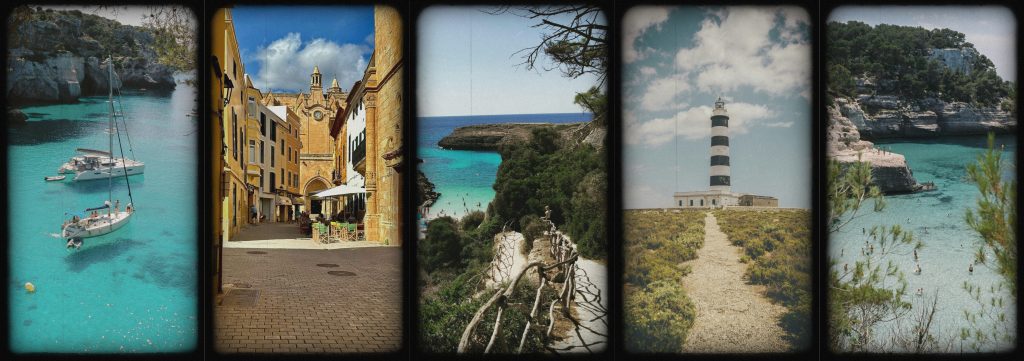
Often described as Mallorca’s quieter and more unspoiled sister, Menorca is a haven of natural beauty and quiet charm. Some areas of the island have been sadly invaded by resorts, waterparks, and cheap, tacky tourism. Luckily, that is concentrated to just a few areas, and there are stretches of crystal-clear waters, secluded coves, and rolling countryside that remain untouched.
The historic towns of Mahón and Ciutadella are elegant and slow but offer bustling markets amidst striking architecture shaped by a rich maritime heritage. There are also a great number of ancient ruins for those of that persuasion to explore, while coastal trails offer enchanting walks all across this beautiful little island.
Ciutadella
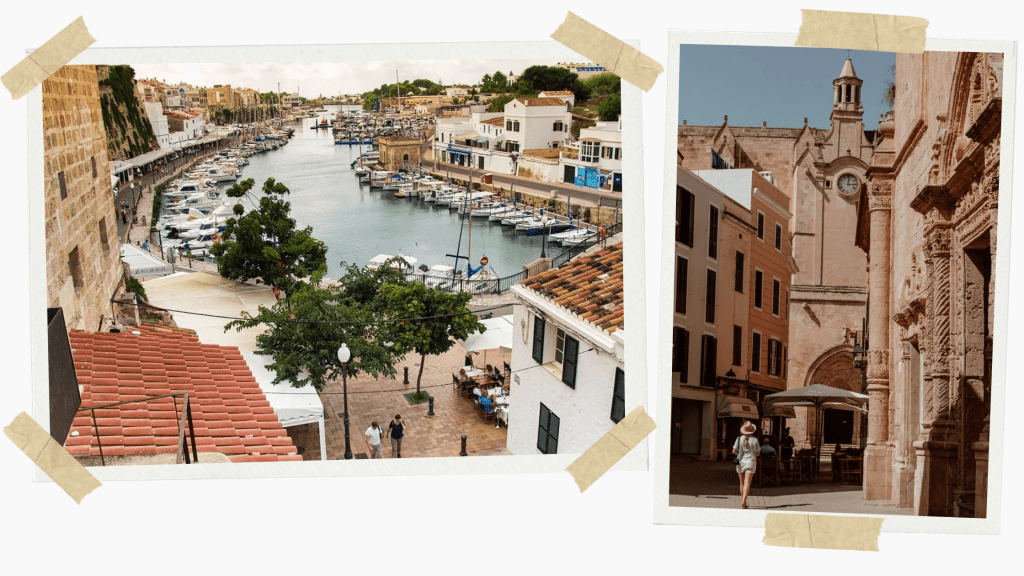
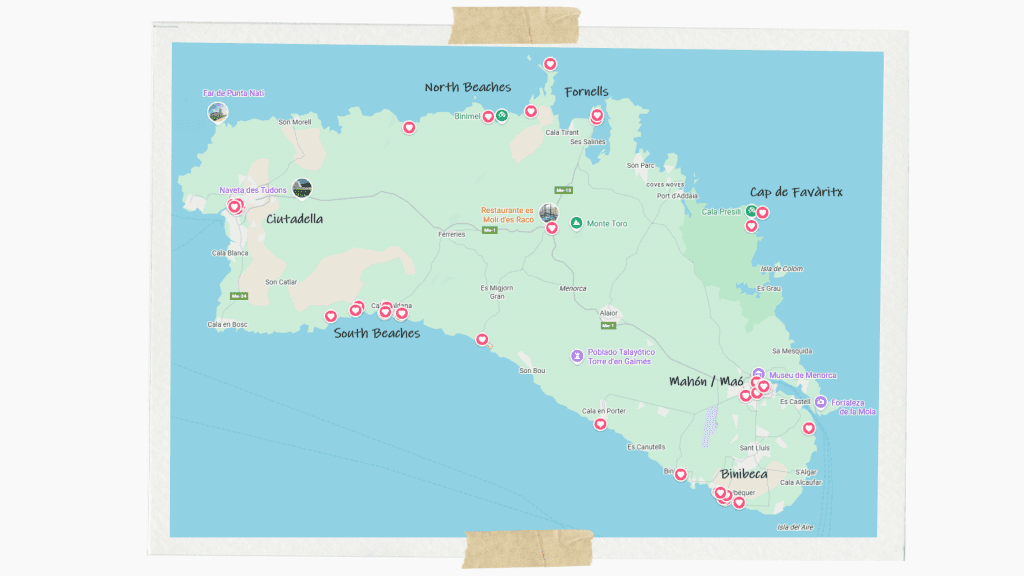
Stone palaces, narrow medieval streets, hidden courtyards, and lively plazas make Ciutadella the island’s most atmospheric town. Once Menorca’s capital, it reflects centuries of aristocratic wealth and Mediterranean trade, especially around the Cathedral-Basilica of Saint Mary, the Plaça del Pins, and the small harbour of Port de Ciutadella.
It’s best experienced slowly and without a plan, stopping for a coffee in a shaded square, and watching the town shift gears as evening approaches.
Bar Imperi is a perfect all-day anchor for breakfast, afternoon snacks, and casual drinks. It has a pleasant back patio and an aged, local feel. Moriarty is another standout, ideal for kicking back in its leafy courtyard with a drink.
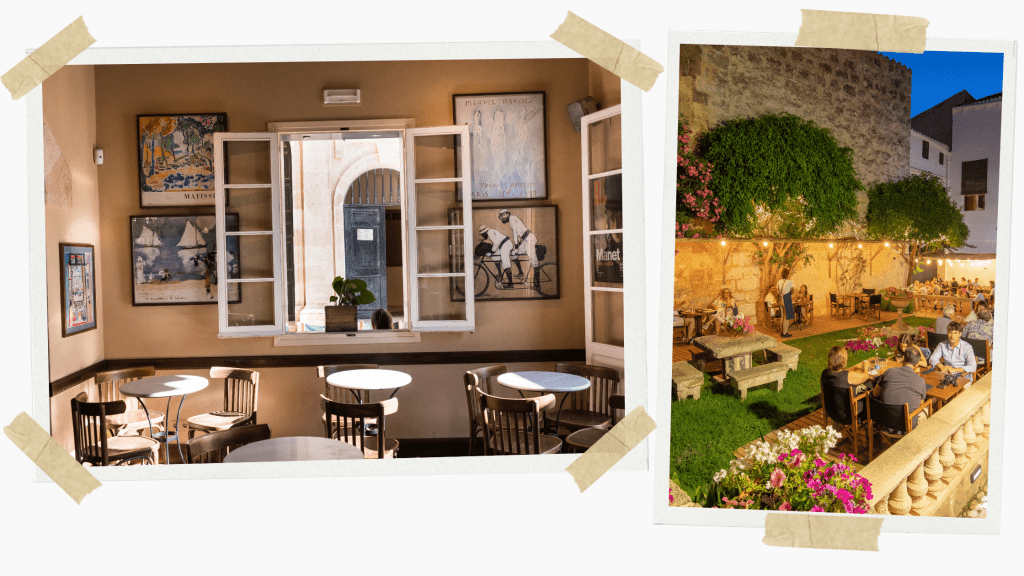
When it comes to dinners, Restaurant El Hogar del Pollo is a great, authentic and affordable spot to try local dishes. It’s small and lively, so you may have to settle for standing around the bar and ordering little plates in a very Spanish fashion.
If you’re wanting to sit down for a fancy dinner, Katú by Smoix Restaurant is one of the island’s best fine-dining options. Blending Mediterranean and Mexican influences, it’s on the more expensive side, but there are plenty of dishes between €15 and €30, so still affordable.
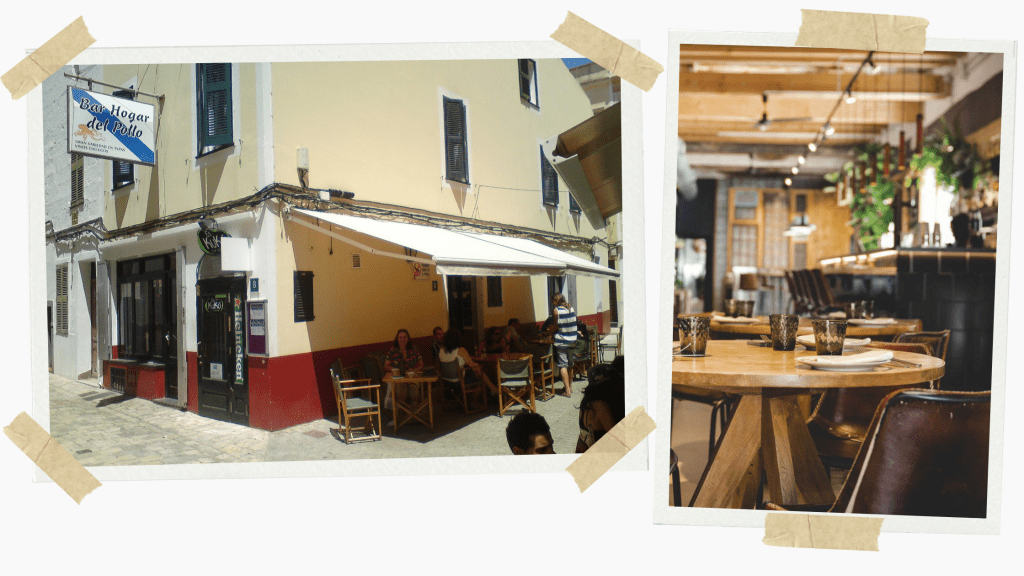
In all cases, stick to the old town, this is where you’ll find Menorca’s best evening atmosphere. And wear comfortable shoes as the streets are uneven!
Mahón
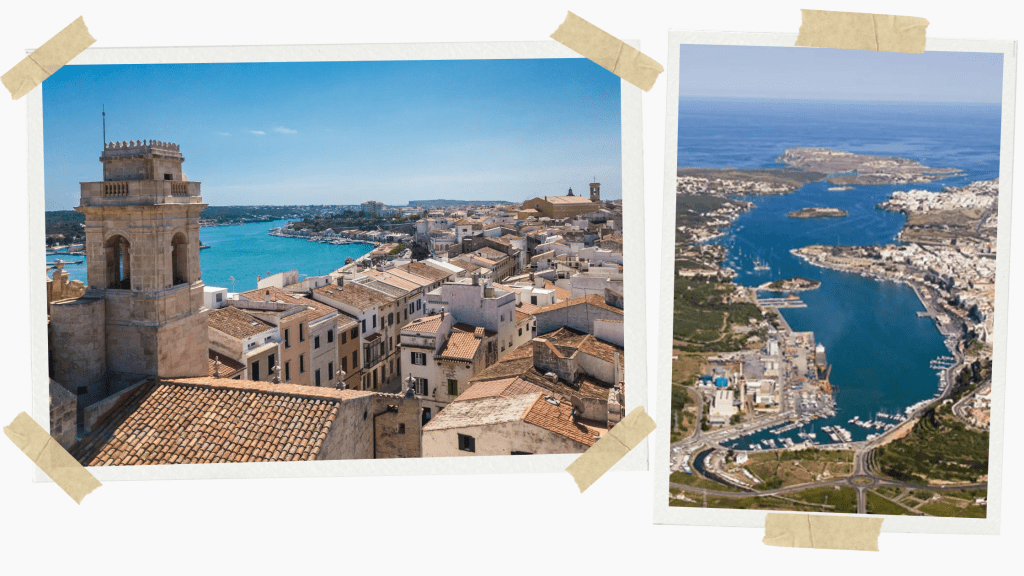
The island’s capital, Mahón (Maó in Catalan), sits along one of the largest natural harbours in Europe. Prized historically for its strategic depth, this vast inlet has shaped the island’s history for centuries. Fortresses, old naval buildings, and waterfront warehouses line the edges, while the upper town reveals a blend of Menorcan and British architectural influences from the 18th century.
The easiest way to grasp the harbour’s scale is from the water. A short boat tour offers context you simply can’t get from land, passing fortifications and tucked-away coves along the shoreline. Afterwards, linger along the port for lunch or head uphill into Mahón’s historic centre.
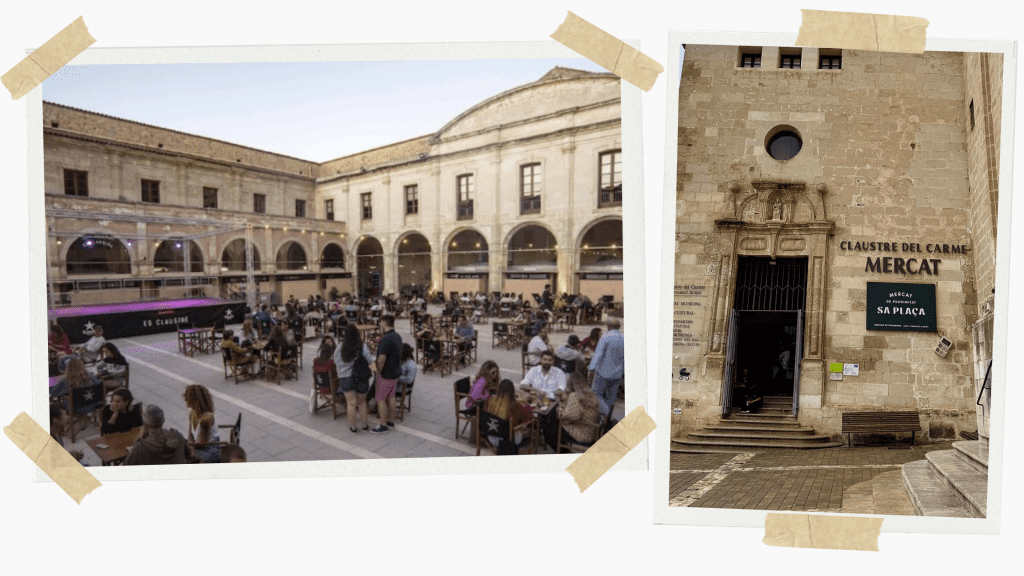
Mercat del Claustre del Carme is worth a visit. This market sits in a beautifully restored 18th-century cloister just off the main square. It has a mix of food stalls, artisan shops, and cafés set in the vaulted arcades of a former monastery while the central courtyard often hosts events and live music. It’s a great spot to sample local produce like Menorcan cheeses or to use as a coffee checkpoint and meeting place.
Es Llonguet Forn Artesà is a great little bakery for coffee and breakfast. For food, be it lunch or dinner, go to Candela, a highly rated restaurant in the town centre.
S’aturadeta is another reliable option with plenty of Menorca classics, while Restaurante Mirador Des Port is a more upmarket option offering excellent views over the harbour and refined Mediterranean cooking
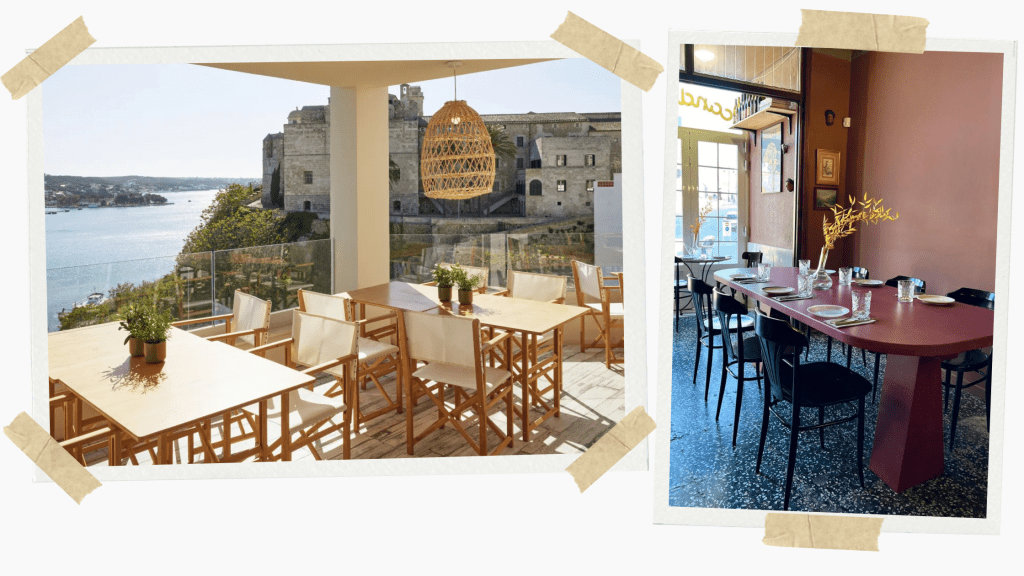
Beaches, Calas, & Coastal Sites
Menorca’s coastline is defined by its calas and is part of the reason tourists flock to this small island. Many of these secluded coves require short walks or boat access, which helps preserve their calm, unspoiled feel. The contrast between white sand, turquoise water, limestone cliffs and pine forests is what makes Menorca unique.
Many calas have no service or nearby cafes, and they can get very busy in peak season. If you’re going for the day, bring plenty of water, snacks, sun protection, and good shoes, as the access paths aren’t always great.
North Coast
The north coast is distinctly different from the rest of the island. Defined by its dramatic geology rather than postcard perfection, the area is rugged, raw, wind-shaped, and far less manicured.
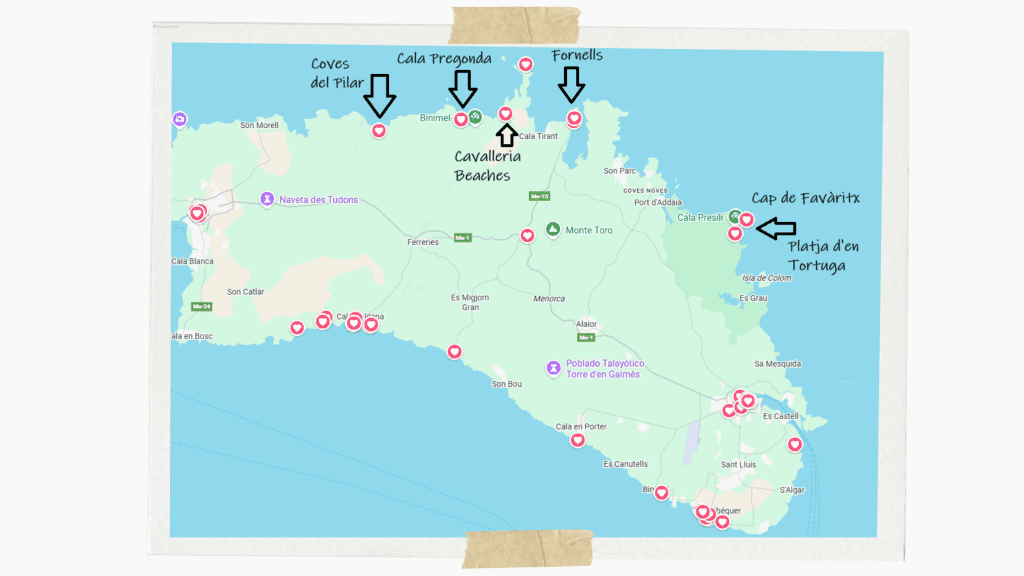
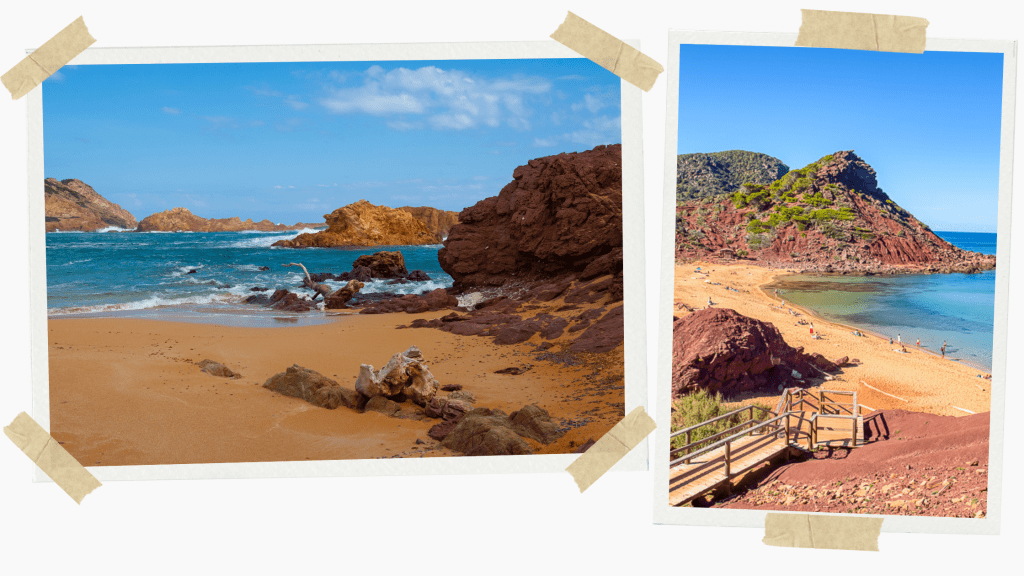
The standout beaches are the red-sand Cala Pregonda, defined by low dunes and rocky outcrops, the isolated and untamed Coves del Pilar, and the breezy, open Cavalleria beaches.
Nearby, the small seaside town of Fornells works well as a base or lunch stop along this coast. It has a laid-back, working-harbour feel and is known for honest, seafood-focused cooking. Restaurants like Sa Xerxa make the most of their waterfront setting, offering relaxed lunches that pair well with a swim or coastal walk before moving on.
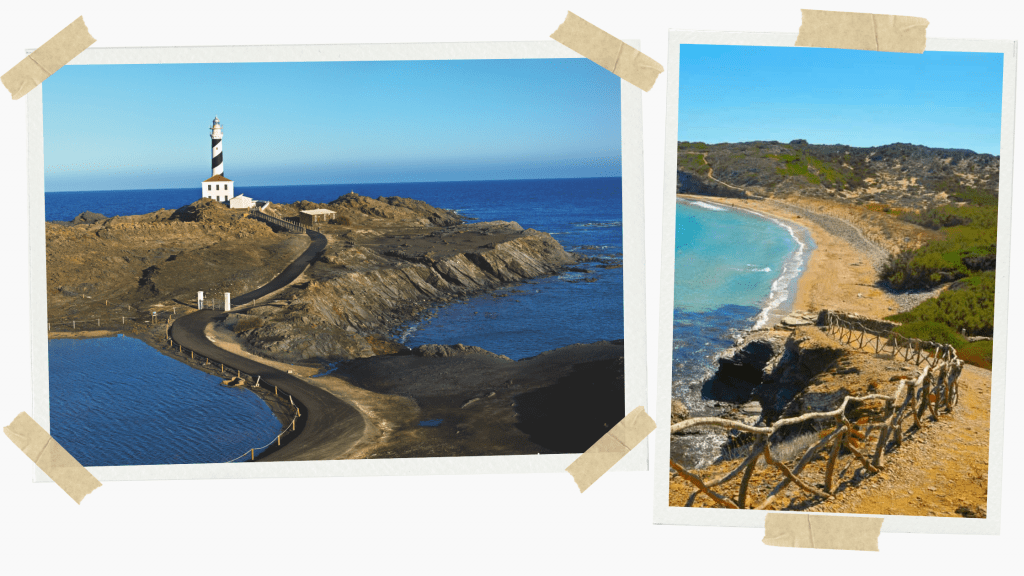
Further along the north coast, through increasingly stark landscape, you’ll encounter the picturesque Cap de Favàritx lighthouse rising from a fractured lunar-like peninsula. Just beyond it lies Platja d’en Tortuga, a wide, undeveloped beach within the Albufera des Grau Natural Park, great for those seeking to explore the wilder side of the island.
South Coast
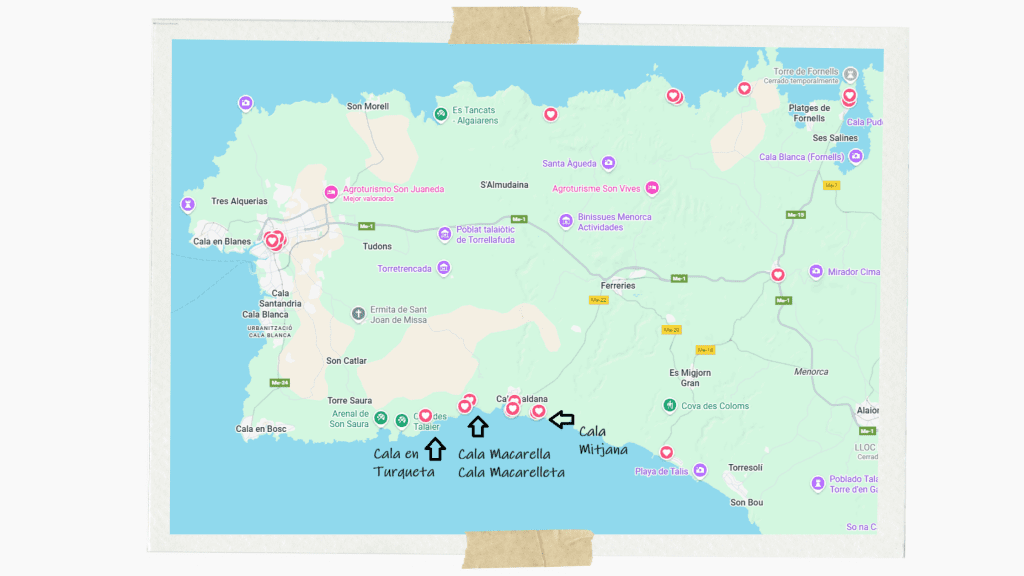
The south coast of Menorca is the island that most people imagine when planning a visit. It is gentle, green, and accessible with fine white sand and mostly calm, shallow turquoise waters. The headline calas are Cala en Turqueta, Cala Mitjana, and Cala Macarella & Cala Macarelleta.
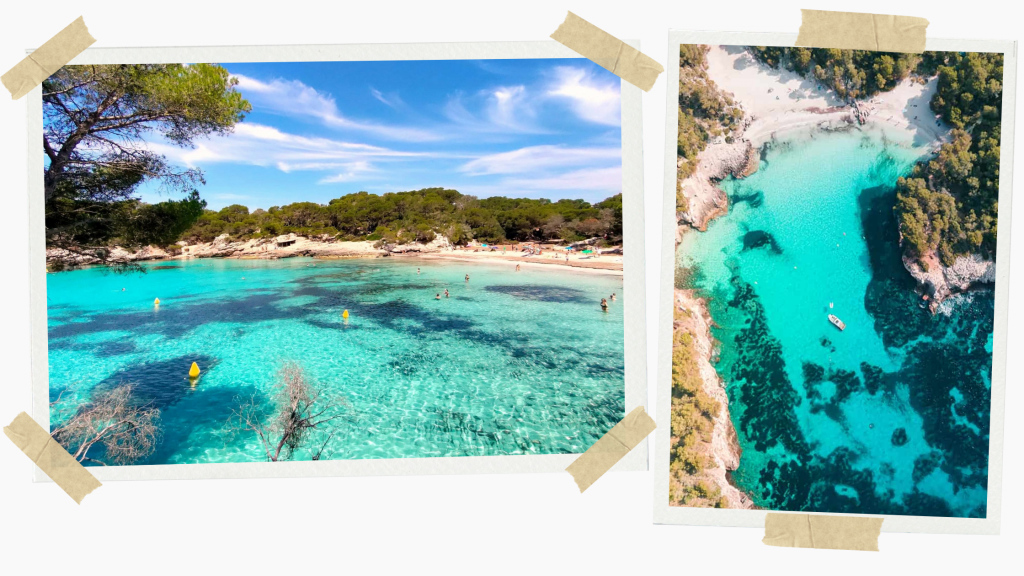
Cala en Turqueta
Cala en Turqueta is often the first stop on the south coast, and with good reason. Its fine white sand and striking, near-Caribbean shades of blue make it one of Menorca’s most instantly impressive beaches.
The bay is relatively wide and gently sloped, with calm, shallow water that’s ideal for swimming. Pines fringe the back of the beach, offering limited natural shade, but facilities are minimal, which is part of its appeal.
Parking fills quickly, so arrive early or late in the day. I would recommend walking as far as you can east around the shore until you find a place for yourself.
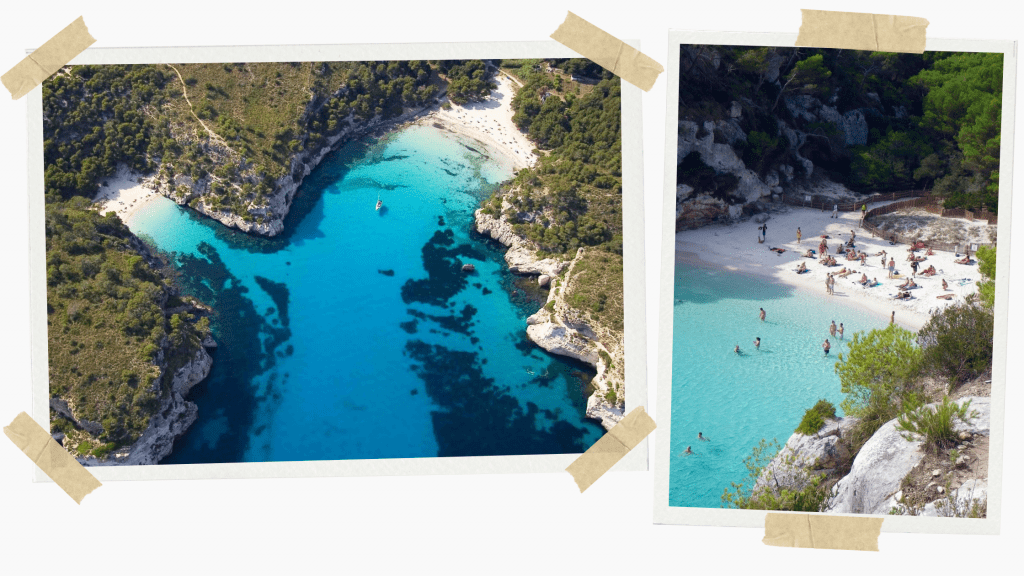
Cala Macarella & Cala Macarelleta
The twin coves of Macarella and Macarelleta are among the most photographed places on the island, and they largely live up to the hype. Cala Macarella is the larger and more accessible of the two, with a broad sweep of sand and brilliant turquoise water framed by limestone cliffs.
Beyond it, Cala Macarelleta is smaller, more intimate, and often considered the prettier of the pair. I would recommend heading to Cala Macarelleta, as it is a little more remote.
In summer, access is controlled via shuttle bus from Ciutadella to reduce traffic, which helps preserve the landscape but requires some planning. Arrive early, or linger into the late afternoon, when the light softens and the crowds thin.
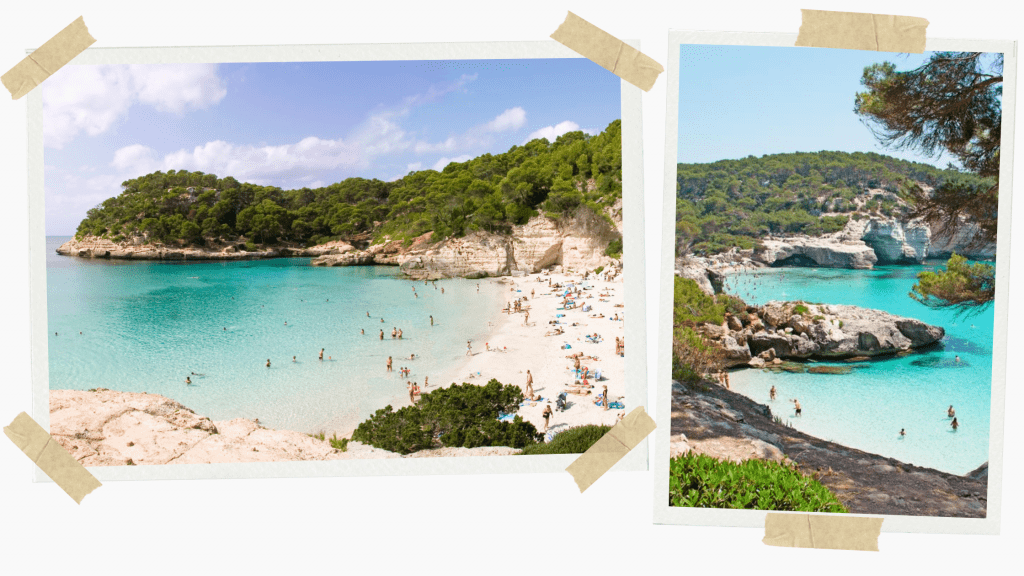
Cala Mitjana
Cala Mitjana feels slightly more relaxed and spacious than some of its south-coast neighbours. Backed by a dense pine forest, it offers more opportunities for shade and short coastal walks, making it a good option for longer beach days.
The water here is equally clear and calm, with rocky edges that are well-suited to snorkelling. Its proximity to other calas means it can still get busy, but it generally feels less intense than the island’s most famous bays.
Miradores
Nearby, viewpoints like Mirador La Punta and Mirador al Mediterrani can be accessed by elevated paths and provide views of the sweeping cliffs, coves, and changing shades of blue below.
Binibèquer Vell
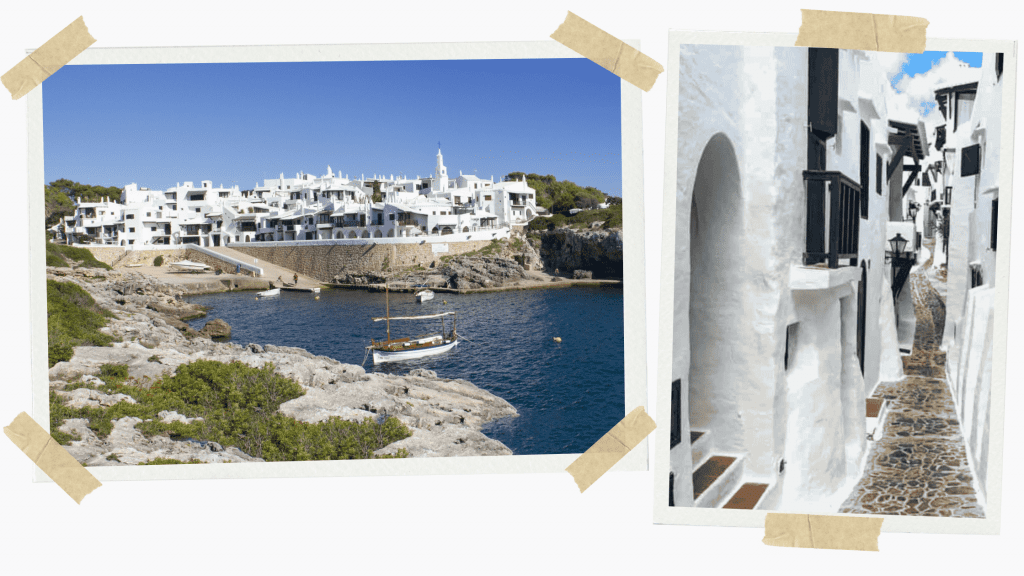
Binibèquer Vell is a purpose-built fishing village designed in the style of a traditional Menorcan fishing settlement, with whitewashed walls, narrow winding alleys, and small arches that open unexpectedly onto the sea. Though it dates to the 1970s rather than centuries past, it captures a romanticised vision of Mediterranean life that is particularly striking in the soft light of golden hour.
Visit early or late in the day to avoid crowds, wander quietly, and treat it more as a visual experience than a checklist stop. You can swim at the nearby Cala Binidalí, a compact, attractive cove just a short drive away, well-suited for a relaxed dip before or after exploring the village.
Cova d’En Xoroi
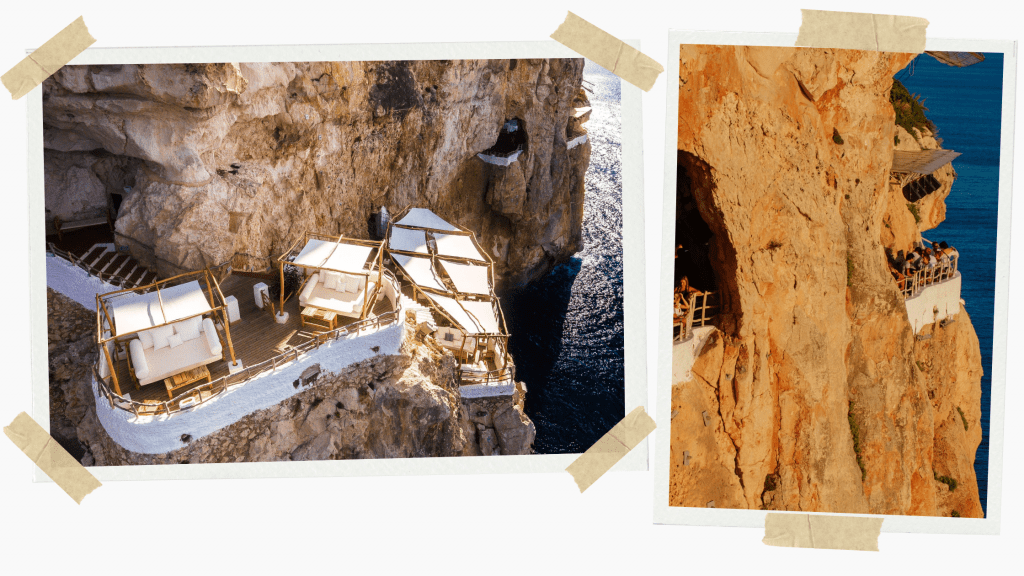
Set dramatically into a cliff on Menorca’s southern coast, Cova d’En Xoroi is a natural cave complex transformed into a bar and viewpoint suspended above the Mediterranean. The draw here isn’t the drinks or décor so much as the setting itself. It’s a memorable experience watching the sun sink into the sea from a terrace carved into rock, with waves far below and light shifting across the horizon.
It’s undeniably popular, but the spectacle remains genuinely impressive. Check opening times in advance, as hours vary by season, and expect an overpriced entrance fee later in the day in peak seasons. Sunset slots fill quickly during high season, so arriving early or booking ahead is essential if this experience is high on your list.
Talayotic Prehistoric Sites
Menorca’s prehistoric heritage is one of its most distinctive and underrated features. Scattered across the island are talayots (stone towers), taulas (T-shaped ritual monuments), and navetas (collective burial structures), many dating back more than 3,000 years.
These sites sit quietly in open countryside, largely untouched by modern development, giving them a powerful sense of isolation and continuity rarely found elsewhere in the Mediterranean. Most are outdoors and exposed, scattered across the countryside, and public transport is limited, so a car is pretty much essential.
The top three sites to visit are probably:
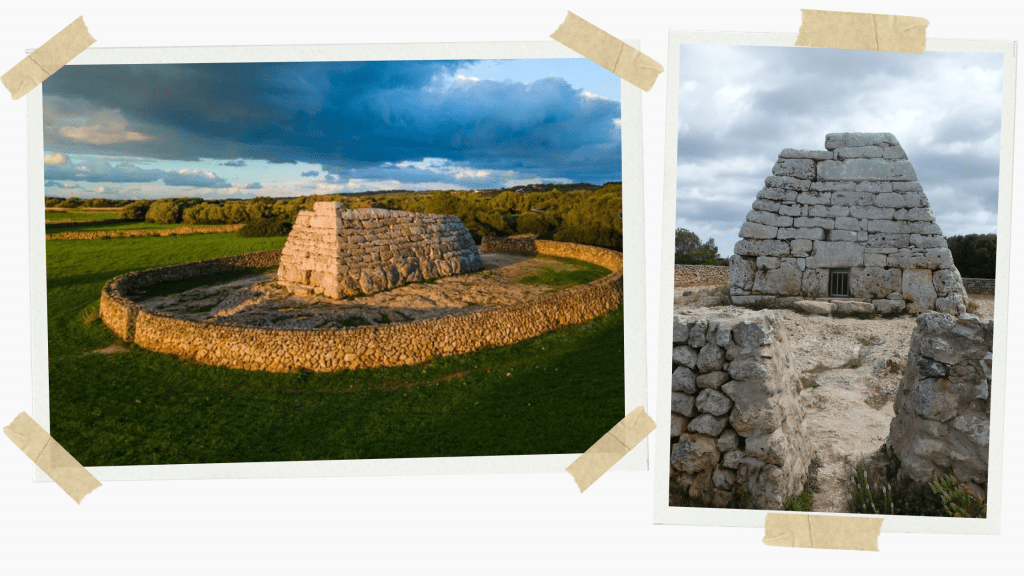
Naveta d’Es Tudons
A wellboat-shaped collective tomb (c. 1200 BCE), the oldest known freestanding funerary building in Europe.
Torre d’en Galmés
The most complete Talayotic settlement. Spread across a hilltop with sea views, it includes multiple talayots, a taula sanctuary, dwellings, and sophisticated water-collection systems.
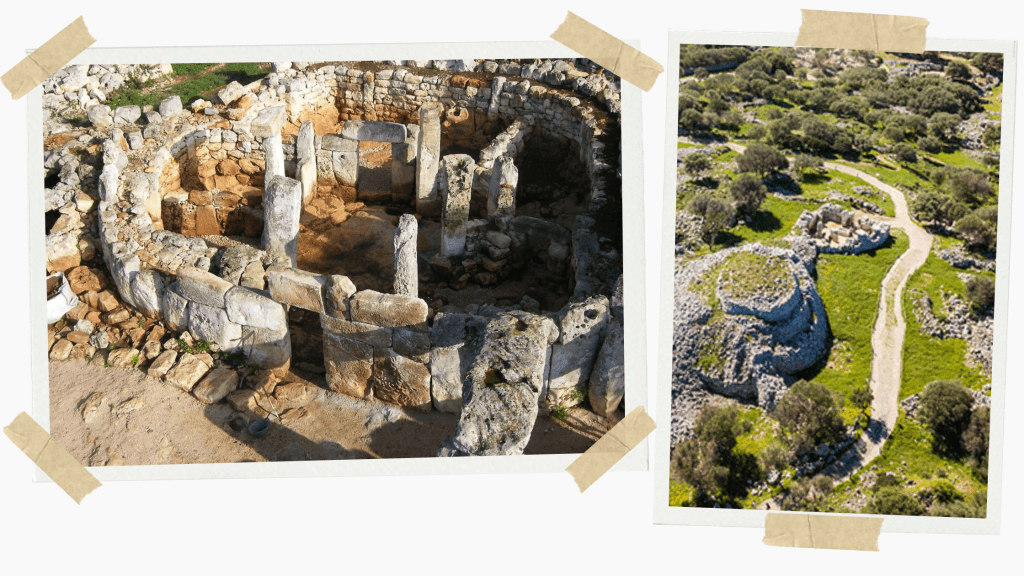
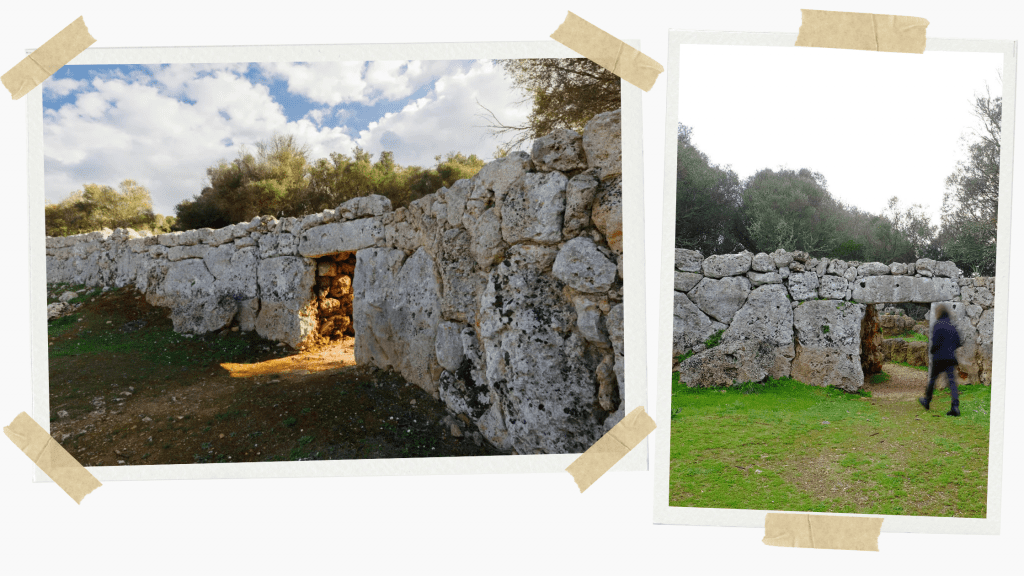
Son Catlar
Unique for its extensive defensive wall, much of which still encircles the settlement, offering insight into the later, more defensive phase of Talayotic culture.
Camí de Cavalls
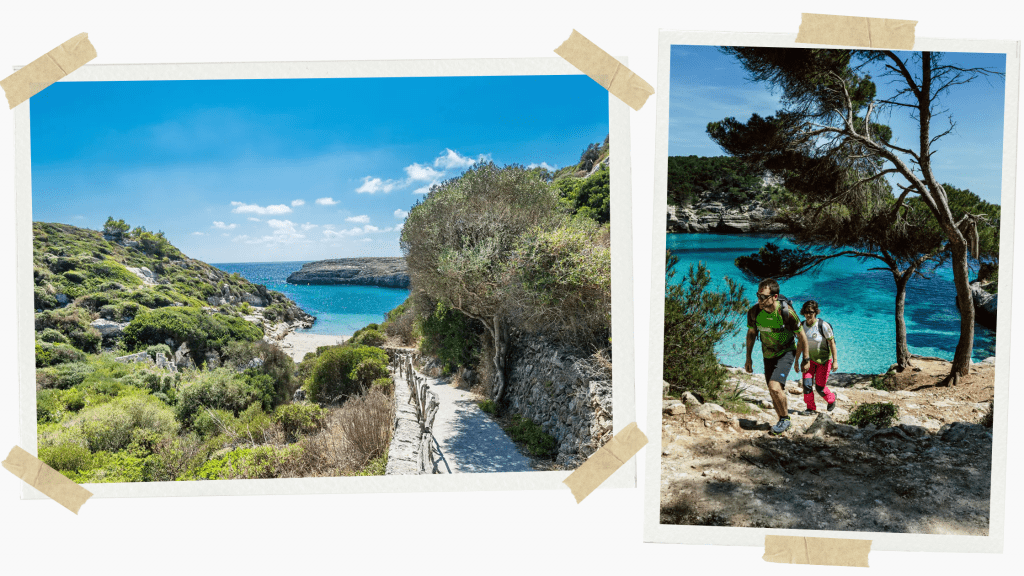
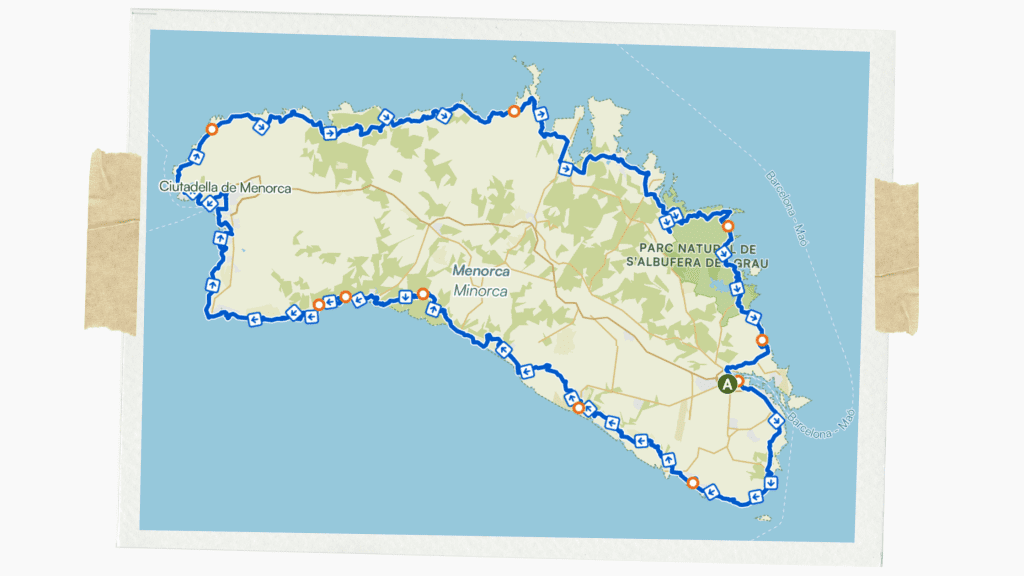
Another route covered in my roundup of the best hikes and walks in Spain, the Camí de Cavalls is an ancient 185 km total circular route once used for defence and patrols that traces Menorca’s entire coastline. Even short sections reveal dramatic changes in terrain, from cliffs and beaches to farmland and wetlands, offering one of the best ways to understand the island’s geography.
You don’t need to do the full loop, but choosing scenic segments based on your base makes for a great morning, afternoon, or day adventure. Bikes are also widely rentable on the island, and many trail sections are clearly marked for cyclists and well-maintained year-round.