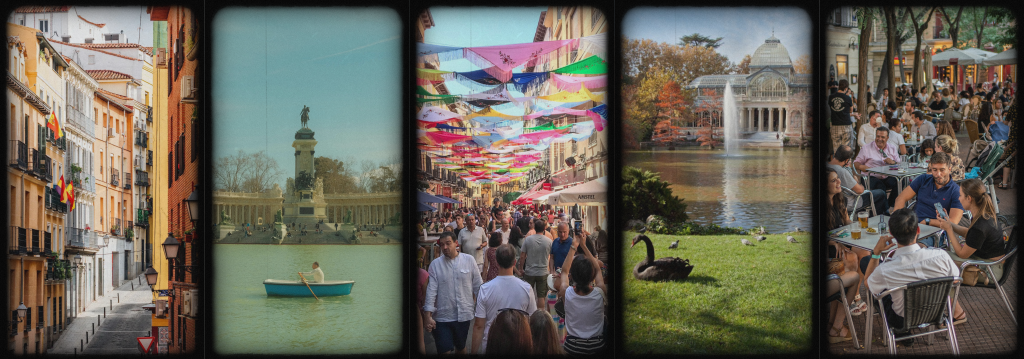
Spain’s capital might not have the Gaudí architecture that Barcelona boasts, nor impressive landmarks of the calibre that can be found in other cities of the Iberian peninsula, but it offers charm in abundance in the very makeup of its streets, parks, and plazas.
Few cities on the planet can rival the array of world-class museums found in Madrid, while numerous verdant spots offer arcadian retreats from the hustle and bustle of the lively city streets. Its character is distilled in its eclectic range of bars, restaurants, cafes and markets, rather than monuments and attractions.
The blend of history, romance and modernity conjures a unique and enchanting atmosphere that is impossible to resist throwing yourself into, but at times it can be difficult to know where to start.
Here is a guide on where to go and what to do in Madrid.
Key Things To Do
Landmarks & Museums
Royal Palace of Madrid
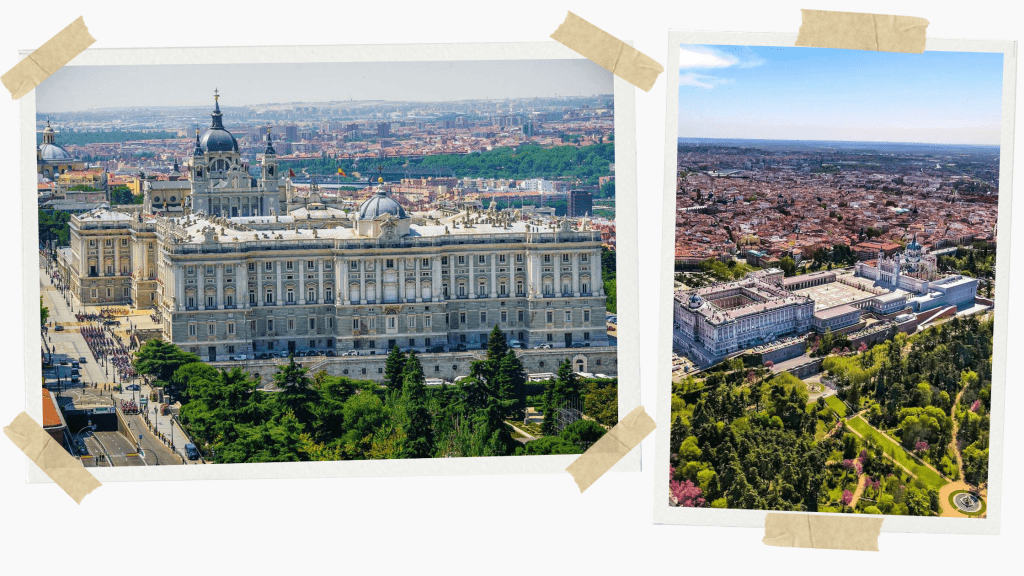
When it comes to sightseeing, the Royal Palace of Madrid (Palacio Real) is one of the most visited spots. Located in the centre of Madrid, the 18th-century palace is the official residence of the Spanish Royal Family and the largest palace in Western Europe by floor area, with over 3,000 rooms.
The exterior plaza area, a grand open square known as Plaza de la Armería, offers a dramatic architectural ensemble sitting between the palace’s main entrance and the Almudena Cathedral directly opposite. It provides visitors with a huge space to gather, along with views over the Campo del Moro gardens, Casa de Campo, and the Sierra de Guadarrama mountains in the distance.
Though the official “residence” of the royal family, it is now primarily used for state ceremonies and official events, so visitors can explore the lavish interiors, including the Throne Room, Royal Armoury, and the Hall of Mirrors.
Tips: Whether you go inside is up to you, but I would recommend walking to the viewpoint between the palace and the cathedral. You can also then walk down to the palace’s Jardines de Sabatini (which can be quite busy) and then down to the entrance to the Campo del Moro gardens. These are far less visited but are quiet and beautiful, offering a wonderful walk on a good day if that takes your fancy.
Plaza Mayor
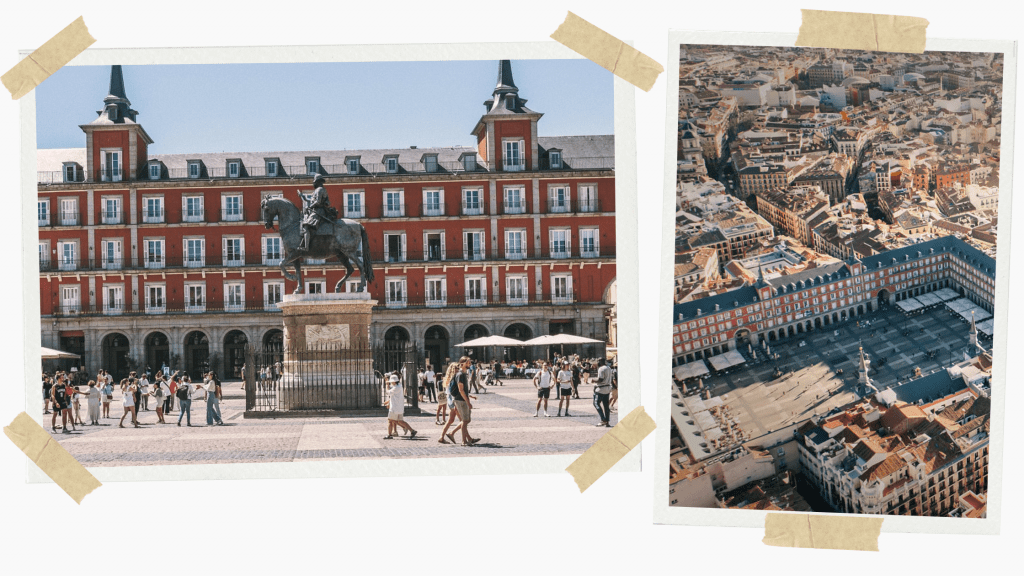
Another spot worth checking out is Plaza Mayor, one of Madrid’s most iconic and historic squares. Located in the heart of the city near Puerta del Sol, it was built in the early 17th century under the reign of King Philip III, whose statue stands in the centre
The square is surrounded by elegant, uniform three-story buildings with balconies overlooking the plaza. Originally used for markets, bullfights, and public executions, it now serves as a lively gathering place filled with cafés, shops, and street performers.
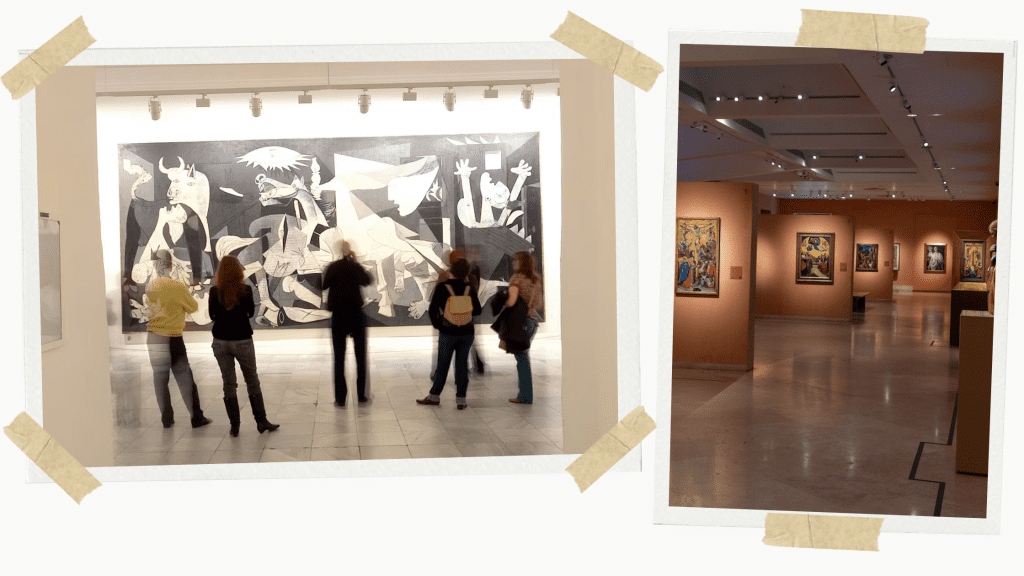
Museums
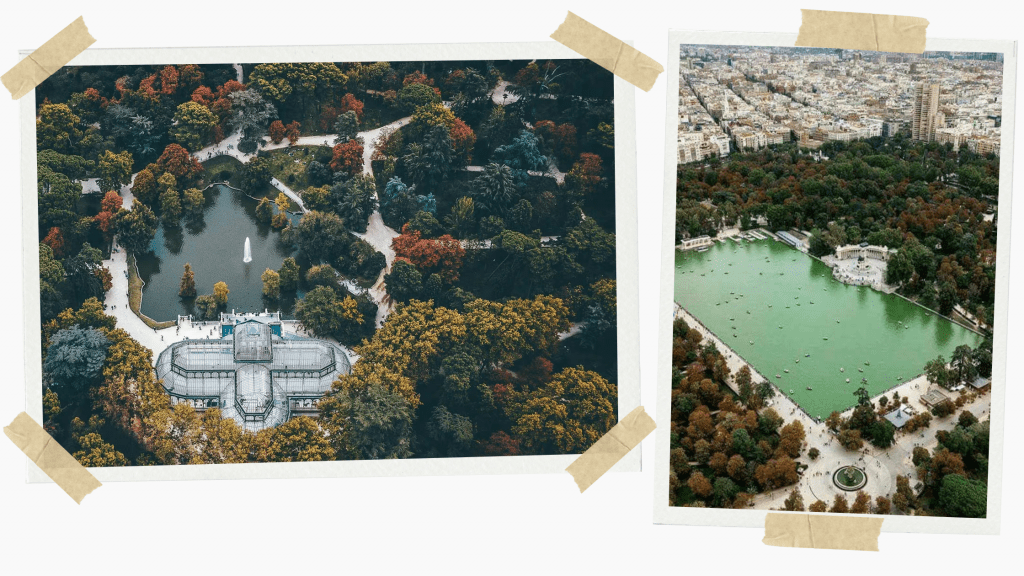
Once you’re done taking in the art and architecture of Madrid, you need to take a walk around Retiro Park (Parque del Buen Retiro). Over 300 acres and an abundance of tree-lined paths, fountains, sculptures, and manicured gardens offer a peaceful escape from the city bustle in the heart of the capital.
Once a royal retreat (hence “Retiro”), the park’s main highlights are the Grand Pond, where visitors can rent rowboats beneath the majestic Alfonso XII Monument, and the Crystal Palace (Palacio de Cristal), a stunning glass structure often used for art exhibitions.
There are plenty of places to picnic or relax. The park is huge and a pleasure to wander around on a sunny day. Explore, maybe rent a boat, and finish off by having a drink at the Florida Park Bar & Restaurant.
Templo de Debod
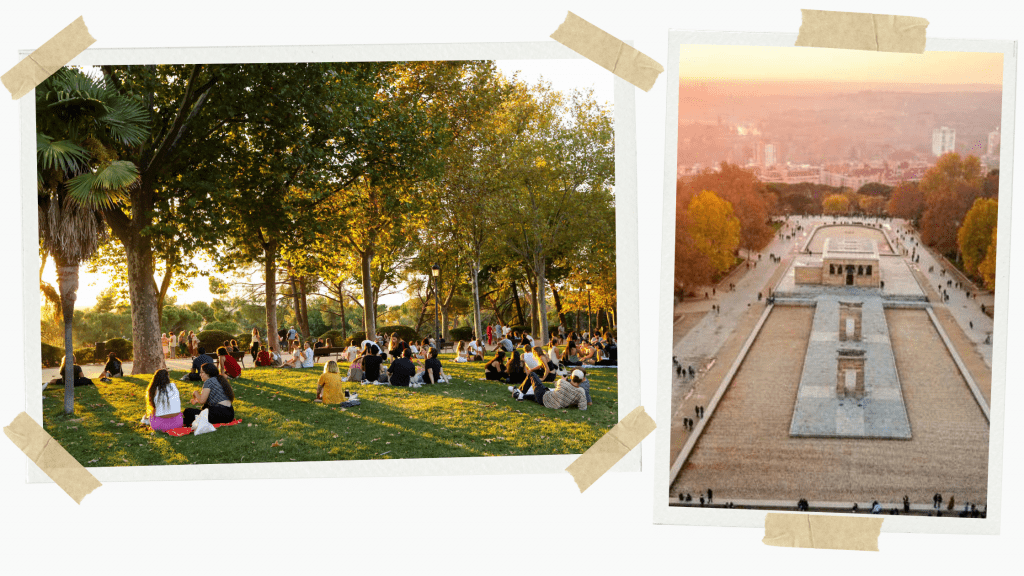
Another top green spot is the Temple of Debod, a genuine ancient Egyptian temple dating back to the 2nd century BC, which was gifted to Spain by Egypt in 1968 as a thank-you for helping save the Abu Simbel temples.
Now sat in Madrid’s Parque del Oeste, it is surrounded by reflecting pools and set against open skies. The temple is especially magical at sunset, offering some of the best panoramic views in the city as musicians play jazz or flamenco guitar in the background. A popular hangout for locals.
Casa de Campo
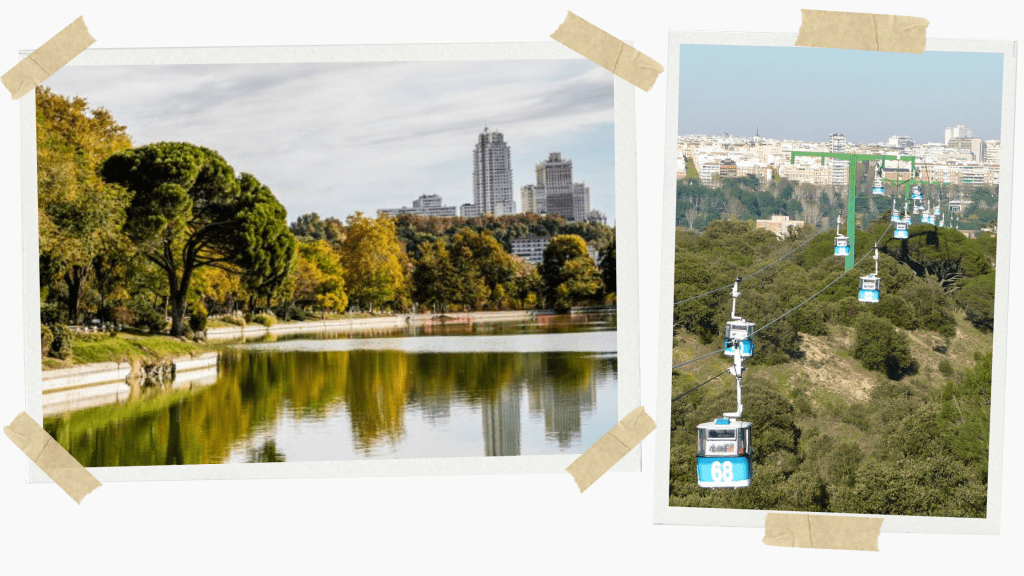
If you’re really looking for a green accessible escape from the city. Nestled just west of central Madrid, Casa de Campo is the city’s largest green area, a sprawling park that stretches over 1,700 hectares, offering a peaceful escape from urban life. Its wooded paths, picnic spots, and panoramic viewpoints invite walkers, cyclists, and families alike to enjoy nature without leaving the city.
At the heart of the park lies the Lago de Casa de Campo, a serene lake where visitors can rent rowboats or simply relax by the water’s edge. Surrounded by cafes and open-air spaces, the lake area is a perfect spot to unwind, especially on sunny afternoons, making Casa de Campo an essential stop for those seeking both outdoor adventure and quiet moments in Madrid.
Madrid Río
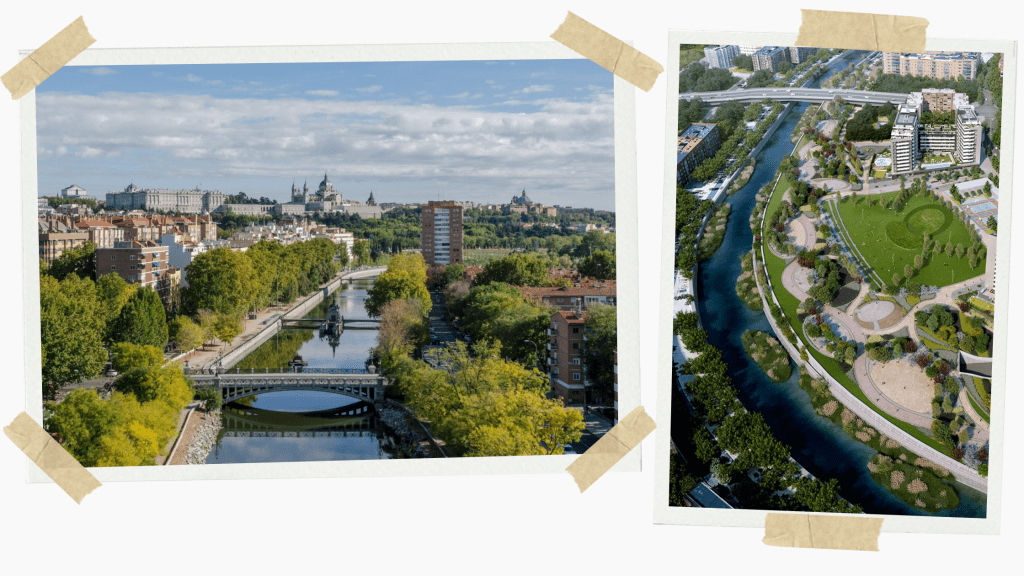
Madrid Río, often called simply el río, is a vast linear park that stretches for nearly 10 km along the city’s Manzanares River, transforming what was once a traffic-choked riverside into one of Madrid’s most vibrant green spaces.
Unlike the Seine in Paris or the Thames in London, which lie at the core of the cities, Madrid’s river is slightly out of the centre, rather unremarkable, and barely built up at all. The water flows at a snail’s pace, and for most of it, only a handful of cafes and terraces can be found near its banks. The silver lining of this is that it is a far more relaxing and sedate area of town.
The park links major neighbourhoods and cultural spaces like Matadero Madrid. In recent years it has been given more attention with restored riverbanks attracting wildlife. In some sections, you’ll find bridges, leafy gardens, and playgrounds, but the vast majority of it has cycling paths and jogging trails, making it a great place for exercise or picnicking. It is today a symbol of the city’s urban renewal and a perfect escape from its bustling streets.
Best Plazas
Plaza Olavide
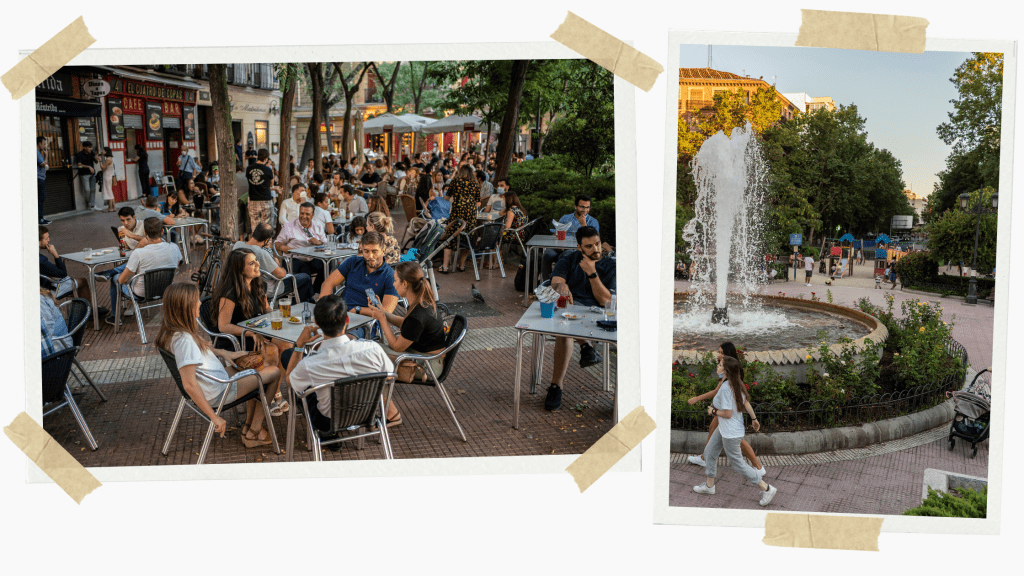
There are plenty of plazas teeming with great bars and restaurants, but Plaza Olavide definitely deserves a mention. In the heart of the Trafalgar neighbourhood of Chamberí, the plaza underwent a major renovation. Traffic around and into it has been restricted, and the plaza now boasts lush gardens, a fountain, and playgrounds.
It is also surrounded by cafés and outdoor seating, making it a favourite meeting spot for locals. On a sunny day, time can pass you by blissfully while you sit sipping drinks with friends. The atmosphere is unparalleled. Whether you come for tapas in the day, an evening drink under the trees, or simply to soak up the authentic barrio atmosphere, Olavide is an unparalleled pedestrian-friendly oasis offering a slice of everyday Madrileño life away from the city’s busier tourist areas.
Plaza Cascorro
Close to the centre, connecting Madrid’s neighbourhoods of La Latina and Embajadores, Plaza de Cascorro sits at the northern gateway to El Rastro, the city’s famous Sunday flea market. On Sundays, the square comes alive as part of the Rastro market: stalls, antiques, food vendors and throngs of locals and tourists weaving through together.
When it isn’t a Sunday, the area becomes a lot more relaxed and plenty of cafés and bars have terraces where you can perch with a drink and soak up the atmosphere. It’s very well connected, close to Metro stations La Latina and Tirso de Molina, and is a great meeting point.
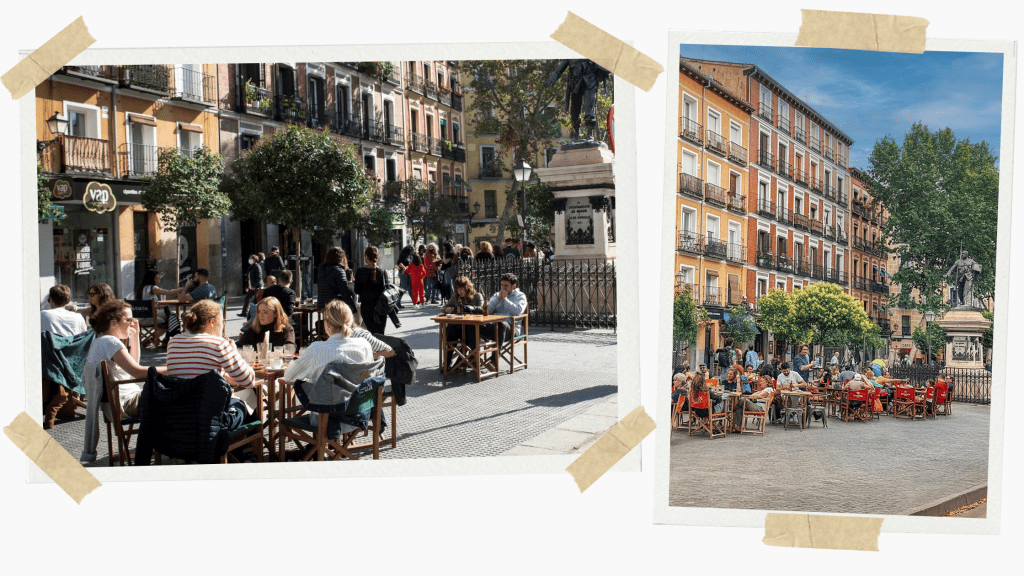
Plaza de las Comendadoras
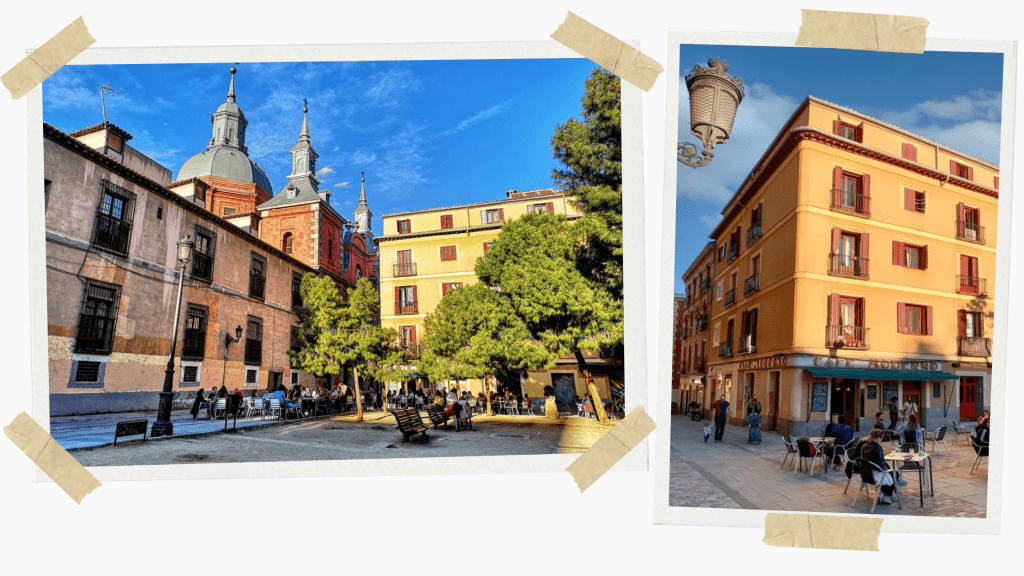
Set in a more residential stretch of the city, Plaza Federales is the kind of place you stumble upon rather than seek out, and that’s very much part of its charm. Calm and refreshingly untouristy, it’s a square shaped by everyday life with parents chatting while kids play, neighbours stopping for coffee, and regulars claiming the same benches day after day. For locals, the plaza is often linked to Madrid’s creative life as a couple of films have been shot here, including by Pedro Almodóvar’s Madres Paralelas.
Surrounded by low-key bars and cafés with outdoor seating, it’s a pleasant spot to pause with a drink. There’s nothing flashy here, just an easygoing plaza that offers a quiet glimpse into daily Madrid, away from the crowds and headlines.
Food & Drink
Having explored Madrid’s top spots, it’s time to throw yourself into its food & drink scene.
Markets
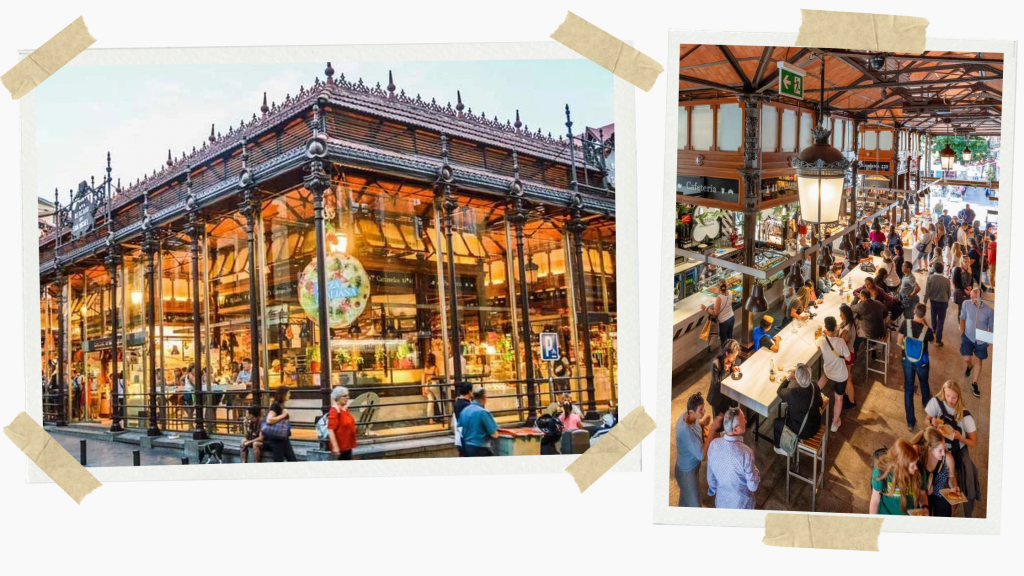
San Miguel Market (Mercado de San Miguel) is a good place to start, right next to Plaza Mayor it has everything from Iberian ham and Galician octopus to oysters, olives, cheeses, artisan pastries and of course plenty of wine, sangria and vermouth options. It’s also a spectacle in its own right, housed in a beautifully restored iron-and-glass structure dating back to 1916.
It’s worth checking out a more local market too as San Miguel, though a great place to start, is a very touristy spot. Alternative options are the trendy, urban-style food market Mercado de San Ildefonso in Malasaña, the more stylish Spanish market Mercado de San Antón in Chueca, the vibrant Mercado de Antón Martín just off Calle de Atocha, or the eclectic Mercado de San Fernando in Madrid’s multicultural Lavapiés neighbourhood. The latter offers the most authentic and accessible market experience if you’re open to embracing the creative spirit of the Lavapiés district.
Spanish Classics
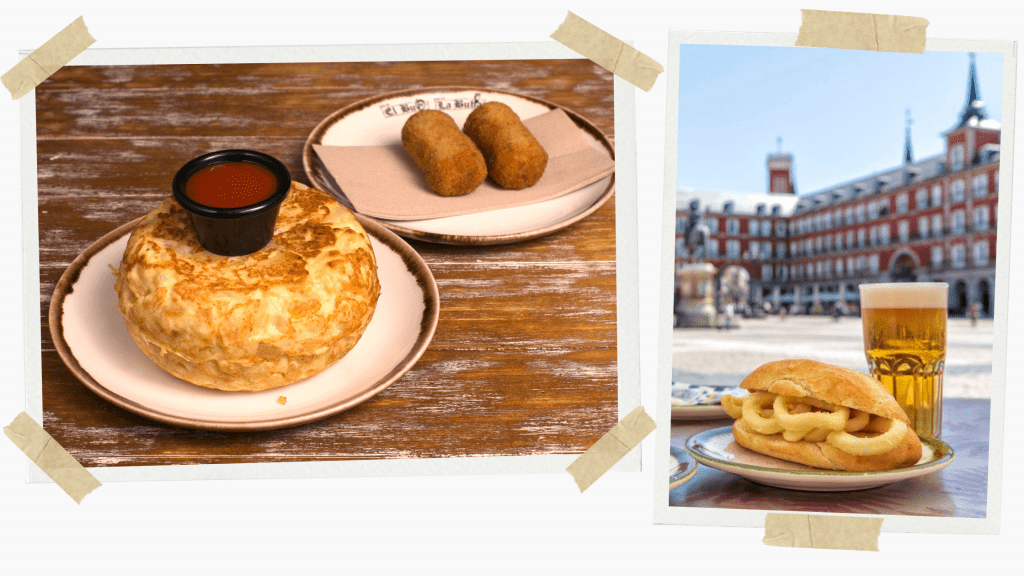
Croquetas
While you’re letting your tourist side run wild, you might also want to sample some of the city’s classic bites. Casa Julio is famous for its croquetas, while Cafetería Rocablanca is less “celebrated” but also has some great croquettas at a very low price and is a great place to stop for a drink and sample the various options.
Tortilla
For tortilla, this is sold all over, and many bars and restaurants claim to have the best. I’d recommend going to either La Buha or Pez Tortilla. Both have two different locations and a extremely reliable when it comes to trying a good tortilla.
Other
Just off the Plaza Mayor, tucked away at Calle Botoneras 6, Bar La Campana is a popular spot to try a bocadillo de calamares, while nearby Chocolatería San Ginés has been serving its famous churros since 1894.
Aside from that, there is an inexhaustible eclectic array of bars, taverns, restaurants, rooftops and all kinds of watering holes of all shapes and sizes all over the city, you often can’t go wrong simply walking into whichever one takes your fancy.
Favourite Bars
With over 15,000 bars, pubs, and taverns, Madrid is one of the cities with the highest bar density in Europe. With the average resident paying a visit to one of these 15,000 on average 3 times per week, bar culture in Madrid cannot be understated.
What makes it truly special is how seamlessly Madrid blends old and new, ancient taverns with worn wooden counters sit seconds away from cutting-edge cocktail lounges and top-tier natural wine bars in avant-garde settings defined by industrial minimalism. Here, drinking is never just about the beverage; it’s about connection, community, and a genuine celebration of life’s simple pleasures.
Whether you find yourself sipping sherry in a century-old cellar or enjoying a craft cocktail in a repurposed cinema, the city’s bars invite you into their stories. The energy spills from bustling terraces and hidden courtyards alike, creating spaces where locals and visitors mingle with equal warmth. Madrid’s bar culture isn’t just nightlife, it’s a way of living, a daily ritual that captures the city’s soul and invites everyone to be part of it.
Sala Equis
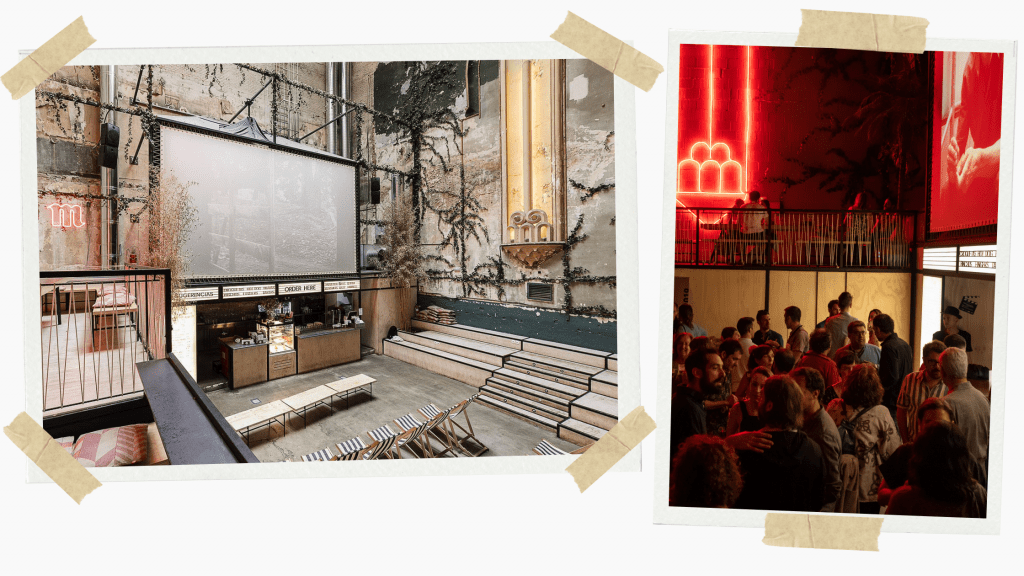
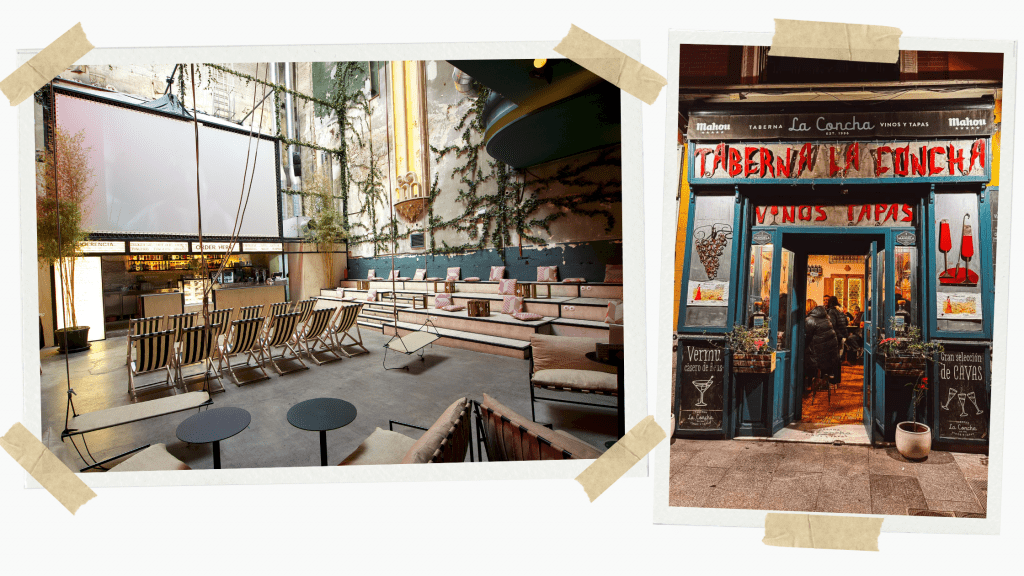
The first shout-out has to go to a popular haunt as it is something you simply rarely find in any city on Earth. Once a 1970s adult cinema, Sala Equis has been reborn and transformed into a dynamic cultural bar in the city centre with huge ceilings, neon lights and plantlife invading the walls like some kind of post-apocalypse scene.
Its unique nature hits you the moment you step inside, with a huge screen playing black-and-white films above the bar and an eclectic range of seating on all sides, including deck chairs and busy steps, which are sometimes the site of live performances. Above the bar, a cinema offers indie films throughout the month. It’s a pulsating atmosphere that’s both playful and relaxed, always paying homage to its original cinematic heritage.
📍 Call del Duque de Alba, 4 (La Latina / Tirso de Molina)
El Viajero
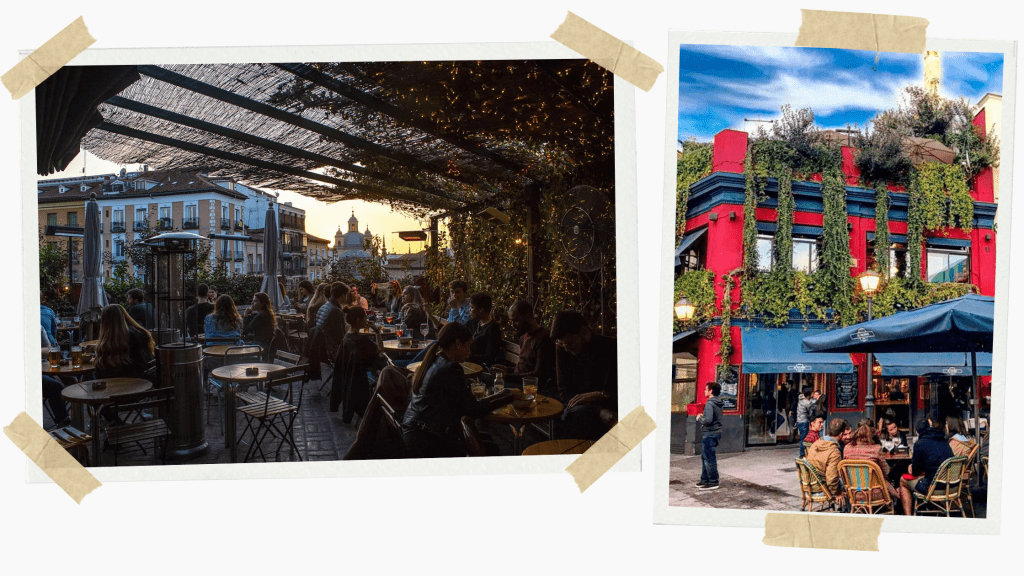
Not far from Sala Equis, set atop a building in the lively La Latina district, is the hidden rooftop bar El Viajero. This sanctuary offers a bohemian vibe, casual seating, and views stretching over Madrid’s rooftops.
It’s a favourite for sunset drinks and late-night conversations. It is also right next to Mercado de la Cebada, La Buha and Pez Tortilla (two great places to try tortillas in Madrid) and Cava Baja street, which is teeming with great bars and eateries.
📍 Plaza de la Cebada, 11 (La Latina)
Lamiak
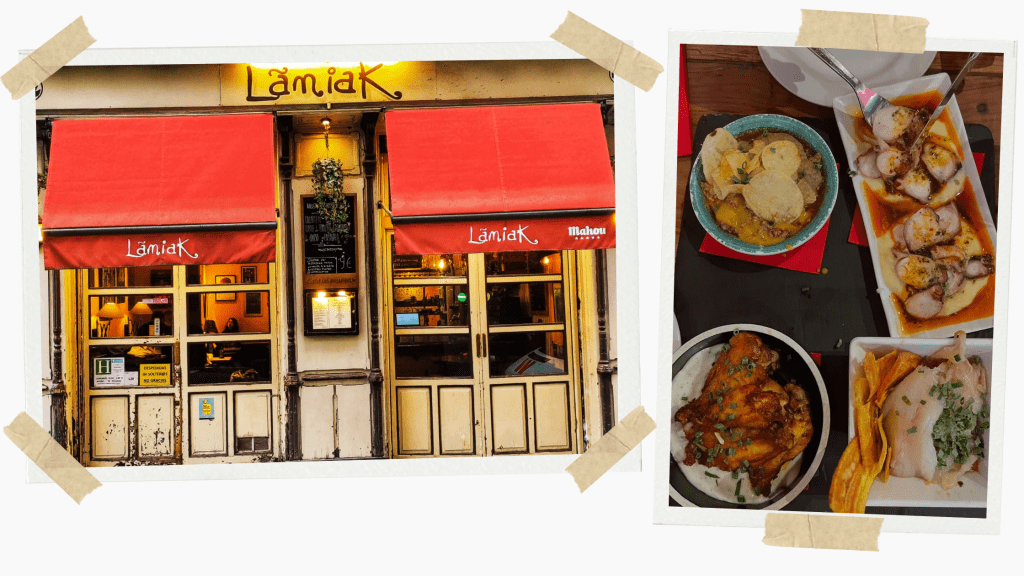
A small Basque-inspired bar tucked in the heart of Madrid, Lamiak serves pintxos that pair effortlessly with its casual, well-chosen wine and cider list. The atmosphere is laid-back and unpretentious, inviting locals and visitors alike to enjoy simple, quality bites alongside friendly conversation. There are two locations, one in La Latina on Cava Baja and another next to the Antón Martín metro.
📍 Calle Cava Baja 42 (La Latina)
📍 Calle de la Rosa, 10 (Barrio de las Letras / Antón Martín)
Casa Macareno
Intimate, lively, authentic. Casa Macareno embodies the soul of traditional Madrid bars. The wooden counters and friendly chatter create an authentic setting where locals gather to enjoy classic drinks and small plates in a typical spot that is brimming with character.
📍 Calle de San Vicente Ferrer, 44 (Malasaña)
La Manuela
La Manuela throws back to the 1980s with its retro style. It’s a spot to let loose, play board games, and enjoy creatively mixed drinks in a setting that’s both nostalgic and fresh.
📍 Calle de San Vicente Ferrer, 29 (Malasaña)
La Venencia
La Venencia is defined by its dusty bottles, old paintings, and no-nonsense sherry served straight from the barrel. This historic sherry bar encourages genuine immersion into Madrid’s sherry culture and is the type of place where you might spot a Hemingway-type character sitting in the corner letting his genius run wild while savouring some prime sherry.
📍 Calle de Echegaray, 7 (Barrio de las Letras)
Café Moderno
Café Moderno deserves a mention despite not being the most incredible of bars and providing somewhat slow service and a moderate range of options. Inside art deco interior exudes a timeless charm, featuring vintage furnishings and a cosy ambience, but it is the fantastic sun-dappled terrace perched on the edge of Plaza de las Comendadoras that makes it a favourite.
This picturesque setting caught the attention of renowned filmmaker Pedro Almodóvar, who chose Café Moderno as a filming location for his movie Madres Paralelas. With an ambience inspired by Almodóvar’s Madrid, it blends cinematic flair with a carefully curated wine and cocktail menu and is a vibrant gathering place for locals and visitors alike on either a lively evening or leisurely afternoon.
📍 Plaza de las Comendadoras, 1 (Noviciado)
Café Pavón
One more in La Latina, Café Pavón is a terrific spot where classic meets contemporary. A longstanding Madrid institution, it combines classic bar culture with contemporary energy. With its polished interiors and steady flow of patrons, it’s a reliable stop for well-crafted cocktails and a taste of the city’s evolving nightlife.
📍 Calle de Embajadores, 9 (La Latina)
Bodega de la Ardosa
Bodega de la Ardosa is a historic tavern famed for its vermouth and century-old charm. The wooden bar and walls filled with old photos and dusty bottles make it an authentic spot for sampling Madrid’s traditional aperitivos while feeling like you’ve travelled back in time.
📍 Calle de Colón, 13 (Malasaña)
Favourite Wine Bars
Madrid isn’t always the first name on a wine pilgrim’s map, but it should be. This is a city where old vermuterías, beer bars and sleek enotecas coexist in sun-dappled plazas and narrow neighbourhood lanes to offer an abundance of watering holes for each and every taste.
Today, the city’s natural wine scene is thriving having grown by over 200% in the past decade. You’ll find rare and exciting wines in shops, markets, cafes, and cosy little nooks dedicated to imbuing you with new flavours. Whether you’re after bold reds, cloudy whites, innovative orange wines or something delightfully uncategorizable, let your evening unfold across neighbourhoods. Here’s your guide to Madrid’s most inviting wine bars.
Vinícola Mentridana
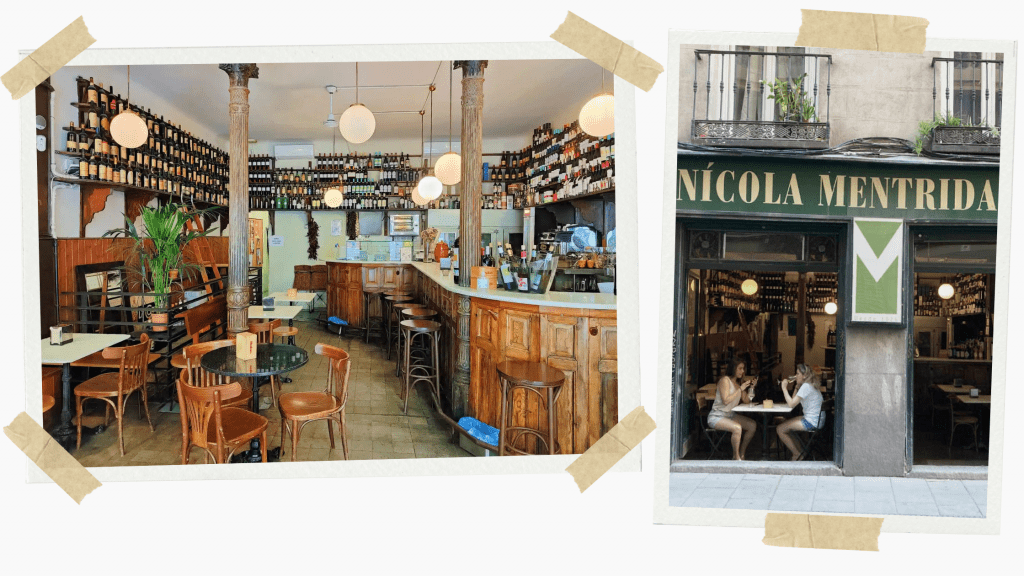
Tucked behind the Antón Martín market, Vinícola Mentridana is a portal into Madrid’s past, with chipped marble tables, wooden shutters, and jazz drifting from a dusty speaker. It feels lived in because it is. The wine list leans Castilian, with well-priced glasses from Méntrida and Ribera del Duero. Pair a glass of earthy garnacha with a dish of olives and drift into conversation as the night folds around you.
📍 Calle San Eugenio, 9 (Barrio de las Letras / Lavapiés)
Corchito
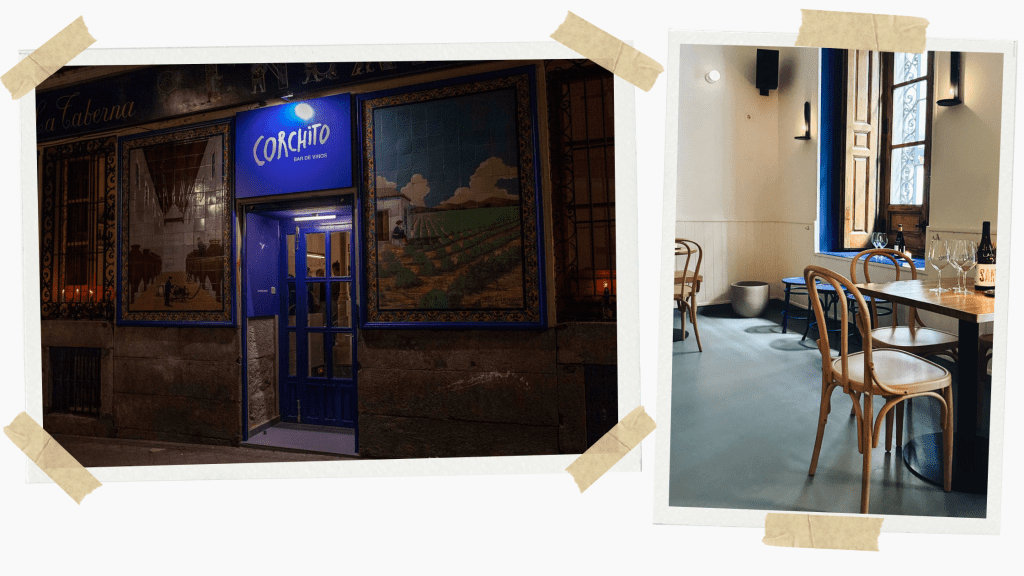
Corchito is the kind of place you’d walk past twice before realising it’s there, and you’d be poorer for it. Inside is a dimly lit wine paradise specialising in natural and low-intervention wines. The team here serves each pour with a quick story and a lot of heart. Expect spontaneous pét-nats, cloudy reds from the Canary Islands, and a rotating soundtrack of Afrobeat and lo-fi soul.
📍 Calle del Olmo, 3 (Lavapiés)
Vinoteca Vides
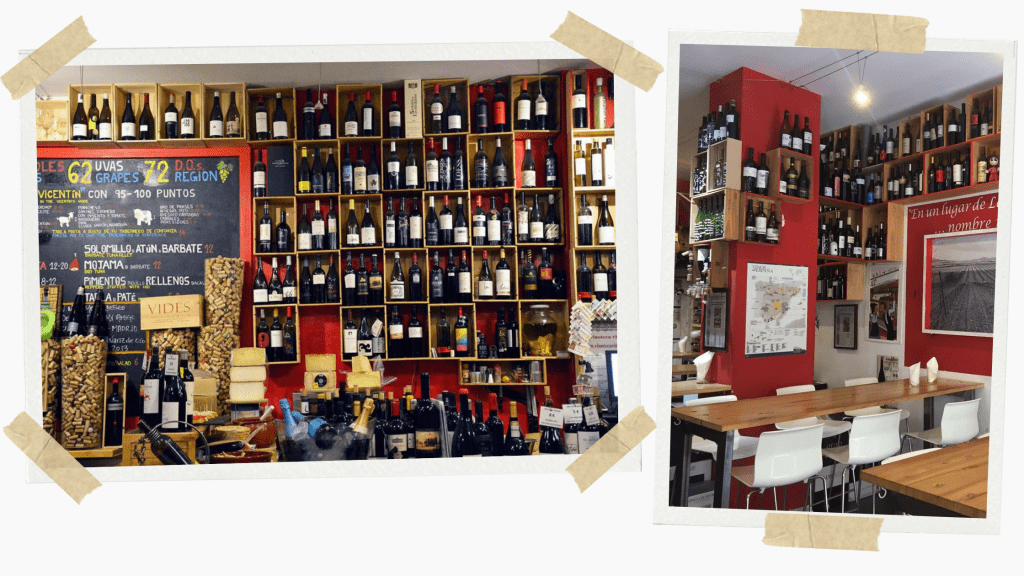
While other wine bars have gone for the minimalistic look, often with an industrial interior such as exposed brick, Vinoteca Vides is an organised mess of wine bottles and boxes filling every space of every wall to provide an intimate and storied wine sanctuary.
The staff is sharply knowledgeable, and the wine list is deep but not intimidating, with a generous by-the-glass offering. It’s the perfect place for discovering a structured Bierzo or a saline Txakoli. The lively setting, smart pairings, and impassioned assistance make it a reliable anchor when you want to unwind with intention.
📍 Calle Libertad, 12 (Chueca)
La Alquimia
Born from a serendipitous post-wedding gathering in 2022, La Alquimia has blossomed into a beloved natural wine bar with two locations in Madrid offering a curated selection of natural wines. Both a spot in Chueca and another newer location in Chamberí provide cosy and welcoming hideouts defined by intimate, candlelit settings with wooden tables and minimalistic designs.
📍Calle de San Lucas, 15 (Chueca)
📍Calle de Galileo, 32 (Chamberí)
Gota
Gota is by far the “trendiest” wine bar you’ll find in Madrid. A haven for the curious drinker with an eye for detail, the cave-like setting feels otherworldly with stylish decor and smooth music. Clean lines, cool playlists, and a wine list that stretches from Catalonia to Jura and back. The focus is global but thoughtful whether you’re sipping a skin-contact white from Alicante or an orange from Slovenia.
📍 Calle de Prim, 5 (Chueca)
Bendito Vinos y Vinilos
An audiophile’s wine bar where records and bottles sit side by side. This place captures the easygoing side of Madrid’s wine scene. Expect soulful grooves and well-priced reds and whites that range from the Sierra de Gredos to Portuguese vinho verdes. The team is informal but informed, and if you stay long enough, you’ll probably get a personal pour of something from under the counter.
📍 Found inside Mercado de San Fernando (Lavapiés)
Marcelino, Vinos y Ultraporcinos
Marcelino is part deli, part bar, and part love letter to Spanish cured meats. Here, you’ll find rare bottles from Galicia or bold Montsants next to slabs of cecina and manchego that seem sliced with reverence. Unpretentious, warm, and buzzing with locals, it’s a gem for those who want their wine paired with deep flavours and deeper conversation.
📍 Cava de San Miguel, 13, (Central, Near Plaza Mayor)
Masa Vins
In the heart of Chamberí, Masa Vins stands out as a testament to the neighbourhood’s vibrant Argentine influence. This wine bar offers a thoughtfully curated selection of natural wines, reflecting the owners’ passion for both their heritage and the broader world of viniculture. The ambience is warm and inviting, making it an ideal spot for both casual sips and deeper oenological explorations.
📍 Calle Trafalgar, 22 (Chamberí)
La Fisna
La Fisna has long been a pioneer in Madrid’s wine movement and it still holds its own. The bar is snug, the walls lined with bottles you’ll want to take home. The menu reads like a tour of Iberian viticulture, with a few French and Italian detours. What sets it apart is its confidence. Here, wine isn’t just served, it’s celebrated, but never in a precious way.
📍 Calle del Amparo, 91 (Lavapiés)
Bocado
Bocado is an intimate spot with just a few tables and a sidebar area that offers a dual dining experience: by day, it serves flavorful dishes like burrata with tomatoes and garlic confit, and by night, it transforms into a burger haven. Complementing the menu is a curated selection of natural wines, making it a delightful destination for both casual bites and evening indulgence but don’t underestimate the calibre of the wines they serve, even if your eyes might be drawn towards the superb snacks they’re cooking up.
📍 Calle Santa Teresa, 1 (Chamberí)
Favourite Restaurants
Ástor
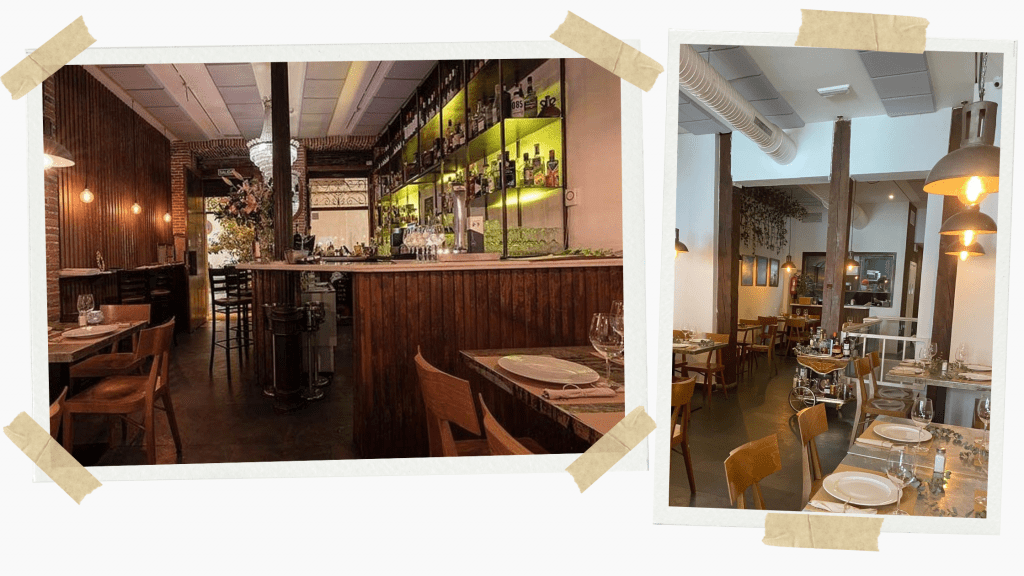
An intimate neighbourhood standout in La Latina known for well-executed contemporary Spanish dishes and a lively, authentic atmosphere. It’s very good quality at moderate prices. My favourite restaurant in Madrid. Perfect for a relaxed lunch or dinner after exploring the old city.
Taberna La Carmencita
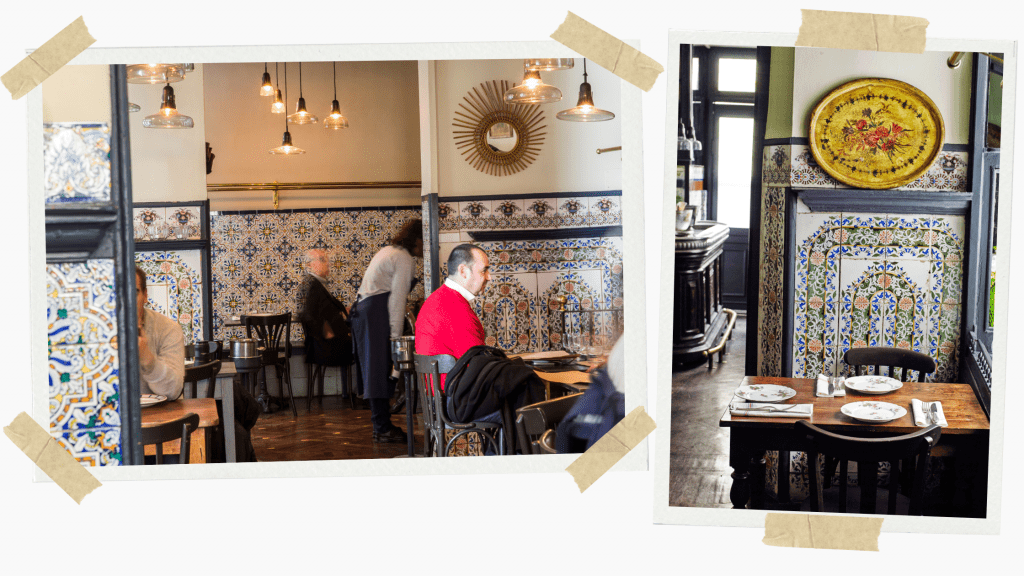
One of Madrid’s oldest taverns (since 1854), La Camencita serves classic, home-style Spanish cuisine with eco-sourced ingredients in a charming, historic setting.
Ochenta Grados Malasaña
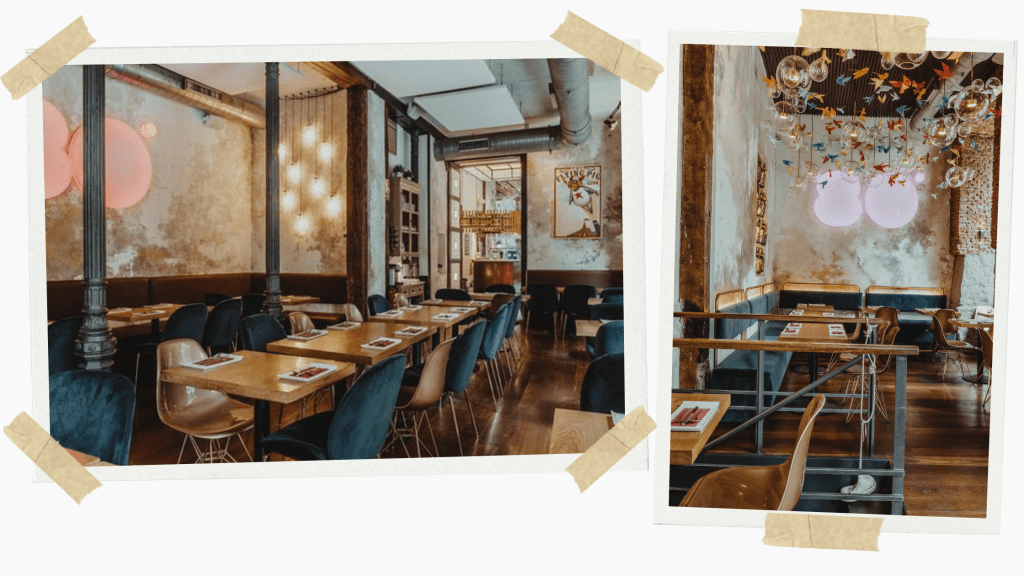
This popular Malasaña spot specialises in small, modern, creative tapas with global touches. It’s a lively, affordable choice well-suited to sharing or trying several different dishes. Carbonara croquettes, crab ravioli and a unique sangría are all typical choices.
Toga Restaurante
A well-loved spot blending Spanish ingredients with Latin American and Asian influences. The vibe is casual but sharp, and the food ranges from inventive pastas to intriguing grilled dishes.
Los Montes de Galicia
An extremely popular and highly rated classic Spanish spot in the Salamanca neighbourhood, beloved for its Galician seafood and excellent value.
Fismuler
A slightly more upmarket option, Fismuler is a stylish, modern Spanish restaurant in the Chamberí neighbourhood. Seasonal, ingredient-driven dishes served in a relaxed, design-forward space.
Events & Festivals in Madrid
Recurring Events & Fairs
El Rastro
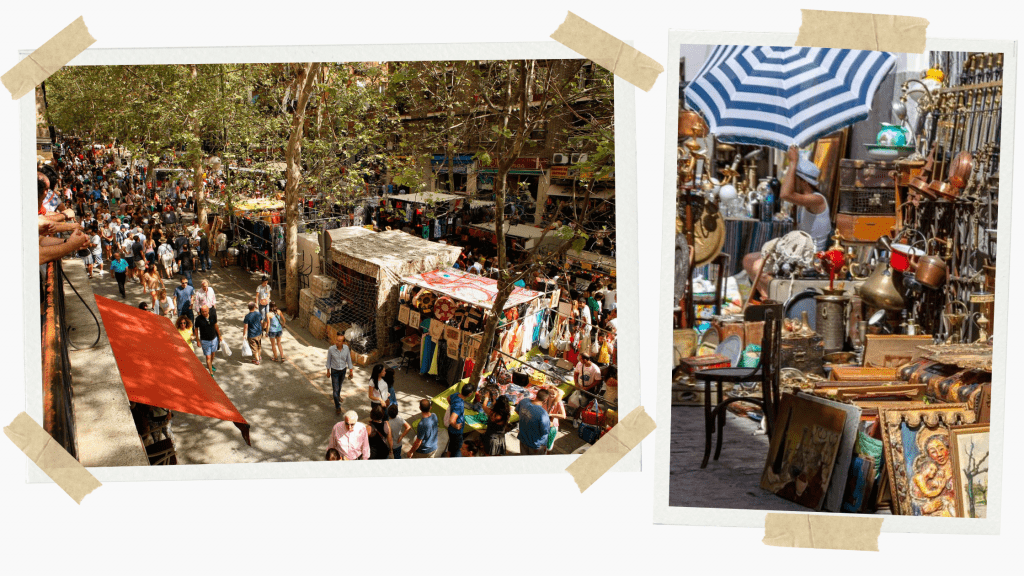
This sprawling flea market fills the streets of La Latina every Sunday, offering everything from antiques and vintage clothing to books, vinyl records, and quirky souvenirs.
The atmosphere is lively, with street performers, cafés spilling onto sidewalks, and locals mingling with curious visitors. It’s an iconic Madrid experience and a bit of a sensory overload of sound, smell, and colour.
Mercado de Los Motores
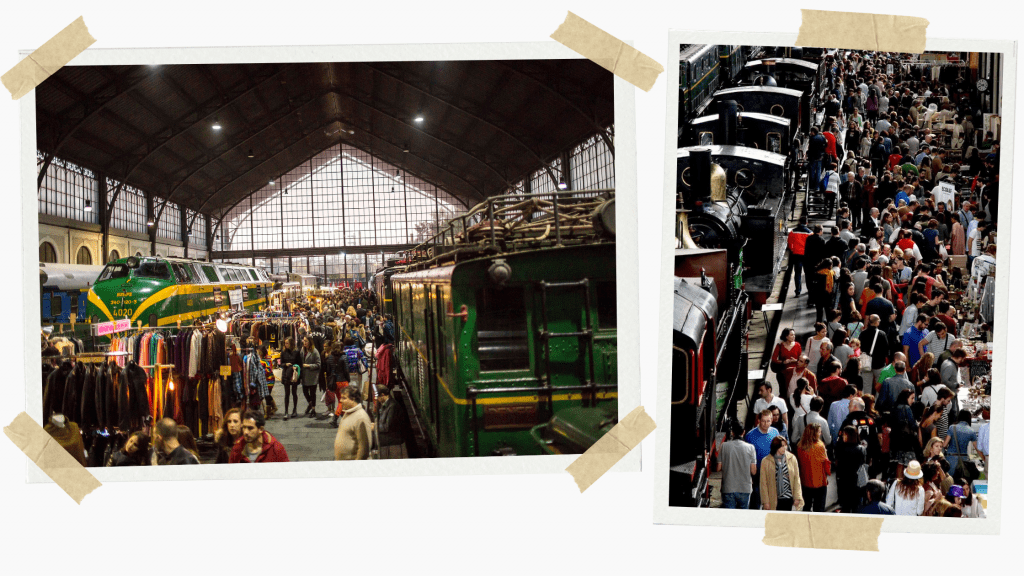
The Railway Museum (Museo del Ferrocarril) in Delicias hosts the Mercado de Motores on the second weekend of each month. With old locomotives separating stands, the setting is unique and charmingly nostalgic.
There’s so much to browse, buy, and taste. Inside stalls are brimming with antiques, crafts, fashion, vinyl, and collectables. Outside tables provide somewhere to kick back surrounded by gourmet food trucks, drinks and live music. It’s a perfect spot for treasure hunters, culture lovers, and anyone looking for a stylish, laid-back weekend experience in Madrid.
Mercado Productores
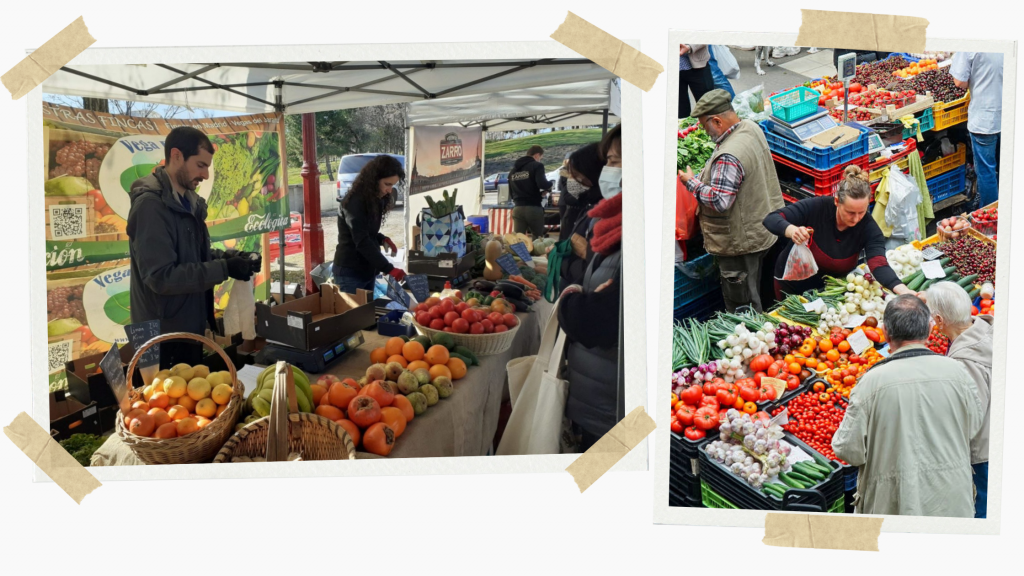
Less for socialising and more for finding top-tier produce, the Mercado Productores (Madrid Producers Market) takes place on the first Saturday of each month on Paseo de Puerta del Ángel near El Lago in the Casa de Campo. Here you can source local produce and artesanal goods more directly from Madrid growers.
Annual Events & Festivities
Cabalgata de Reyes (January)
On January 5th, Madrid’s magical Three Kings Parade, with floats and sweets thrown to children, marks the highlight of Christmas in Spain.
Semana Santa/Holy Week (March/April)
From Palm Sunday to Easter Sunday, processions take place through the historic centre with religious images, bands, and a solemn atmosphere.
Tamborrada (April)
On Easter Monday, a drumming festival fills Plaza Mayor.
Dos de Mayo (May)
On May 2nd, celebrations in Malasaña’s Plaza del Dos de Mayo commemorate Madrid’s 1808 uprising against French troops.
San Isidro Festival (May)
The city’s patron saint fiesta takes place around May 15th, with festivals and concerts taking place across the city, particularly in the Pradera de San Isidro and Las Vistillas.
Madrid Pride (June/July)
One of Europe’s biggest Pride celebrations takes place in late June or early July around the Chueca area.
Mad Cool Festival (July)
The city’s premier international music festival takes place in mid-July, drawing famed rock, pop, and electronic music artists to Madrid.
Veranos de la Villa (July-August)
A summer programme of concerts, theatre, film screenings, and cultural events across the city.
Cine de Verano (July-August)
Outdoor film screenings are shown at open-air cinemas across Madrid’s parks, including Parque de la Bombilla and Matadero. Often paired with food stalls and live entertainment.
Batalla Naval de Vallecas (July)
A playful neighbourhood water fight or “naval battle” takes place in Vallecas around 16-20 July, where locals soak each other with buckets and hoses.
San Cayetano (August)
Streets in Lavapiés are dressed with paper garlands while music and dancing take place around August 7th.
San Lorenzo (August)
A few days later, on August 10th, the partying resumes in Lavapiés/Embajadores with food stalls and more music.
La Paloma Festival (August)
The most famous summer fiesta, with fireworks, tapas, and dancing until dawn in La Latina on August 15th.
Fiestas de la Virgen de la Almudena (September)
Religious celebrations for one of Madrid’s patron saints take place in early September.
Transhumance Festival (October)
Hundreds of sheep and shepherds parade through central Madrid (Cibeles and Gran Vía), following ancient migration routes. Usually takes place in late October.
Tapapiés (October)
Multicultural tapas festival in Lavapiés with live music, dance, and local gastronomy. Over 100 bars in the neighbourhood sell a drink and a tapa for a discounted deal (in recent years it has been €3.50).
Festival de Otoño (October-November)
The Autumn Festival sees prestigious international theatre, dance, and music events across the city.
All Saints’ Day (November)
Cemeteries and bakeries fill with tradition, including huesos de santo marzipan sweets starting on the first day of November.
Christmas Markets (December)
Christmas markets can be found around the city, with the biggest in Plaza Mayor.
Nochevieja (December)
Thousands gather in Puerta del Sol to eat 12 grapes at the 12 chimes of midnight, a tradition for good luck.
A Perfect Day in Madrid
- Have breakfast at Caravan Cafe. You can see their menu in English here. Everything is great from here, but if you’re hungry, I really recommend the St Louis Chicken Sandwich.
- Once you’re full of fuel to explore, I would head to Retiro Park and check any museums that you haven’t seen either before or after. Reina Sofía Museum is a short walk from Caravan Cafe, while The Prado Museum and The Thyssen-Bornemisza Museum are both conveniently close to Retiro Park, as are the Botanic Gardens.
- Stop for a drink and snack at La Galería de Florida Park; it’s a lovely spot in the park to rest your feet with a drink.
- Head back into the centre to see Plaza Mayor if you haven’t seen it already, either on foot, by metro, or grab a taxi. Walk to the nearby San Miguel Market to check it out, too.
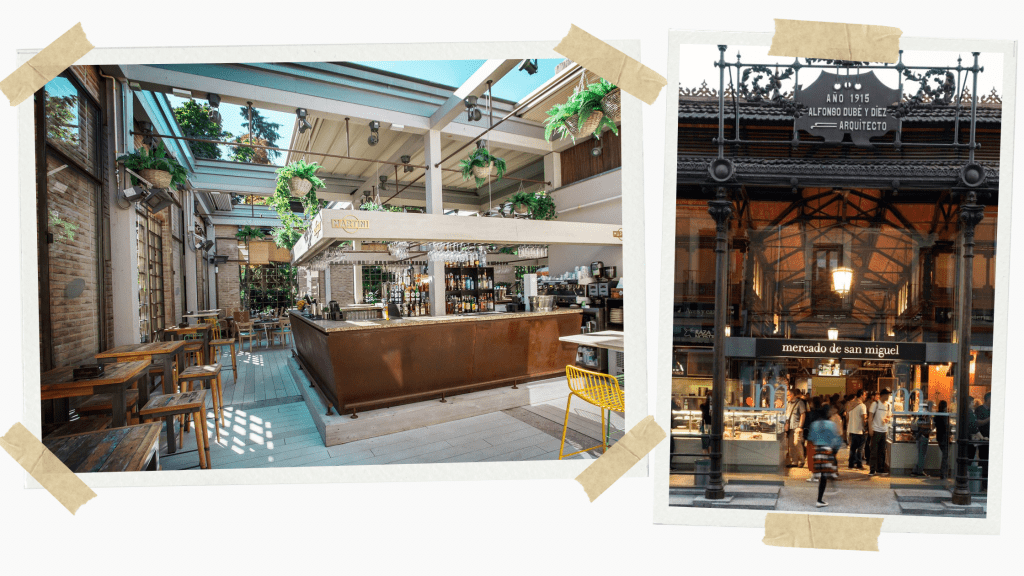
- After all that walking, it could be good to treat yourself to a Hammam Al Ándalus experience. Really close to Plaza Mayor, these Arabic baths offer steam rooms, massage experiences, and hot, warm and cold water pools inspired by the historic bathing culture of Muslim Spain. (Needs to be booked in advance).
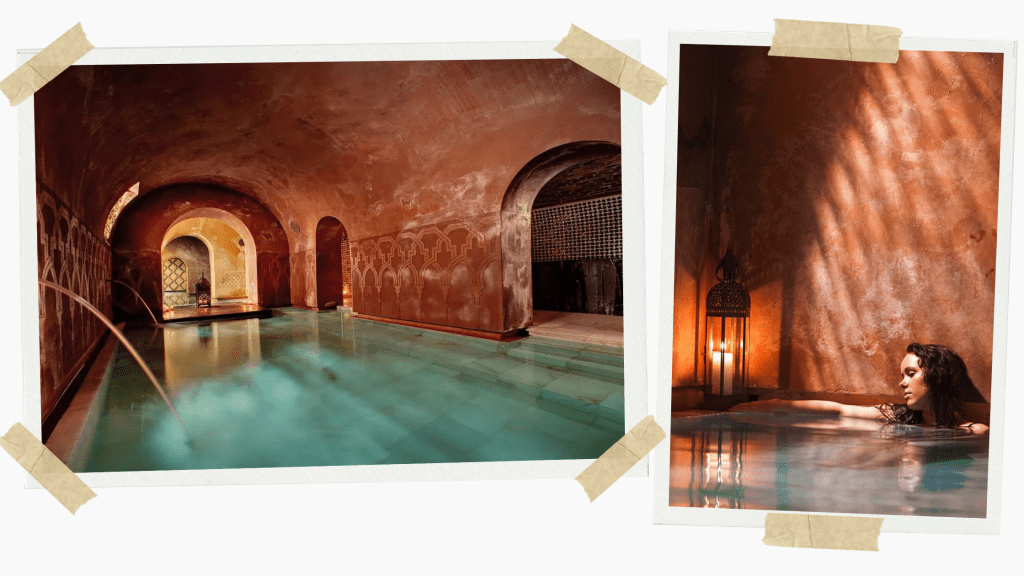
- After that, head over to Lamiak on Cava Baja and order a couple of things from the tapas/pintxos menu. You can find their menu in English here.
- Next door is Pez Tortilla, and over the road is La Buha. Both are great for tortilla. So save some space to try one of these.
- Very close by, you’ll find El Viajero, a hidden leafy rooftop. Makes for a great place for a drink or two.
- Now you’re full and a few drinks in, it might be time to take a little breather back at your base. Otherwise, I’d recommend carrying through to dinner by either heading down for a vermut at Taberna La Concha, situated down the road on Cava Baja. Or checking out a couple of wine bars in the area, such as Vinícola Mentridana and Corchito.
- Have dinner at Ástor (needs to be booked in advance), you can see their menu in English here. Then wrap the night up with a couple of post-dinner drinks at Sala Equis before bed.
Day Trips From Madrid
Cuenca
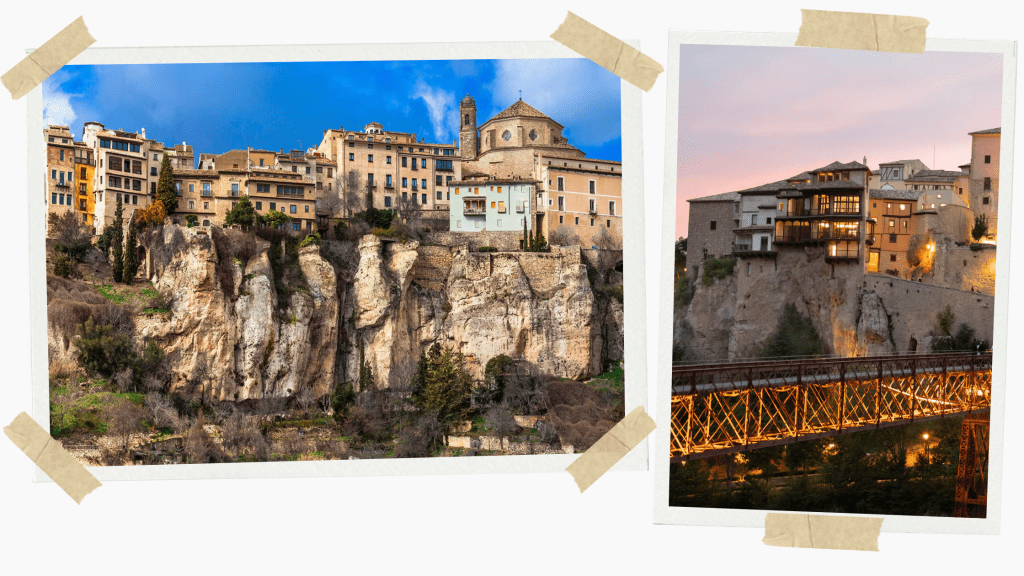
Famous for its dramatic cliffs and hanging houses (Casas Colgadas), Cuenca is a picturesque hilltop city with a beautiful old town, cosy bars, and a strong art scene, including the Museum of Abstract Art. The views over the gorges are truly unforgettable, especially from the San Pablo Bridge if you can brave it!
- How to get there: High-speed trains from Madrid to Cuenca Fernando Zóbel. With AVE, OUIGO, or Iryo takes 1 hour and usually costs anywhere from €7.50 to €20 one way, depending on time. Alternatively, the bus from Estación Sur de Autobuses (Méndez Álvaro) takes 2h 30m but is usually cheaper.
Renfe information (Madrid, Chamartín or Atocha to Cuenca Fernando Zóbel)
Segovia
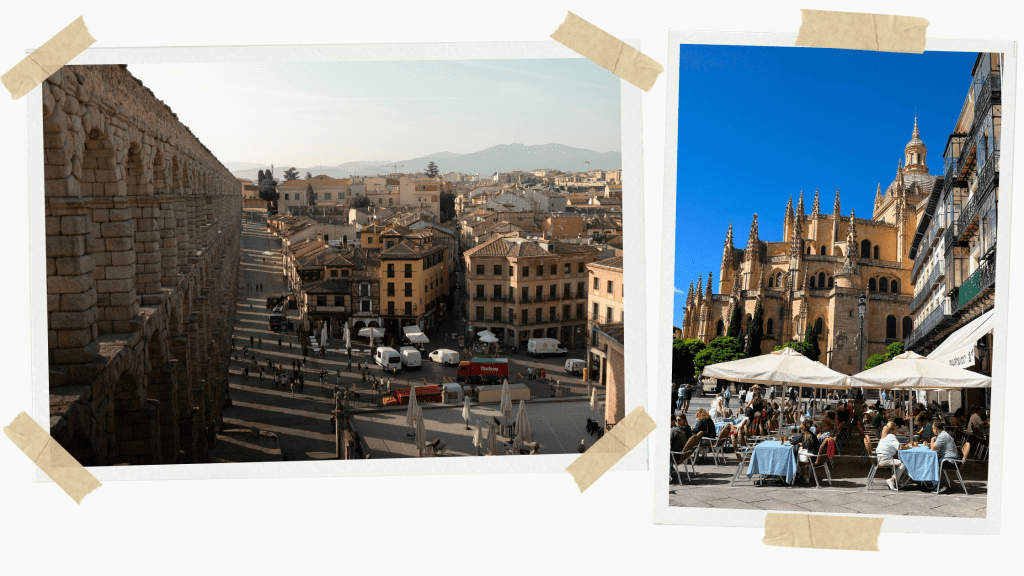
A UNESCO World Heritage city, Segovia is known for its stunning Roman aqueduct, fairy-tale Alcázar castle, and magnificent Gothic cathedral.
- How to get there: The high-speed AVANT train from Madrid Chamartín to Segovia takes 28 minutes and costs €8 and up, usually €12-15, or again the bus from Moncloa is cheaper but less frequent and takes 1 hour 20 minutes. With the latter, you end up right in the centre of Segovia while the train takes you just outside so you need to catch a short shuttle at the other end.
Renfe information (Madrid, Chamartín to Segovia Guiomar)
Toledo
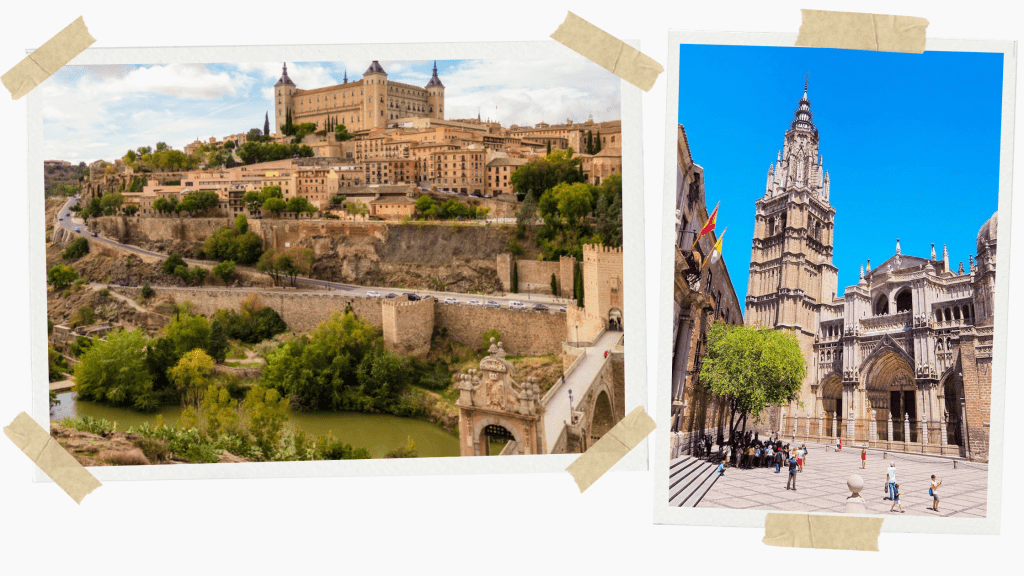
Toledo is a medieval city of narrow alleys and historic layers perched above the Tagus River, where Christian, Muslim, and Jewish heritage intertwine. Landmarks like the Toledo Cathedral and El Greco Museum are definitely worth a visit.
- How to get there: Renfe’s AVANT high-speed train from Atocha to Toledo takes around 30-35 minutes and usually costs around €13 each way but varies depending on day, time etc. There is also a bus from Plaza Elíptica which takes 1 hour and costs just €6.
Renfe information (Madrid, Atocha to Toledo)
Patones de Arriba
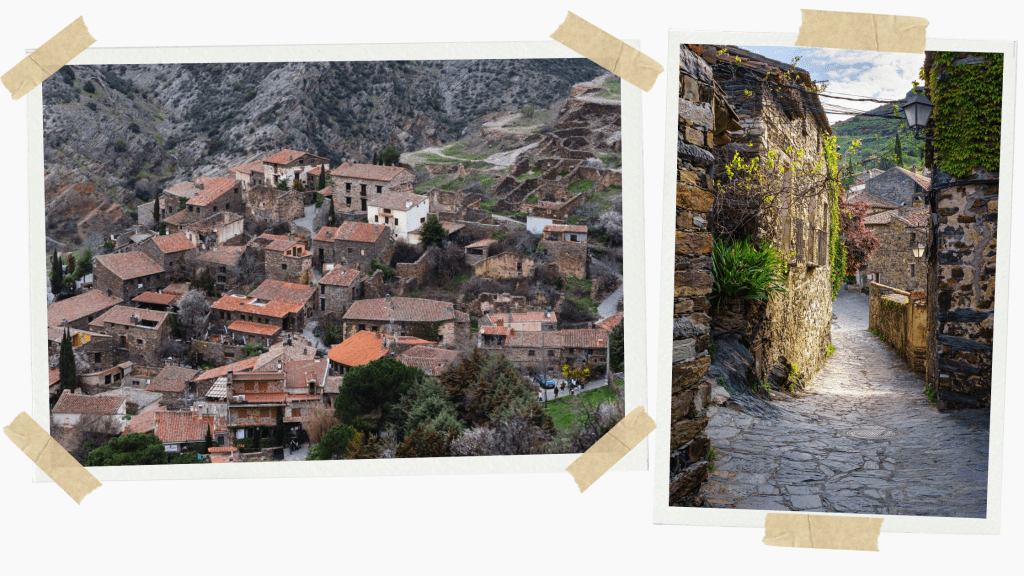
A picturesque mountain village in the Sierra Norte known for its slate architecture, narrow winding streets, and peaceful atmosphere. It’s fairytale-like most of the year and great to do short hikes around it and then enjoy its terraces afterwards.
- How to get there: 197 bus from Plaza de Castilla to Patones and then a 30-minute walk up to Patones de Arriba. Takes 1 hour 30 minutes roughly, the bus costs around €5 but you’ll need cash for the bus ticket.
Bus 197 Schedule (Madrid, Plaza Castilla to Patones)
Chinchón
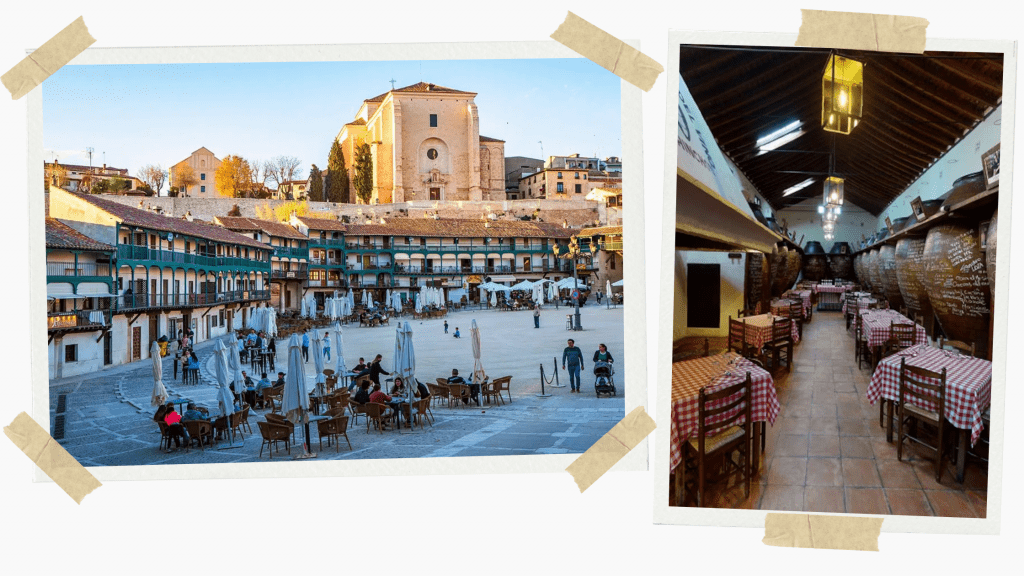
Famous for its unique plaza, Chinchón offers a mix of medieval charm, historic buildings and culinary delights just 45 minutes from Madrid. A top tip is to have lunch or dinner in Mesón Cuevas del Vino before or after enjoying a few glasses of wine in its cave bars below.
- How to get there: 337 bus from Conde Casal. Takes around 50 minutes and costs around €5, you’ll need cash for the bus ticket.
Bus 337 Schedule (Madrid, Avenida Mediterráneo to Chinchón)
Buitrago del Lozoya
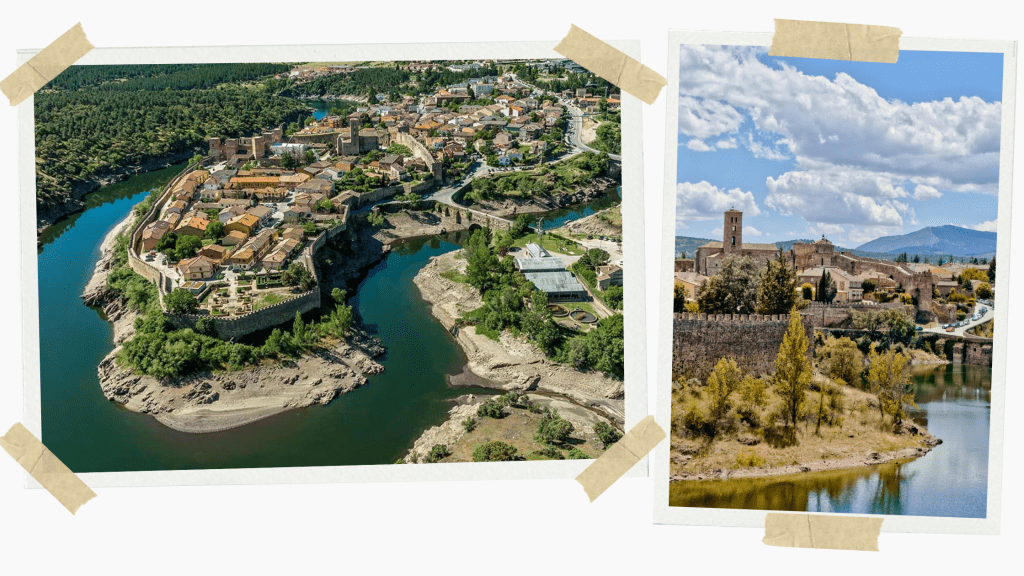
Buitrago del Lozoya is one of the best medieval escapes from Madrid: compact, atmospheric, and dramatically set on a bend of the Lozoya River, about an hour north of the capital.
Fully enclosed by 11th–15th century medieval walls and surrounded by mountains, it feels far more remote than it actually is. Inside the walls, everything is walkable in under 30 minutes, making it an ideal half-day or full-day trip for history, walking, food, and gentle nature, and it pairs beautifully with the northern Sierra landscapes.
- How to get there: It is far better to go by car, driving 1 hour on the A-1 north towards Burgos. However, the 191 bus operated by ALSA goes from Plaza de Castilla bus station and takes about 1 hr 30.
Bus 191 Schedule (Madrid, Plaza de Castilla to Buitrago del Lozoya)
*Make sure you have a reserved ALSA ticket back if you’re not staying the night.
Hiking & Walking Routes Near Madrid
As Europe’s highest capital (aside from Andorra’s Andorra la Vela), Madrid has a good range of mountains, forests, and rivers within easy reach.
The Sierra de Guadarrama National Park creates a natural northern boundary of the city, rising quickly into pine forests and high granite peaks.
To the northeast of Madrid, the Sierra de Ayllón straddles the border with Castilla-La Mancha and Castilla y León. To the Southwest of Madrid lie the Sierra de Gredos, offering some of central Spain’s most rugged terrain.
Whether you’re looking for a gentle riverside walk, a shaded forest hike in summer, or a challenging summit with wide-open views, Madrid is one of Europe’s few major capitals where genuinely good hiking starts less than an hour from the city centre. It is handy to have a car, but many of these can be reached by bus or train from Madrid.
Hiking from Manzanares el Real
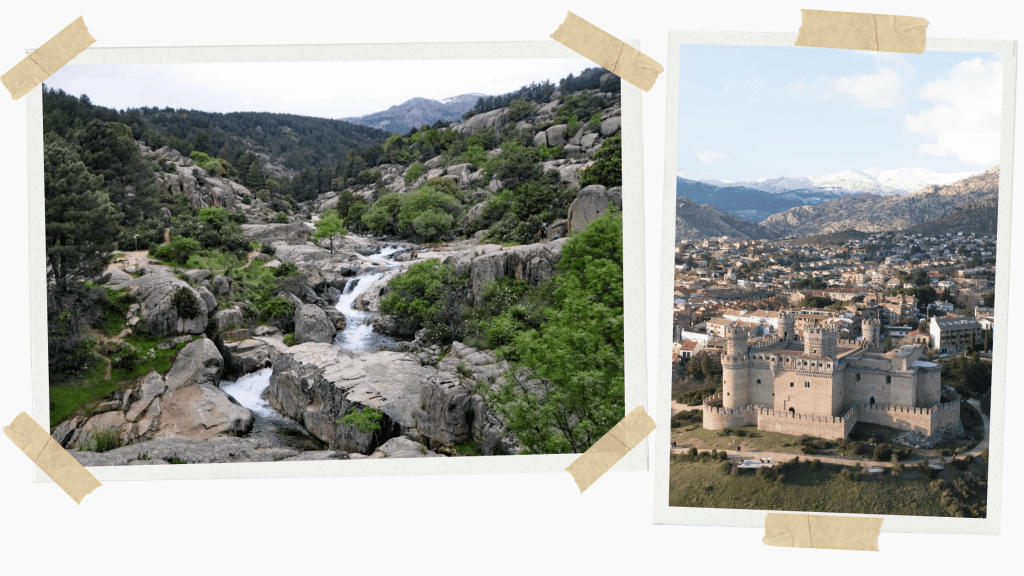
Difficulty: Moderate
Best known for its well-preserved medieval castle, Manzanares el Real sits on the edge of La Pedriza in the Sierra de Guadarrama National Park, one of Spain’s most striking granite landscapes. Rounded boulders, narrow gorges, natural pools, and wide-open views dominate the terrain, making it one of the most rewarding hiking areas near Madrid.
Routes can be kept short and scenic or extended deep into the park. La Charca Verde is a popular destination thanks to its emerald pools and cooling water.
- How to get there: 724 bus from Plaza Castilla to Manzanares. Takes 45 minutes, comes hourly, costs around €5, and you’ll need cash for the bus ticket. Bus 724 Schedule (Madrid, Plaza Castilla ↔ Manzanares el Real)
- Suggested route: For a good hiking route, walk from the bus stop to La Pedriza up via La Tortuga and head to the general area of La Charca Verde and head back the same way or via a loop back to where you entered La Pedriza. There are plenty of places in Manzanares el Real to stop for a well-deserved drink afterwards.
- Distance: 10-14 km round trip (route-dependent)
- Best season: Spring and autumn
- Weather notes: It is very hot in summer with limited shade, and the granite rocks can be very slippery after rain. Hence, spring and autumn are the best times to go.
Important tip! Summer weekends can be busy. Start early and bring sun protection. Plenty of bars and terraces await you back in town.
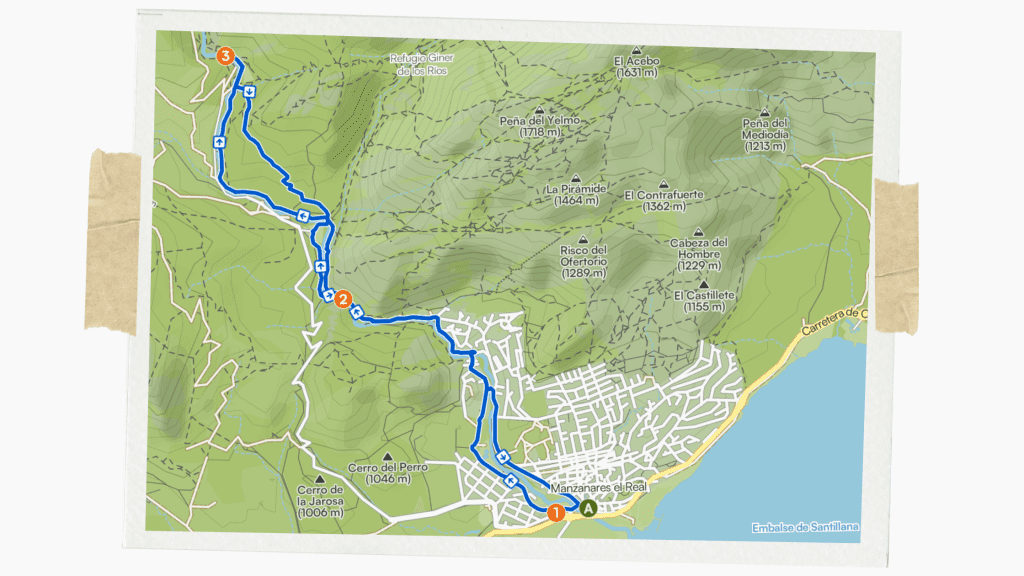
Load the route on Komoot here.
Hiking from Cercedilla
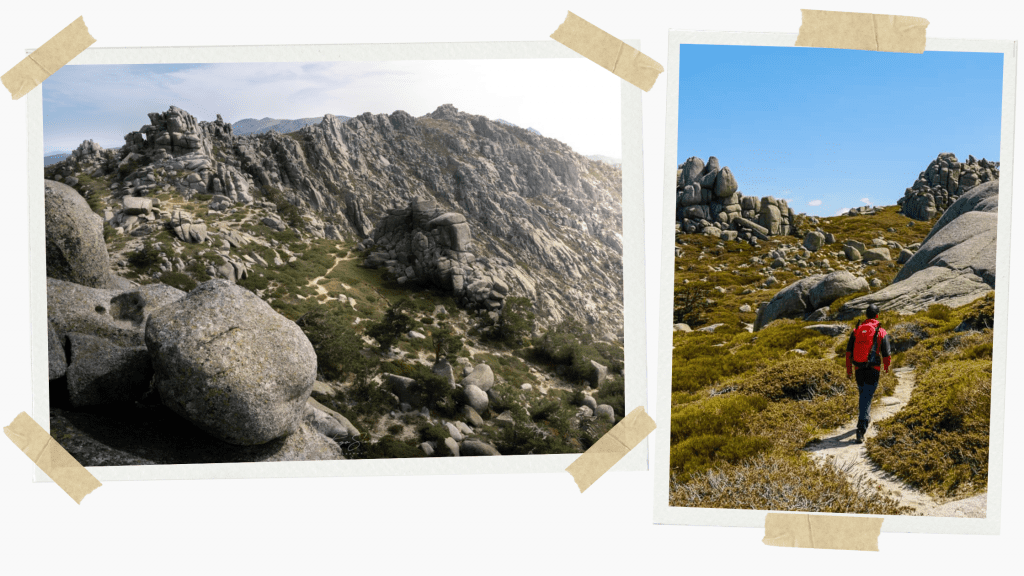
Difficulty: Moderate to moderately hard
Cercedilla is a charming mountain village in the Sierra de Guadarrama and one of the best hiking bases near Madrid, thanks to its direct train connection and wide range of trails. Pine forests surround the town, and routes quickly lead into higher, more open terrain.
The most iconic hike from Cercedilla is Siete Picos, a classic mountain route that climbs steadily through forest before reaching a series of exposed granite peaks. From the summits, you’re rewarded with wide panoramic views across the Madrid mountains and, on clear days, far beyond.
- How to get there: Take the Cercanías Renfe C-8 train from Chamartín to Cercedilla, which comes every hour and takes about 1 hour and 10 minutes. It costs €5-€8, you can buy tickets online, via the Renfe app or from machines at the station. Cercanías Renfe C-8 train schedule (Madrid, Chamartín ↔ Cercedilla)
- Suggested route: From Cercedilla, follow signs toward Siete Picos, completing the loop via the forested ascent and exposed ridge before descending back toward town.
- Distance: 11-14 km loop (route-dependent)
- Best season: Spring through autumn
- Weather notes: Windy and exposed on the peaks; snow and ice in winter
Important tip! This route is very exposed near the summits, so avoid attempting it on very windy or stormy days.
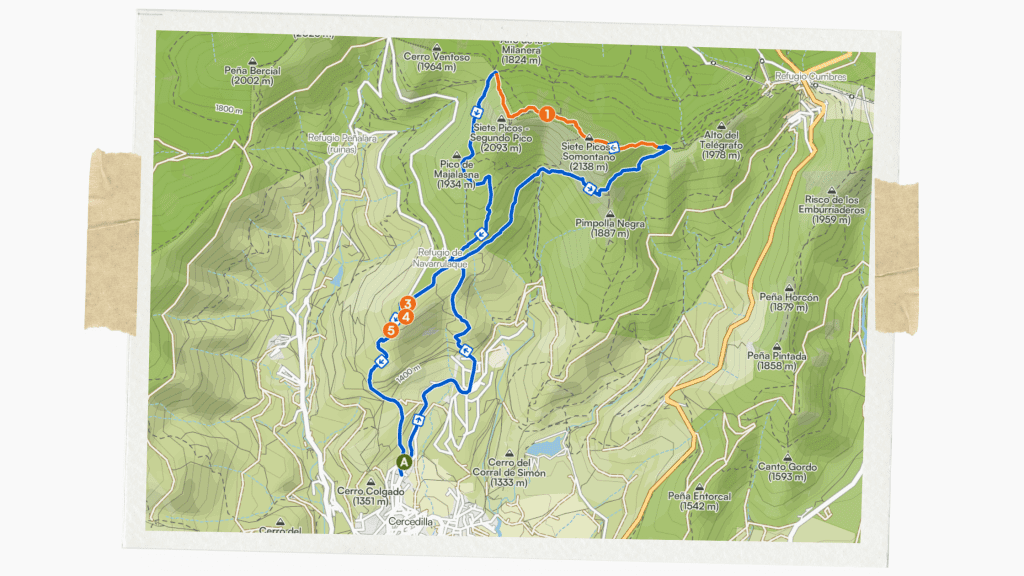
Load the route on Komoot here.
Hiking from Navacerrada
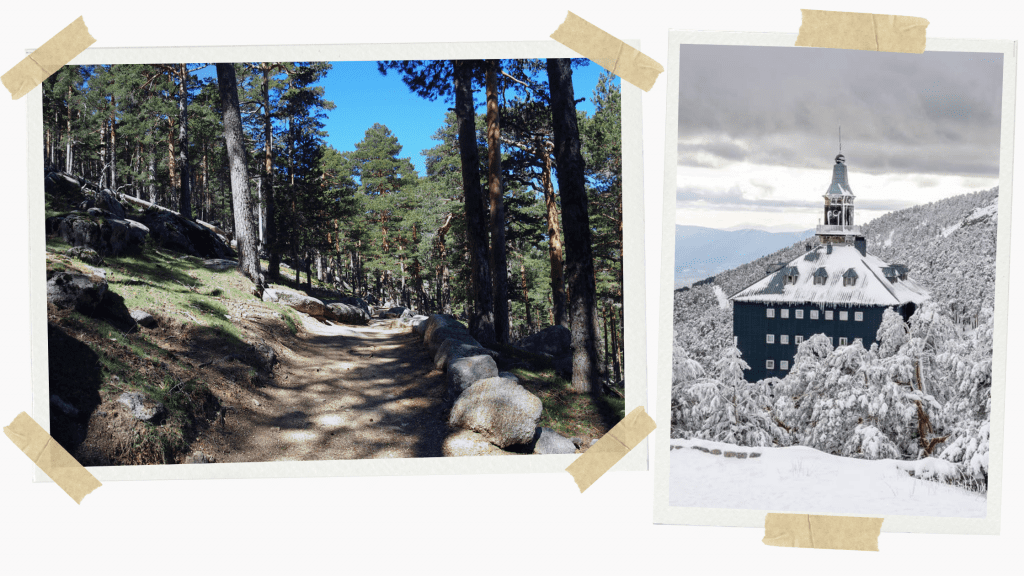
Difficulty: Moderate/hard (two routes)
Navacerrada is a high-mountain town in the Sierra de Guadarrama, best known for its ski resort in winter. Outside of snow season, it becomes one of the most accessible starting points for mountain hikes near Madrid. While the town itself is pleasant for drinks and food, the real draw is Puerto de Navacerrada, the mountain pass above it, where trails begin immediately in pine forest and open highland terrain.
One of the most classic routes here is the Camino Schmidt, a historic trail that traverses forested slopes and gentle ridges between Navacerrada and Cercedilla. Thanks to its altitude, the area feels noticeably cooler than lower hikes around Madrid and offers more of an alpine atmosphere.
- How to get there: Take the 691 bus from Moncloa to the Estación de Esquí Puerto de Navacerrada. Takes just under 1 hour, runs hourly and costs around €5 in cash. Bus 691 Schedule (Madrid, Moncloa ↔ Puerto de Navacerrada)
- Suggested route: From Puerto de Navacerrada, follow the Camino Schmidt toward Cercedilla. You can either loop back to Puerto de Navacerrada and take the bus home or continue to Cercedilla and take the train back to Madrid from there.
- Distance: 13 km one way (Navacerrada ↔ Cercedilla)
- Best season: Late spring through early autumn
- Weather notes: Weather can change quickly at altitude, snow and ice are common outside of summer
Important tip! Even on warm days in Madrid, temperatures can be much cooler here. Bring layers and check the forecast before you go.
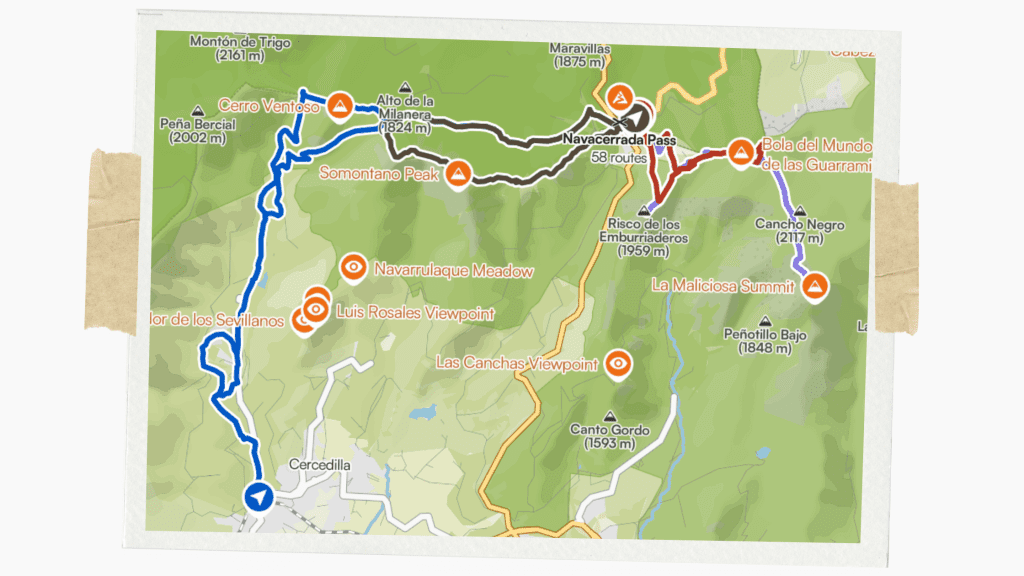
Load the route looping back to Navacerrada here (moderate).
Load the route from Navacerrada to Cercedilla here, but note that this is reversed (hard).
Cascadas del Hervidero
Difficulty: Easy
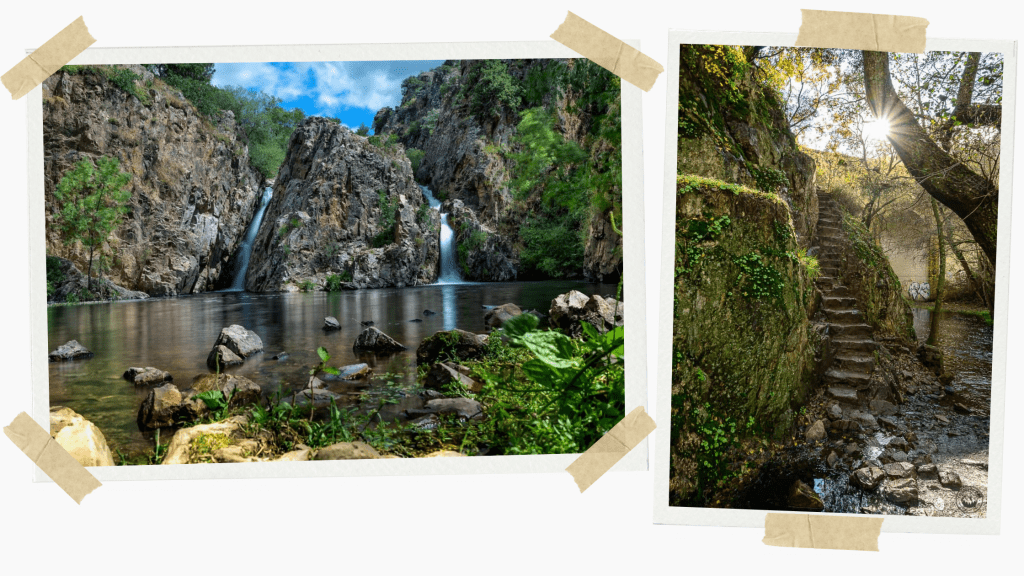
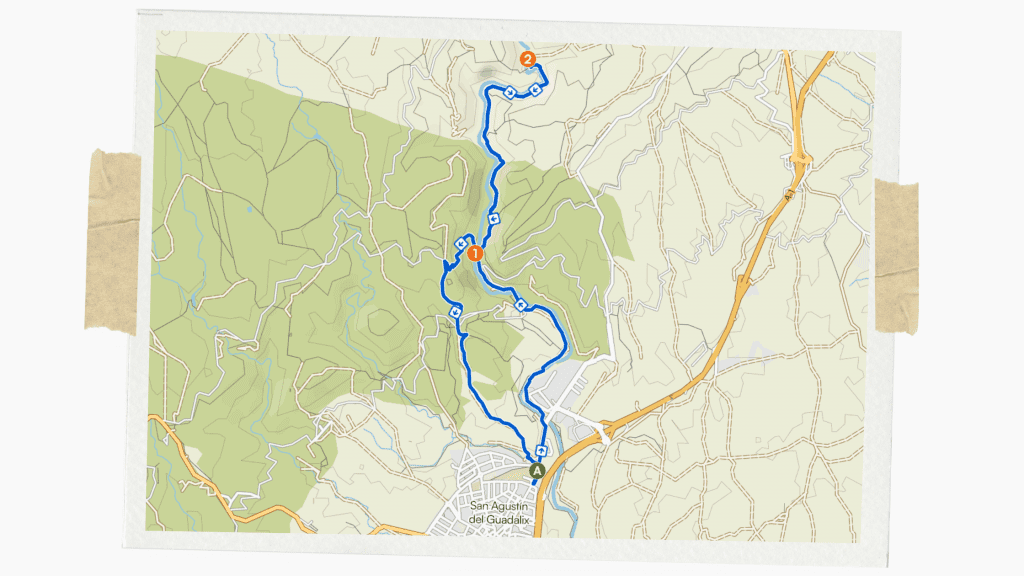
Cascadas del Hervidero is a hidden natural gem in the Sierra Norte de Madrid, near the village of San Agustín del Guadalix. It’s an ideal option if you want a nature escape without heading deep into the mountains. The walk follows the Guadalix River beneath shaded trees before reaching a beautiful two-tiered waterfall tucked into a narrow gorge.
After descending a series of stone steps, you’ll find crystal-clear pools framed by mossy rocks and tall trees, offering a perfect place to rest and cool off. On hot days, the area attracts plenty of visitors, but there are quieter spots if you explore slightly above the falls.
- How to get there: Take bus 191 or 193 from the underground Intercambiador de Plaza de Castilla to San Agustín del Guadalix and then look for signs to the Ruta de las Cascadas and follow the river. Bus 191 Schedule (Madrid, Plaza de Castilla ↔ San Agustín del Guadalix)
- Suggested route: Follow the riverside path from town to the waterfalls and return the same way.
- Distance: 4-5 km round trip
- Best season: Spring and early summer
- Weather notes: Best after rainfall, but be extra careful as the stone steps can be slippery
Important tip! On busy days, climb slightly up and around the left side of the waterfalls to find quieter spots to sit and relax.
Load the route on Komoot here.
Pantano de San Juan
Difficulty: Easy
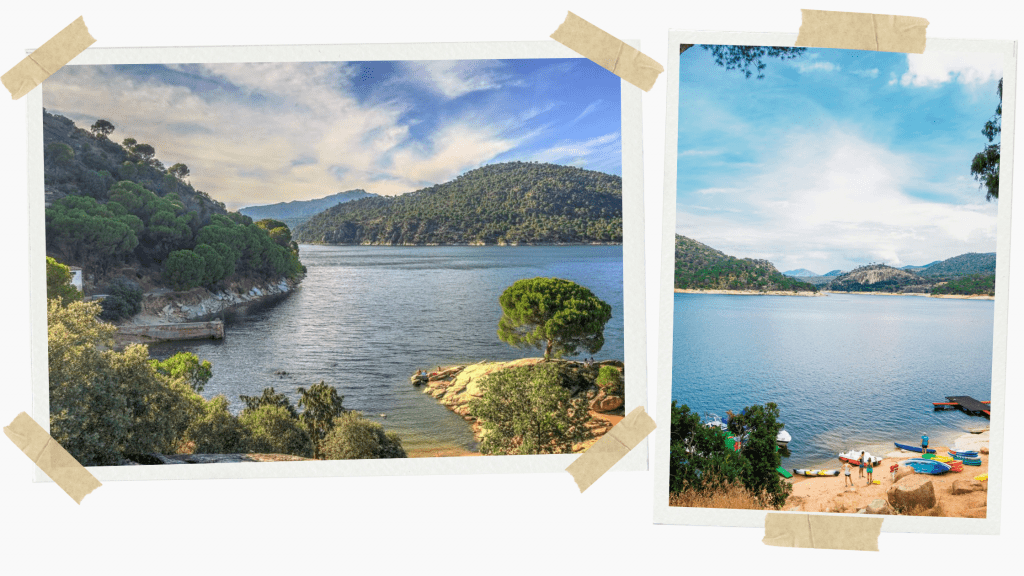
Pantano de San Juan is a large reservoir west of Madrid and one of the most popular summer escapes from the city, offering swimming, sunbathing, kayaking, and boating. Often called “Madrid’s beach,” it’s one of the few large bodies of water in the region where swimming is officially allowed. Beyond the water, it’s also a pleasant place for relaxed walking, with paths that follow the shoreline and shaded stretches through pine forest.
This isn’t a mountain hike, but it’s perfect for hot days when higher routes feel too exposed. Walk as much or as little as you like, then cool off with a swim or settle into one of the lakeside bars before heading back to Madrid.
- How to get there: 551 bus from Príncipe Pío to Martín de Valdeiglesia, but get off at Pelayos de la Presa. Takes around 1 hour and 30 minutes, runs every 10-15 minutes, costs around €6, and requires cash. Bus 551 Schedule (Madrid, Príncipe Pío ↔ Martín de Valdeiglesia)
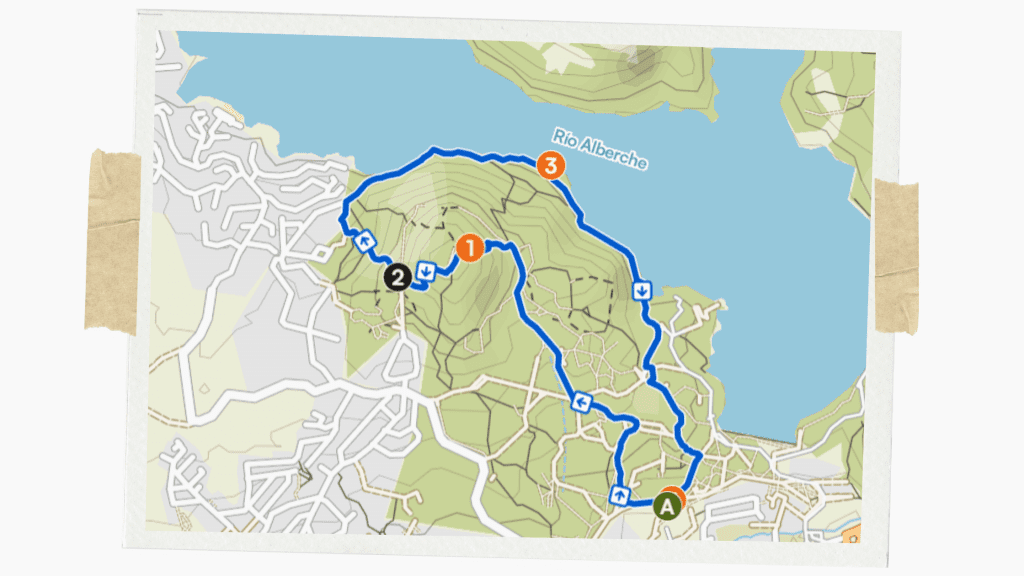
- Suggested route: Walk sections of the shoreline paths near the main beaches, combining walking with swimming or time by the water.
- Distance: Flexible with 5-12 km walking options
- Best season: Spring and Summer
- Weather notes: Very busy on hot weekends, limited shade at midday
Important tip! Go early in the day or on weekdays in summer to avoid crowds.
Load the route on Komoot here.
Cycling The Anillo Verde
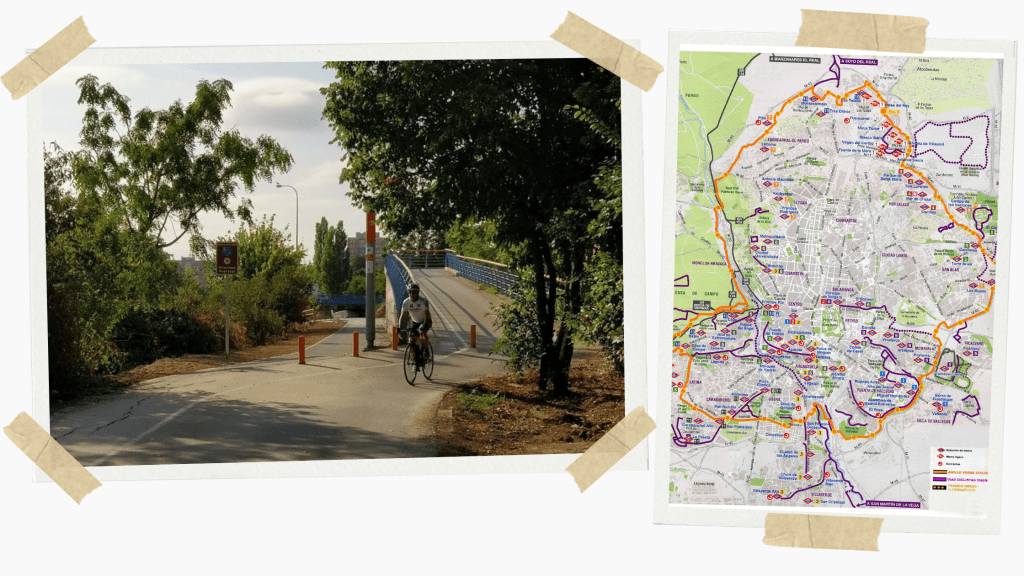
The Anillo Verde (Green Ring) is a roughly 65-70 km (40+ mile) loop that encircles Madrid, offering cyclists and pedestrians a scenic, mostly flat route through parks, residential areas, and green corridors.
Designed to connect the city’s outskirts while promoting eco-friendly mobility, the path is well-paved and mostly separate from road traffic. It’s a great way to explore lesser-seen parts of Madrid while enjoying nature, urban views, and rest stops along the way.
The route can be loaded on Komoot here.
You can begin anywhere on the loop and do it either clockwise or counter-clockwise, but common starting points are along the Madrid Río around Casa de Campo.
A good place to start, especially if you’re renting, is from Príncipe Pío. You can rent bikes from My Bike Rio.