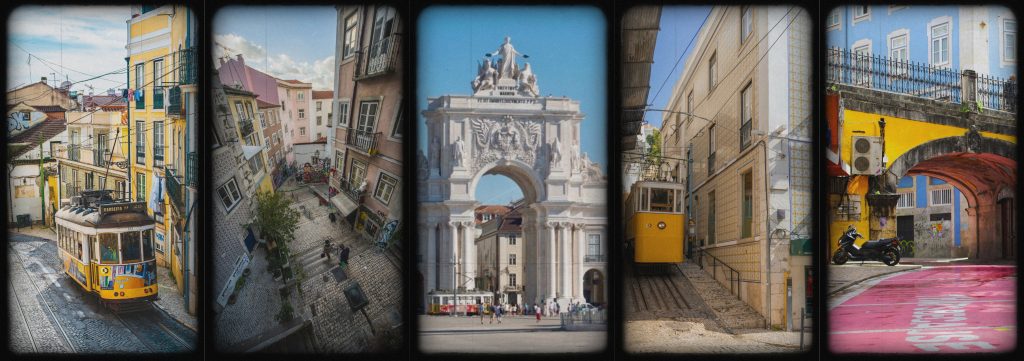
There are few capitals as pleasing on the eye as Lisbon. Colourful tiled facades make you want to photograph every corner, yellow trams rattle past disappearing round narrow corners, and its hilly nature offers views over the Tagus River, blessing the city with a sense of openness and light. It’s like stepping into an eccentric artist’s effusive sketchings.
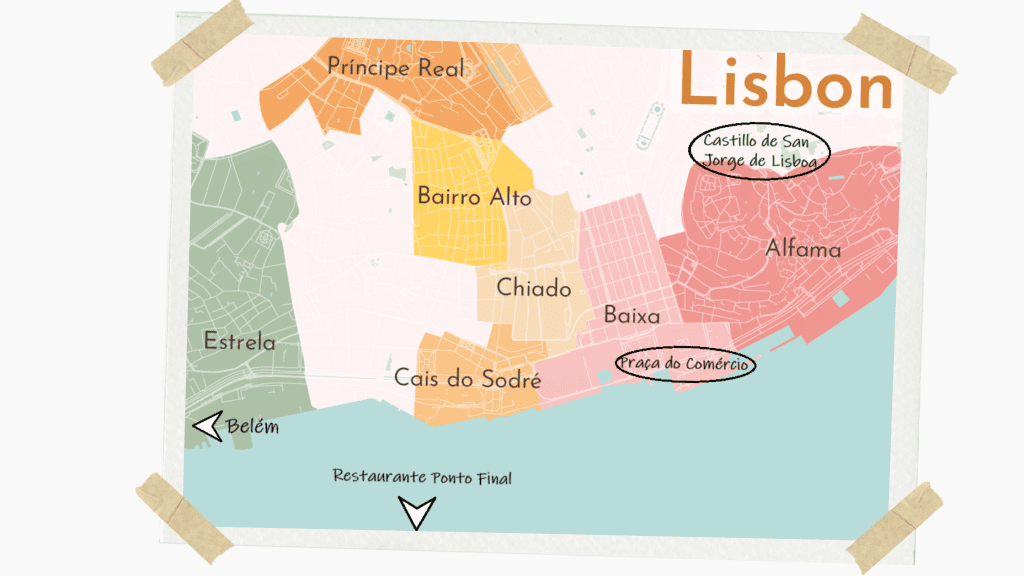
These are some great key neighbourhoods to explore and some typical landmarks to see. I’ll go into these in a little more detail before diving into some of my favourite lesser-known spots.
Neighbourhoods & Landmarks
Alfama is the city’s oldest neighbourhood, a tangle of steep streets that survived the 1755 earthquake and still feels deeply lived-in, with laundry lines, small taverns, and occasional bursts of fado music drifting through the alleys. Above it rises the São Jorge Castle.
Downhill, Baixa represents Lisbon’s rational, neoclassical side. Rebuilt after the earthquake, its wide streets and grand squares, especially Praça do Comércio, open directly onto the river, a big contrast to the city’s hillier quarters.
Nearby, the Chiado neighbourhood blends elegance and culture, long associated with writers, cafés, theatres, and bookshops, and remains one of the most pleasant areas to stroll between sights.
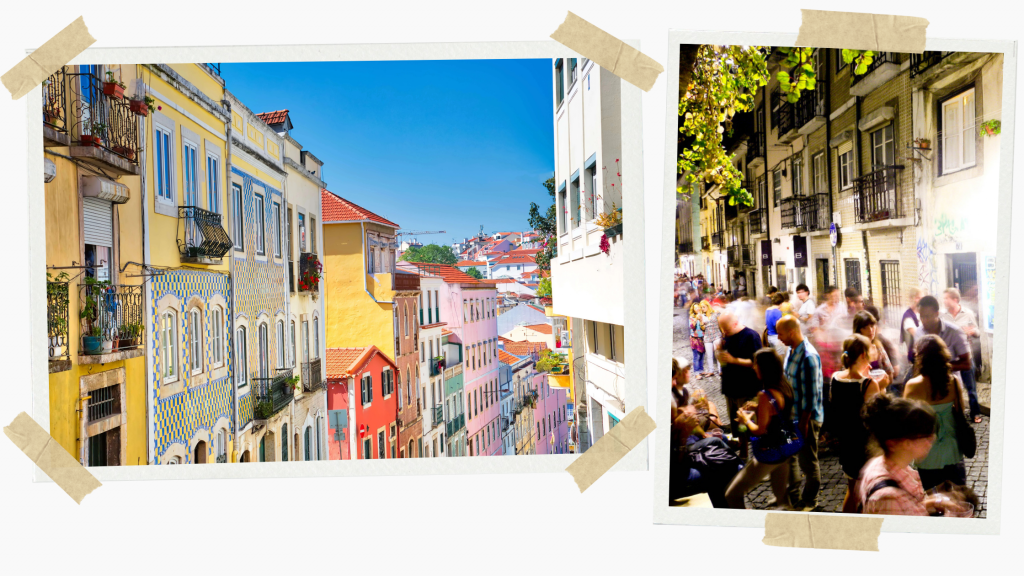
Just uphill from Chiado, Bairro Alto shows a different side of Lisbon. Quiet by day, by night it transforms into one of Lisbon’s liveliest areas, filled with bars, music, and late-night conversation.
Down at the river’s edge, Cais do Sodré acts as a gateway between historic Lisbon and the Tagus. Once a rough-and-ready port area, it’s now a lively mix of transport hub, nightlife district, and riverside promenade.
Pink Street, one of Lisbon’s most recognisable nightlife spots, can be found in Cais do Sodré. Empty by day this bright pink pavement fills with people hopping between bars and clubs in the evening. It’s lively, a little chaotic, and undeniably touristy, but fun if you come with the right expectations.
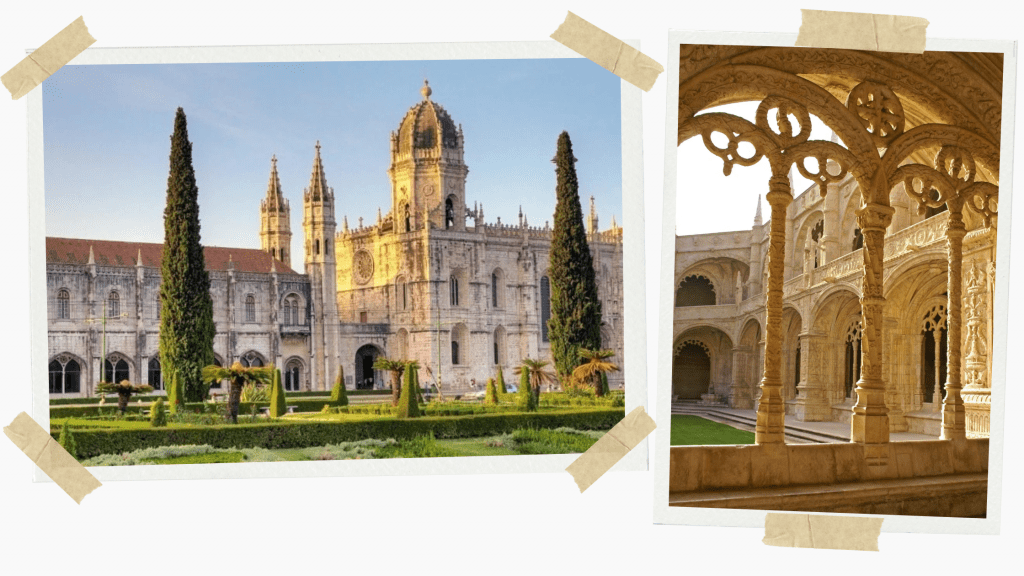
To the west, Belém reflects Portugal’s Age of Discoveries, featuring the Jerónimos Monastery and the Belém Tower standing as a ceremonial gateway to the city.
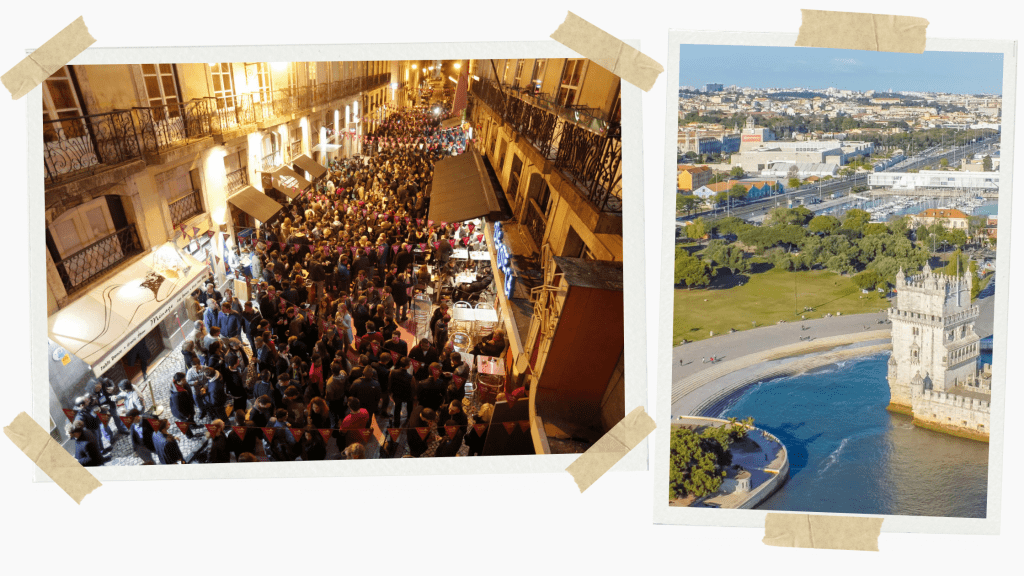
Praça do Comércio
Praça do Comércio is Lisbon’s grandest square and its symbolic front door to the city. Opening directly onto the Tagus River, it was once the site of the royal palace before being completely rebuilt after the 1755 earthquake.
Today, the square’s sweeping arcades, yellow façades, and central statue of King José I create a sense of scale and openness that contrasts with the city’s narrow streets. It’s a natural gathering point, ideal for strolling, and beginning your day exploring Lisbon here.
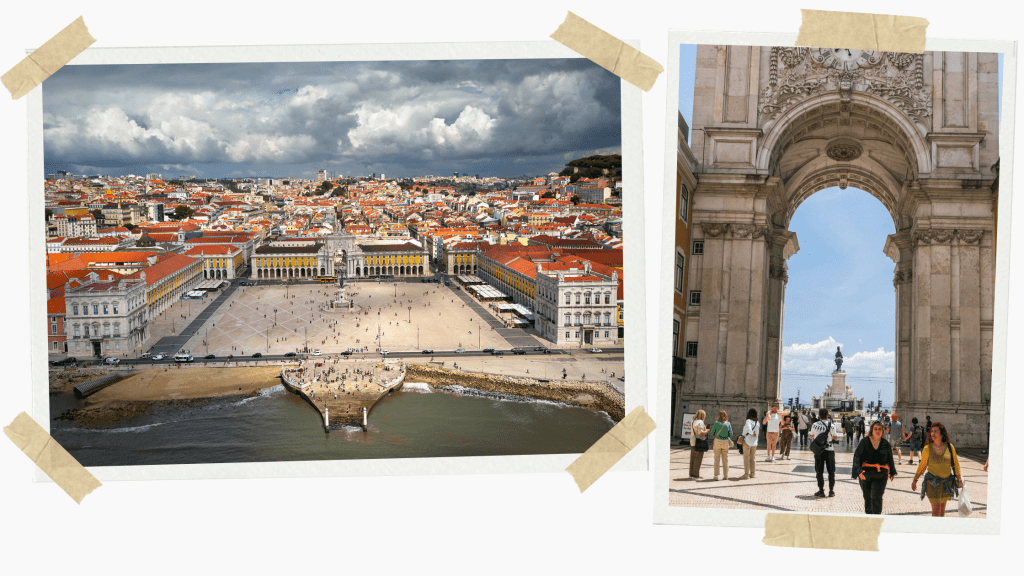
São Jorge Castle
São Jorge Castle crowns one of Lisbon’s highest hills and offers some of the best panoramic views in the city. Originally a Moorish fortress, the castle later became a royal residence before falling into ruin and eventually being restored in the 20th century.
Today, visitors come as much for the sweeping views over Alfama, Baixa, and the river as for the ramparts, towers, and archaeological remains within the walls. Peacocks roam the grounds, and the setting gives valuable context to Lisbon’s long, layered history. It’s definitely worth a visit.
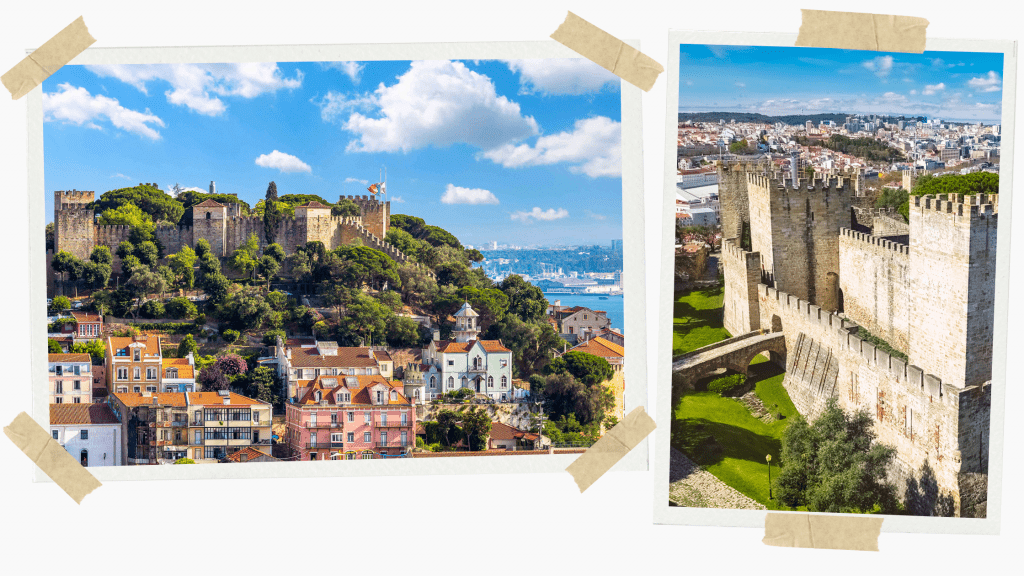
Belém Tower
Belém Tower sits dramatically along the Tagus and is one of Lisbon’s most recognisable landmarks. Built in the early 16th century during Portugal’s Age of Discoveries, it once guarded the entrance to the city’s harbour and served both defensive and ceremonial roles.
Designed in the ornate Manueline style, the tower blends maritime motifs with Moorish influences. Today it stands as a UNESCO World Heritage Site and a powerful symbol of Portugal’s seafaring past, best appreciated from the riverfront as much as from inside.
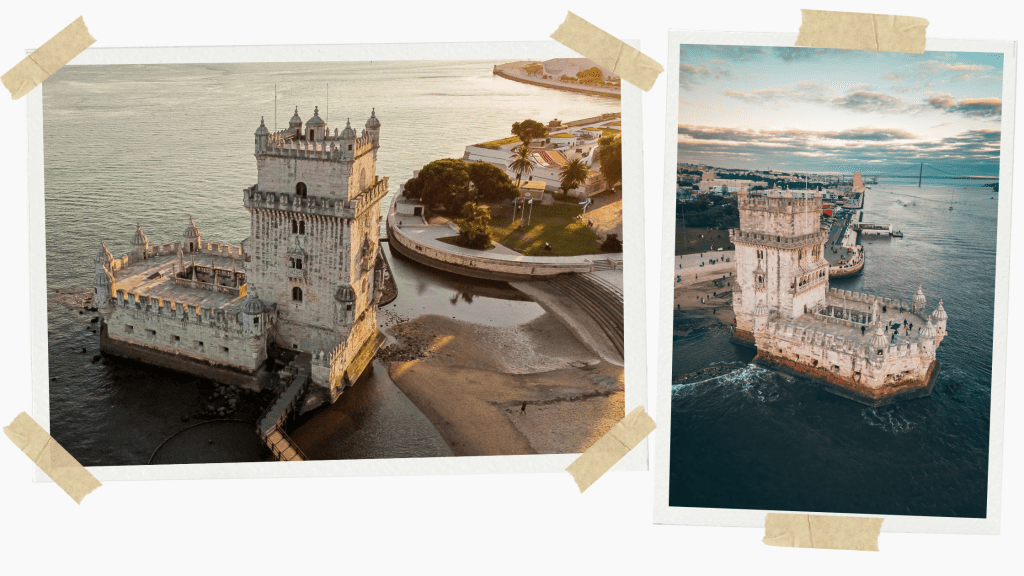
Jerónimos Monastery
Jerónimos Monastery is one of the finest examples of Manueline architecture anywhere in Portugal. Commissioned in the early 1500s to commemorate Vasco da Gama’s voyage to India, the monastery was funded in part by wealth flowing in from overseas trade.
Its intricate stonework, soaring cloisters, and richly decorated church reflect both religious devotion and imperial ambition. Also a UNESCO World Heritage Site, Jerónimos is closely tied to Portugal’s national identity and is an essential stop for understanding the country’s golden age of exploration.
Pastéis de Belém
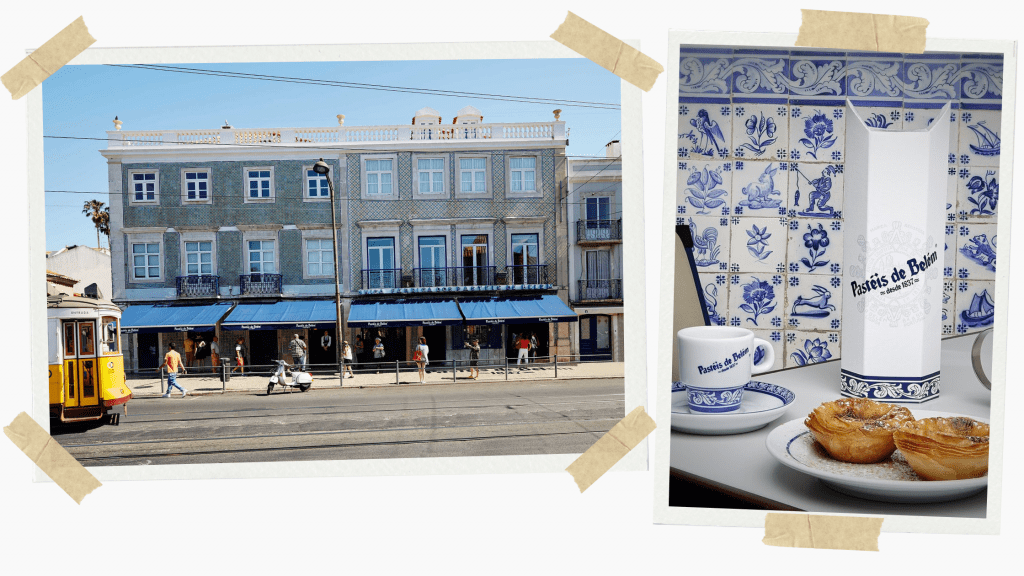
Every list of Lisbon tips will tell you to try a pastel de nata from Pastéis de Belém. It has become a bit of a symbol of overtourism in Portugal, and it can be busy, but it makes sense to visit nonetheless. It’s close to the Torre de Belém and even closer to the Jerónimos Monastery, so you can do these in one trip.
Founded in 1837, Pastéis de Belém is the original home of this famous custard tart. The recipe, still secret, was passed down from monks at the Jerónimos Monastery. You’ll see pastéis de nata all over Portugal, but these are the benchmark and subtly different to justify the short pilgrimage along to Belém.
Grab a few and wander across the road to eat them in the Jardim Vasco da Gama, where locals and visitors alike take a break under the trees.
Viewpoints (Miradouros)
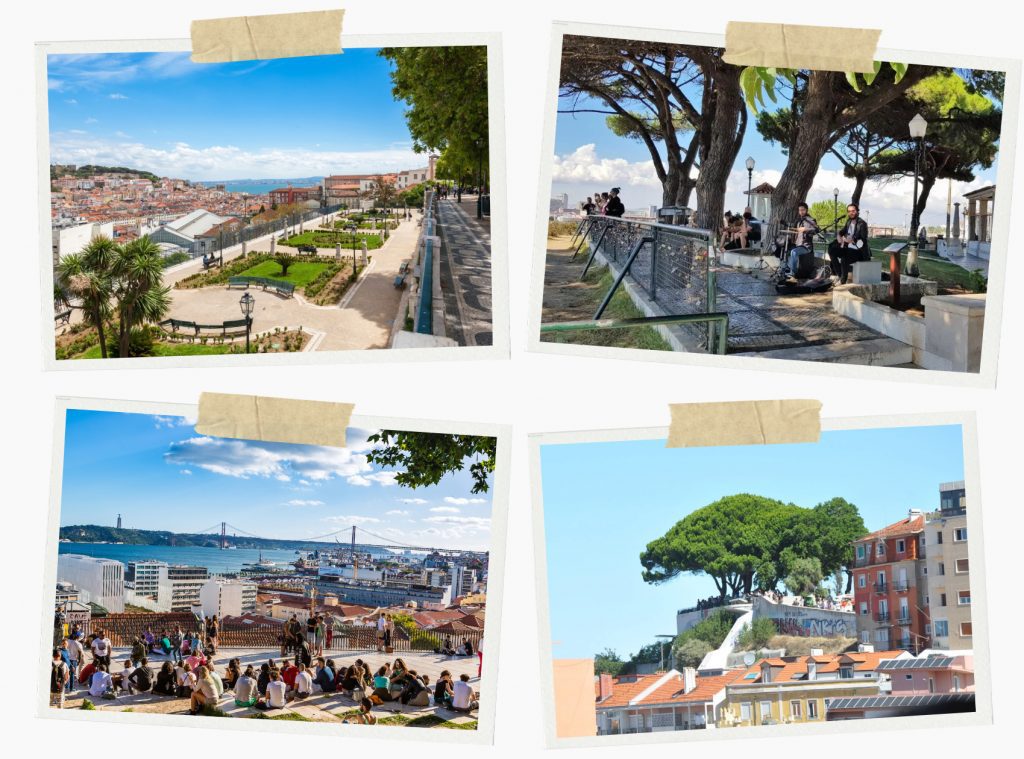
Lisbon’s viewpoints are one of its defining features. There are several, all offering different angles over the city, rooftops, river, and bridges.
The best way to enjoy them is simple: bring a drink, arrive before sunset, and stay as the light changes. Some have kiosks or bars, others are more informal, but all reward slowing down and soaking in the view.
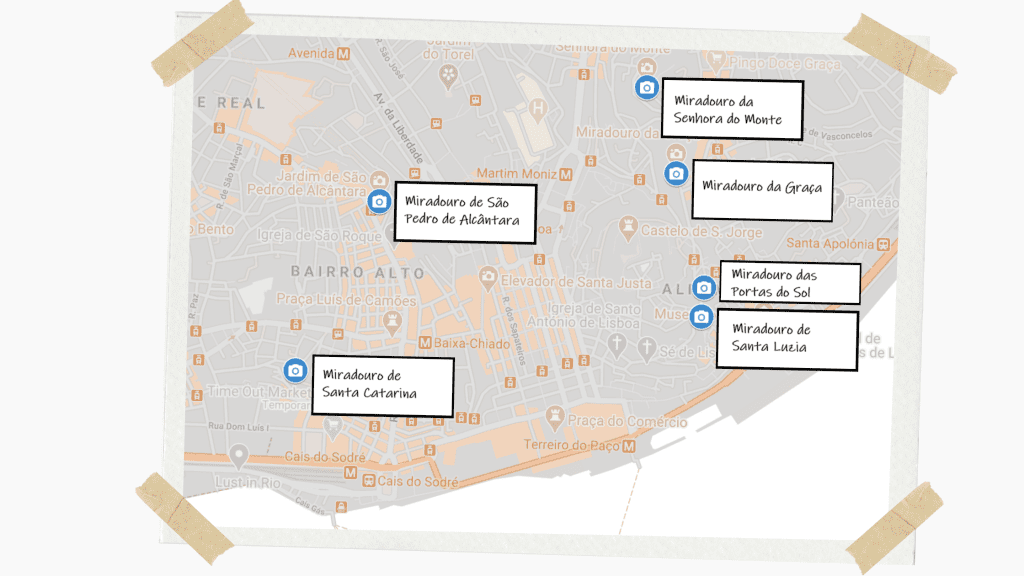
Miradouro de São Pedro de Alcântara is great for its central, accessible location near Bairro Alto. It offers great views of a perfectly framed landscape and usually has a lively, busy atmosphere.
Miradouro da Senhora do Monte has the most complete viewpoint in Lisbon. It sits at one of the city’s highest natural points, giving you an uninterrupted panorama over Alfama, Baixa, the castle, and the Tagus all at once.
Miradouro da Graça is slightly lower and more intimate than Senhora do Monte, delivering slightly less impressive views but with a more local, relaxed feel complimented by a nearby church and café.
Miradouro de Santa Catarina could be considered the least impressive in terms of elevation and scope, but it shines the most socially. A lively crowd, music, and sunset energy make it one of the most enjoyable places to sit with a drink.
Restaurante Ponto Final
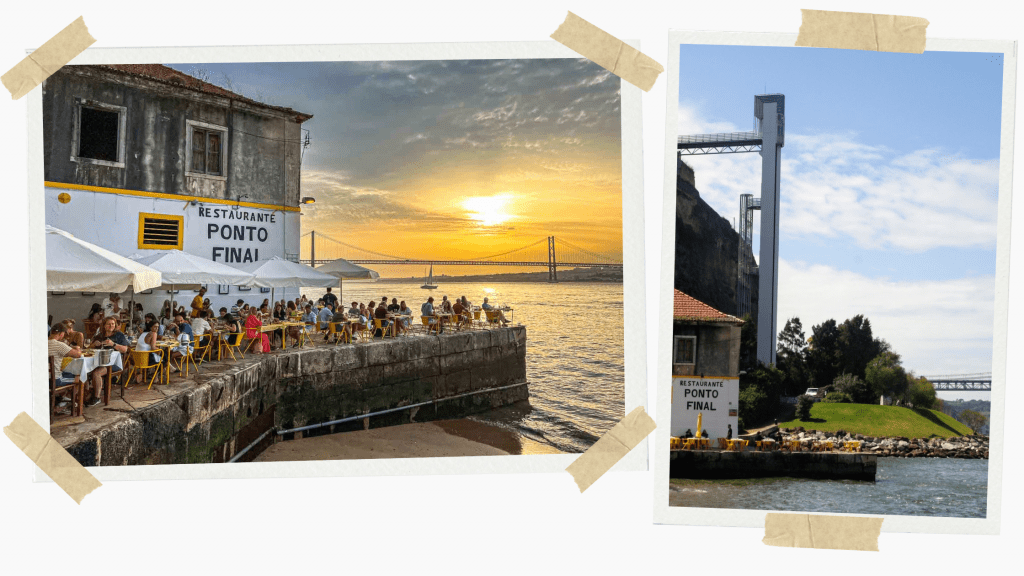
One of my favourite experiences in Lisbon has to be Restaurante Ponto Final. It’s not just the food but the location and the journey to get there. Sitting directly across the river in Almada, the restaurant feels worlds away from the city centre despite being so close and gives you views back over towards the main part of Lisbon.
To get there, take the ferry from Cais do Sodré to Cacilhas, then enjoy a scenic riverside walk past shipyards and old docks. The reward is classic Portuguese cooking, grilled fish, seafood rice, and cold Vinho Verde served with unbeatable views back toward Lisbon’s skyline.
You should book in advance as it can be hard to get a reservation these days. There’s also a nice green space to sit and watch the sunset just around the corner. It can be worth going for that alone.
LX Factory
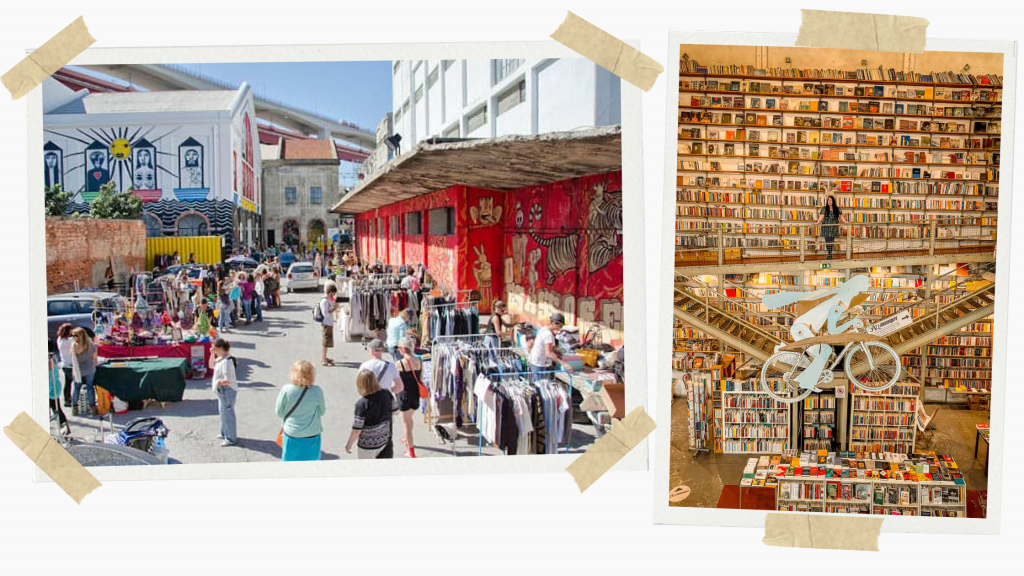
LX Factory is a former industrial complex turned creative hub beneath the 25 de Abril Bridge. Today it’s packed with independent shops, design studios, cafés, restaurants, and one of the city’s most famous bookstores.
It’s casual, slightly edgy, and a good place to browse, eat, or stop for a coffee if you’re exploring Belém or heading back toward the centre.
Quimera Brewpub
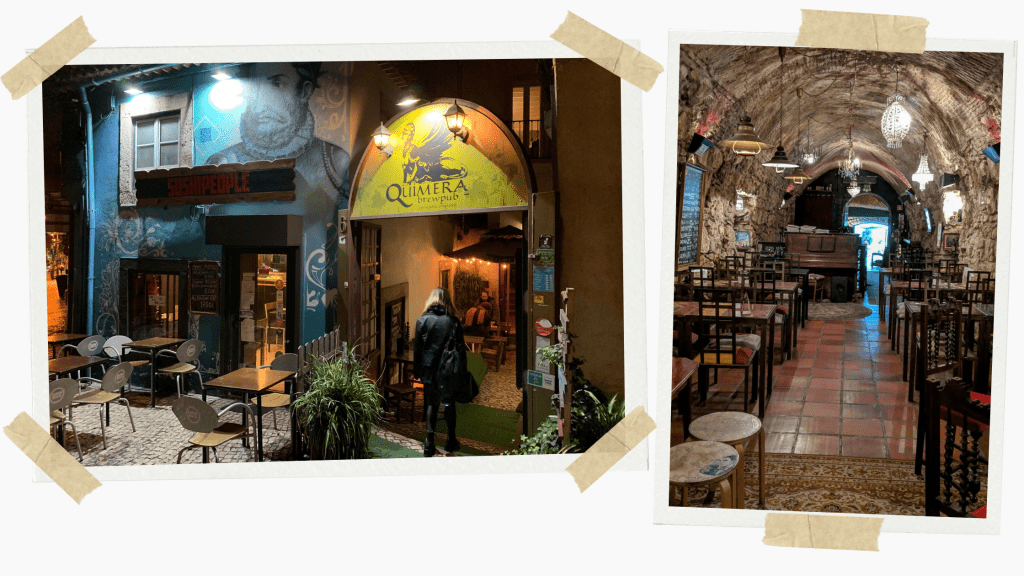
Quimera Brewpub is a standout for craft beer lovers and a welcome change from the usual wine-and-port routine. Brewing on-site, Quimera focuses on well-balanced, thoughtfully made beers rather than gimmicks. They also have incredible sandwiches. The Pastrami NY Deli Sandwich was unreal.
The atmosphere is relaxed and local, it’s also in the west of Lisbon, in a nice square with some other bars and terraces. So it makes for a good stop if you’re already exploring that way and want something low-key but high quality.
Insaciável
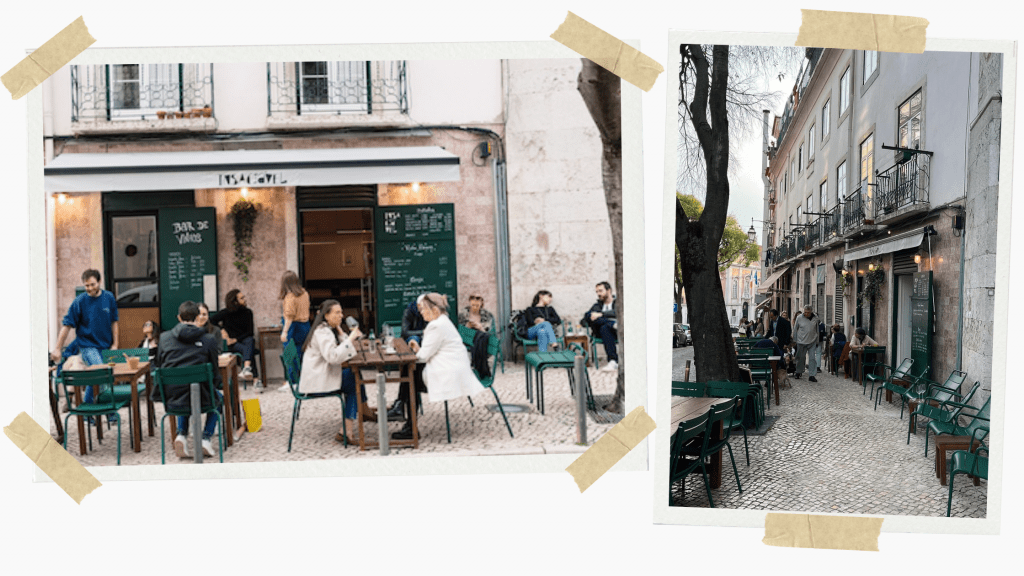
Heading back towards the centre, Insaciável is one of Lisbon’s best wine bars, tucked away from the main tourist routes but still close enough to feel central.
The focus here is on Portuguese wines, especially small producers, served by knowledgeable, friendly staff who are happy to guide you through the list. If you can get a spot out the front on the terrace, it’s the kind of place where you might stop for one glass and end up staying much longer.
Musa da Bica
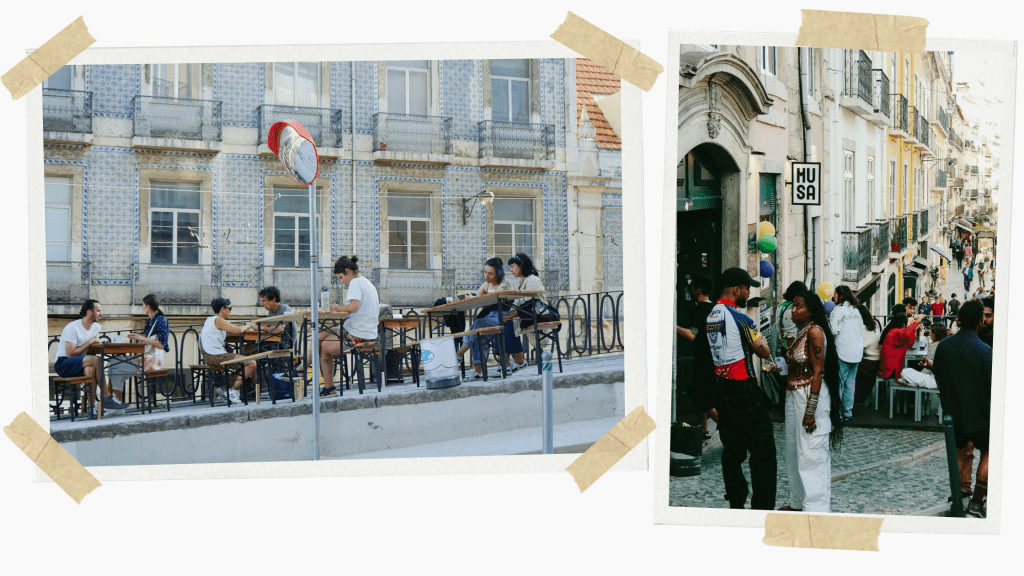
Going back to beer, bang in the centre tucked away just beside the famous Bica funicular, there is a great laid-back craft beer bar called Musa da Bica. It’s on the pricier side, but it has a great hillside terrace, and if it’s sunny, people spill out onto the street with pints in hand.
Try and get a table and watch trams go past, it feels like a very good way to appreciate the heart of Lisbon without being slapbang in the centre of tourist hordes.
Trips from Lisbon
Cascais
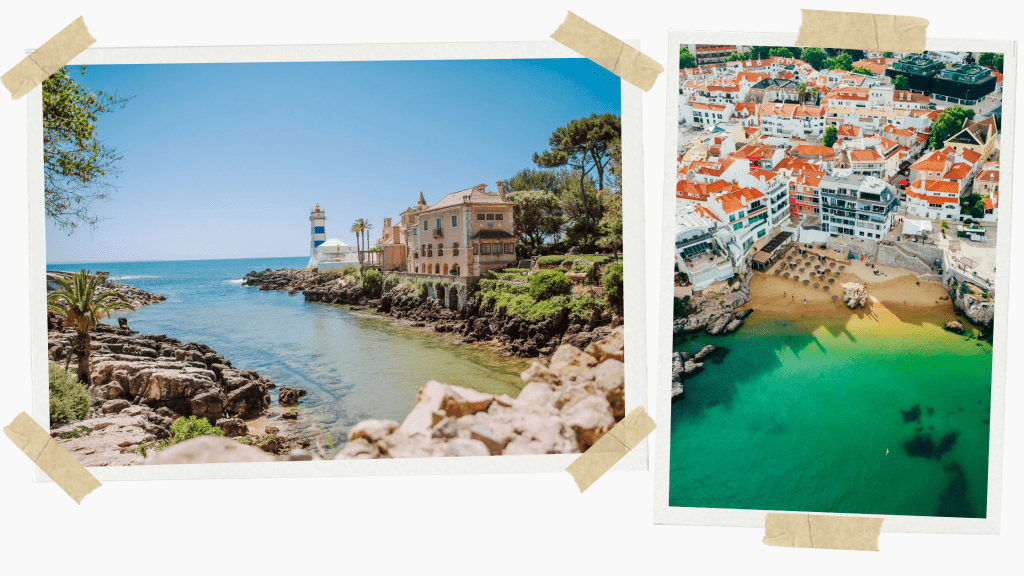
Cascais is an easy, rewarding escape from the city, combining beaches, a marina, and a compact old centre that’s ideal for wandering. Once a royal retreat, it still feels polished but relaxed, with coastal paths, seafood restaurants, and plenty of places to sit by the water.
You can swim in town beaches like Praia da Rainha or walk west toward wilder stretches of coast if you want something more rugged. It’s a great choice if you’re craving fresh air, sunshine, and a slower rhythm.
How to get there: Trains leave frequently from Cais do Sodré, following the coastline and reaching Cascais in about 40 minutes. Sit on the left-hand side for the best ocean views.
Sintra
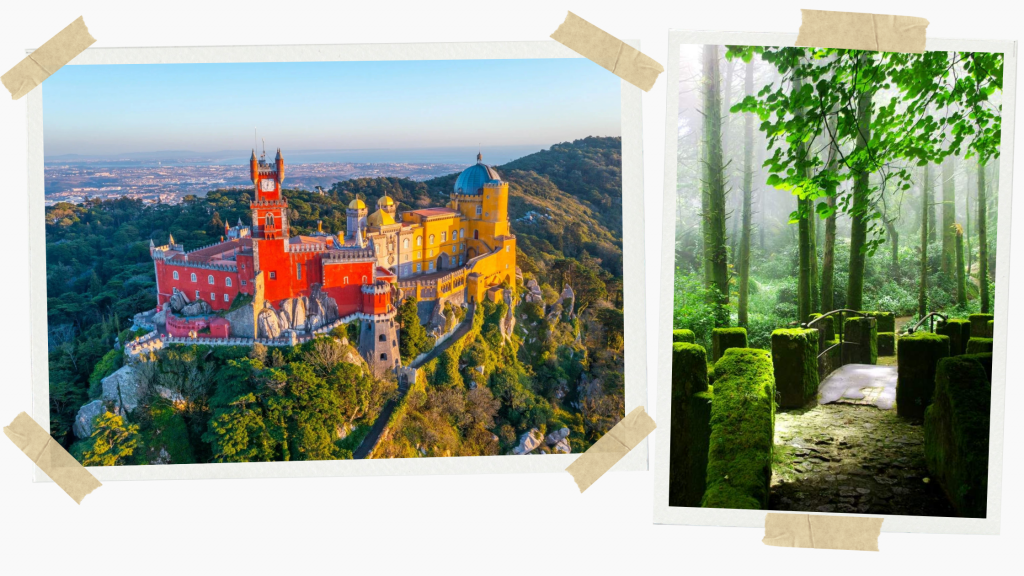
Sintra feels worlds away from Lisbon despite being so close. Set in cool, misty hills, it’s known for its romantic palaces, hidden gardens, and storybook atmosphere.
The brightly colored Pena Palace is the headline attraction, while the Castle of the Moors offers dramatic rampart walks and views over the countryside. It’s popular for a reason, so arriving early makes a big difference.
How to get there: Trains run frequently from Rossio Station and take around 40 minutes. From the station in Sintra, local buses or taxis connect you to the palaces.
Évora
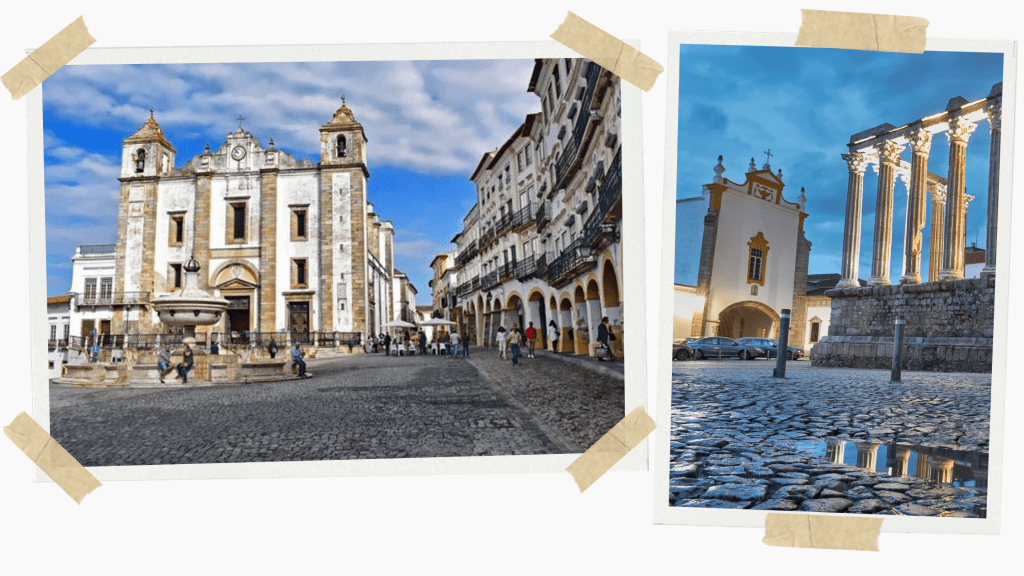
Évora is one of Portugal’s most atmospheric inland cities, packed with Roman ruins, medieval streets, and whitewashed buildings edged in yellow.
Highlights include the Roman Temple, the cathedral, and the eerie but fascinating Chapel of Bones. Compact and walkable, Évora offers a slower, more traditional side of Portugal.
How to get there: Trains from Lisbon’s Oriente Station or Entrecampos Station take around 1.5 hours. Buses are also frequent and often slightly faster.
Setúbal & Arrábida Natural Park
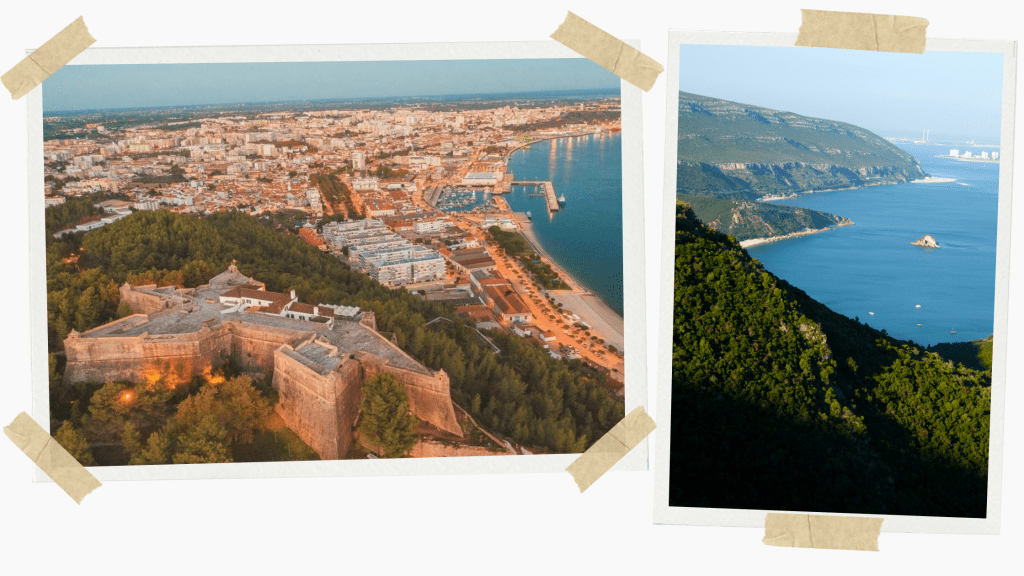
Setúbal is a working port city just south of Lisbon with a very local feel. It’s less polished than Cascais or Sintra, but that’s part of its appeal. Fishing boats still shape daily life, markets are genuinely for locals, and restaurants revolve around what came in from the sea that morning.
It works well as a base for exploring the Arrábida Natural Park, which offers some of the most dramatic coastal scenery near Lisbon. Limestone cliffs plunge into turquoise water and small coves hide between headlands. Here you can get boat trips into the Sado Estuary to spot bottlenose dolphins.
How to get there: The easiest option is by car or taxi (around 45 minutes). Without a car, take a train from Lisbon to Setúbal from Roma-Areeiro Station or Entrecampos Station on the Fertagus line, then use local buses or taxis to reach the park and its beaches.
Porto
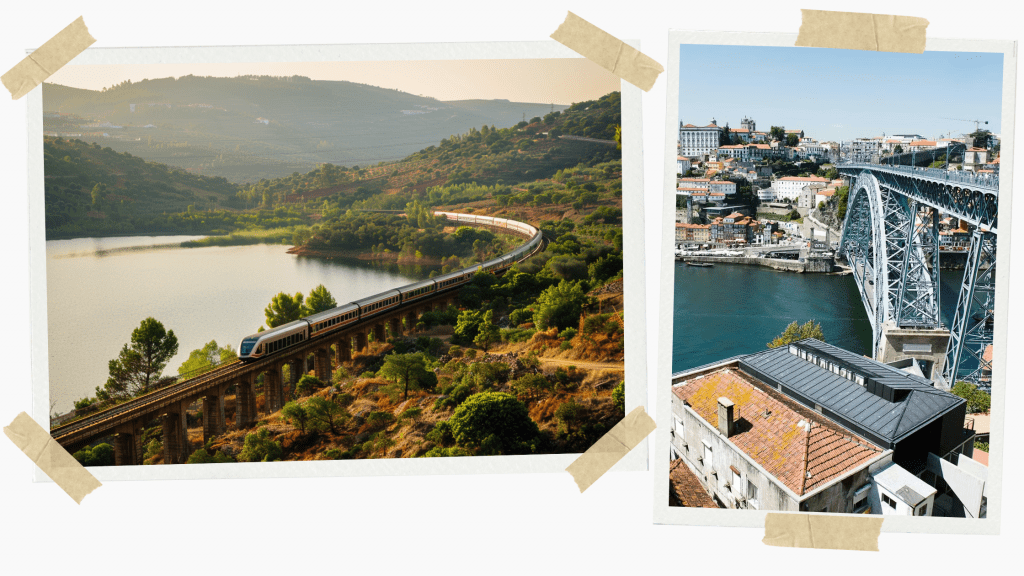
Porto isn’t close enough to be a day trip, but it deserves mention because the train journey between Portugal’s two most well-known cities is special.
Comfortable and scenic, it passes rivers, farmland, and smaller towns along the way. Porto is grittier and more compact than Lisbon but of a similar beauty. You can check out more about it in my Porto Guide.
How to get there: High-speed trains run frequently from Santa Apolónia Station and Oriente Station, taking roughly three hours. Booking in advance often secures better seats and prices.