
The Canary Islands off the coast of West Africa offer an otherworldly concoction of diverse lunar landscapes, but the eastern island of Lanzarote is surely one of the most mindboggling. Sunsoaked wineries are set in black lava fields situated just a short drive from the island’s coast where an array of striking volcanic landscapes descend to golden sand beaches with deep blue waters.
Rocky cliffs carved by relentless waves are unlike anywhere else in Europe, numerous cave-turned-cultural spaces are found across the island courtesy of César Manrique, and the Fire Mountains of Timanfaya National Park, formed by volcanic eruptions in the 1730s, make for an unforgettable adventure across utterly unique terrain.
Then there are the charming whitewashed villages of the likes of Teguise and Haría for welcoming inland spots in which to browse shops and kick back to the pace of local island life. Visitors to Lanzarote are truly spoilt for choice. Here is a list of what to see and what to do in Lanzarote.
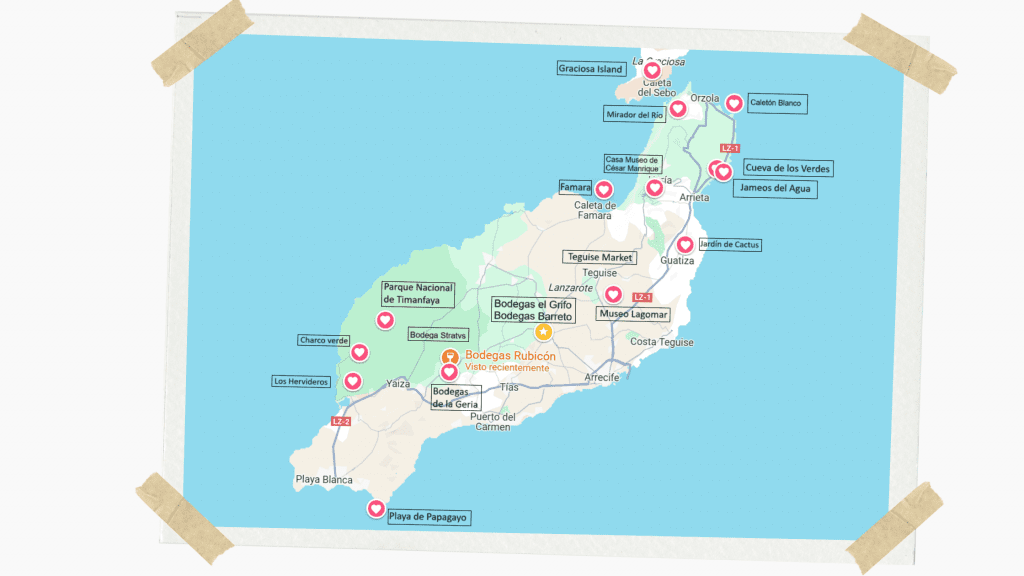
Top natural spots to visit
Timanfaya
A surreal volcanic landscape formed by eruptions in the 18th century, Timanfaya is Lanzarote’s most famous natural attraction.
Visitors can tour the Montañas del Fuego (“Mountains of Fire”), where geothermal heat still rises from underground. The guided bus route offers spectacular views of craters, lava flows, and ochre-red terrain.

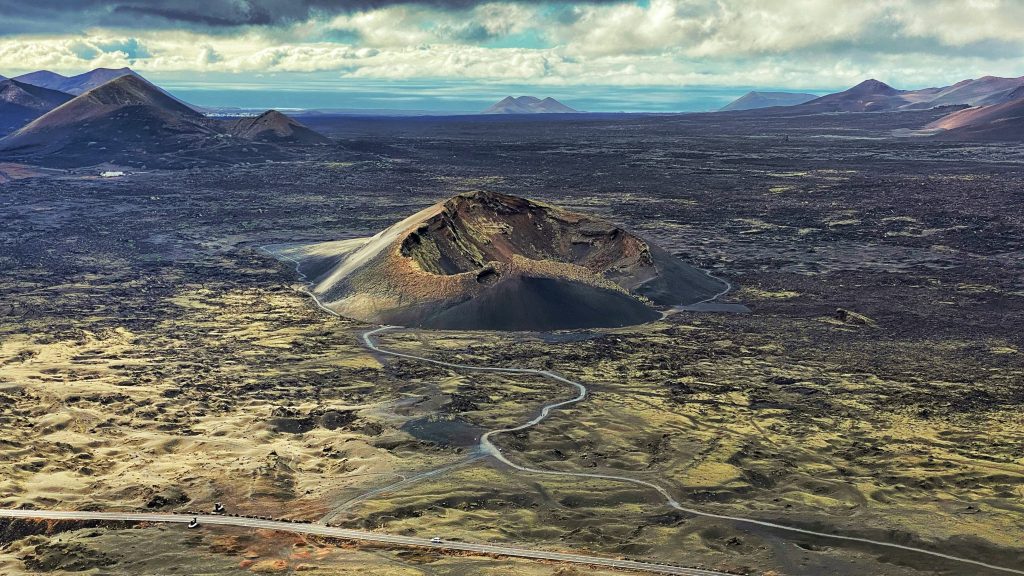
Montaña Cuervo
Hidden within the volcanic landscape, Montaña Cuervo is a crater you can walk around (and in some areas even into). Its volcanic cone and the surrounding terrain give a raw and dramatic impression of Lanzarote’s geological past.
Charco Verde
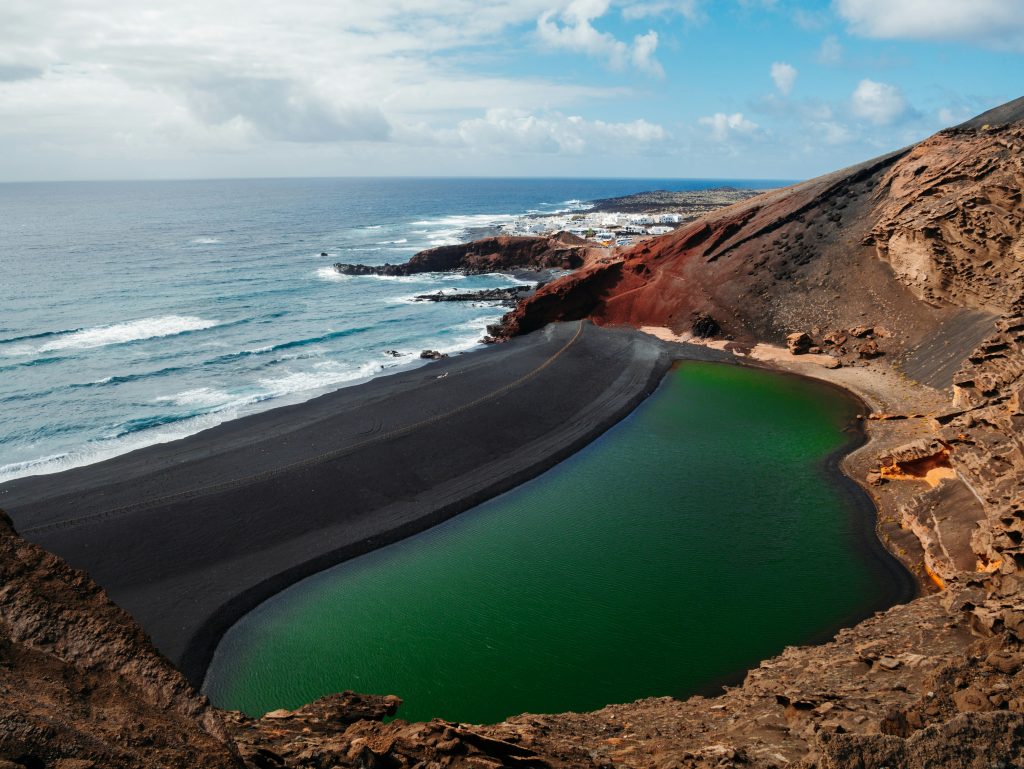
This vivid green lagoon lies within a half-collapsed volcanic crater beside the fishing village of El Golfo. Its striking colour, caused by algae and minerals, contrasts beautifully with the black sand and red cliffs. It is a must-see stop along Lanzarote’s wild southwest coast and can be visited before or after stopping in El Golfo for lunch.
Los Hervidores
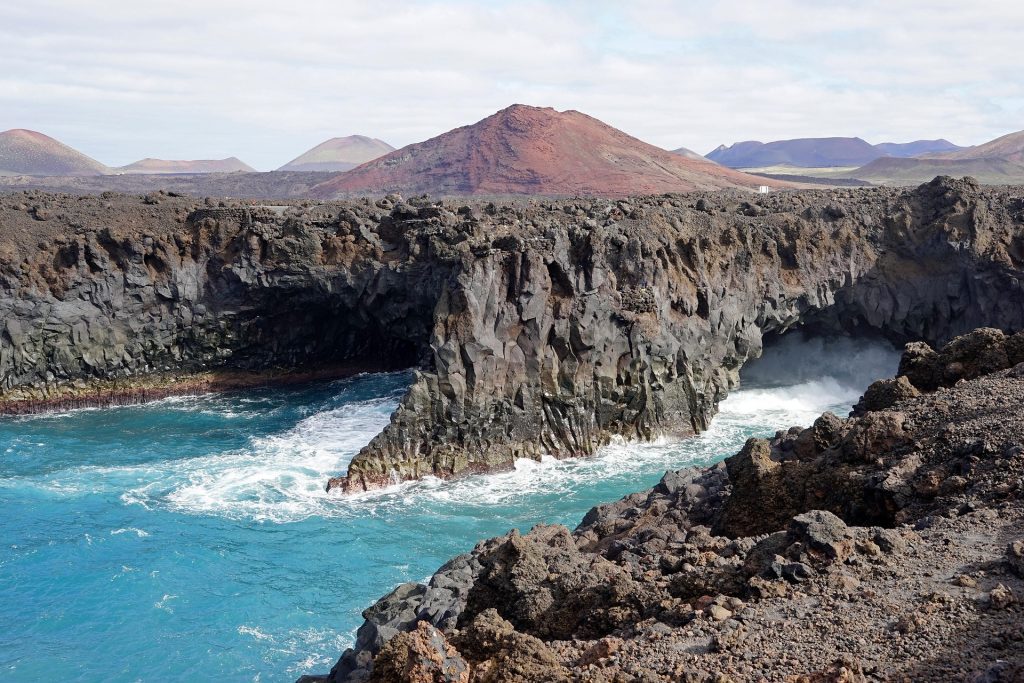
Not far from Charco Verde is the Hervidores, meaning “The Boiling Pots”. These rugged sea cliffs near El Golfo display the raw power of the Atlantic. Waves crash into the lava tunnels and blowholes with dramatic force, sending spray high into the air, especially impressive on windy days or at high tide.
Punta Mujeres Natural Pools
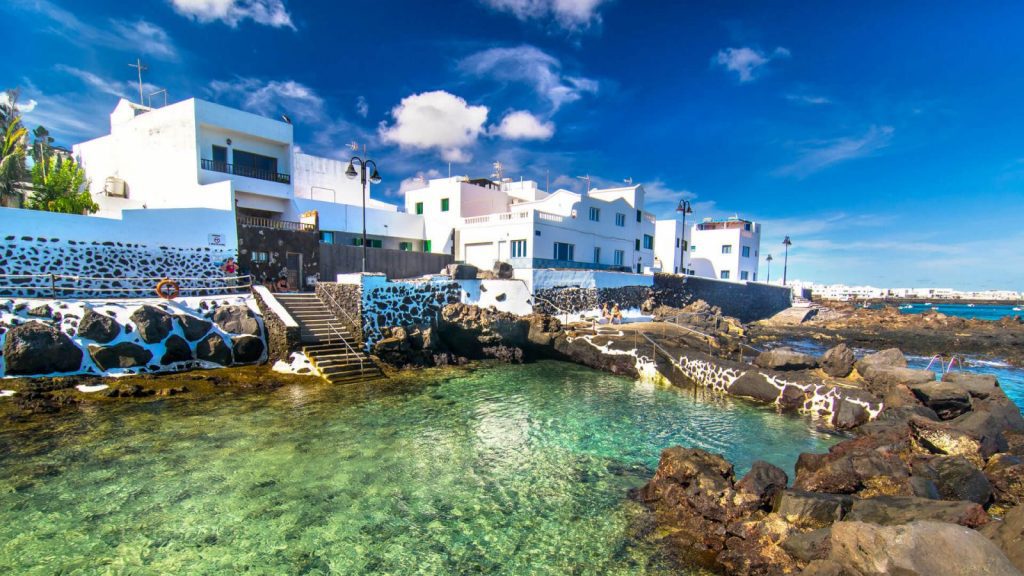
Along the northeast coast of the island, this seaside spot features natural seawater pools formed by volcanic rock and calm wave conditions. A perfect alternative when you want something more tranquil and rugged.
Salinas de Janubio
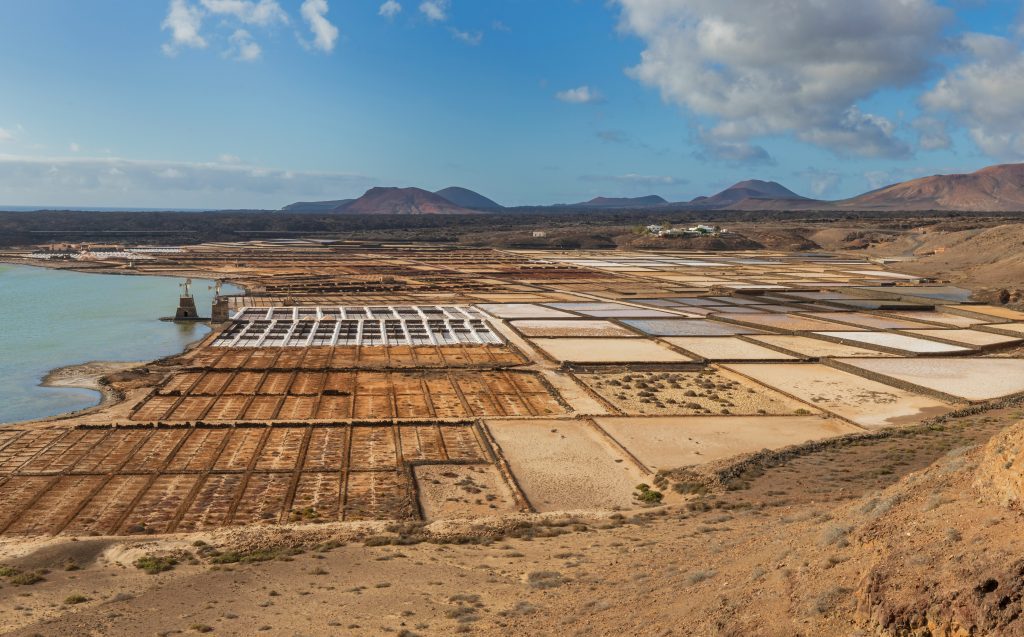
The Salinas de Janubio are historic salt flats formed after lava flows created a natural lagoon. Over time, salt-evaporation techniques were used, and today they provide an interesting mix of natural beauty and cultural heritage.
Cuevas de los Verdes
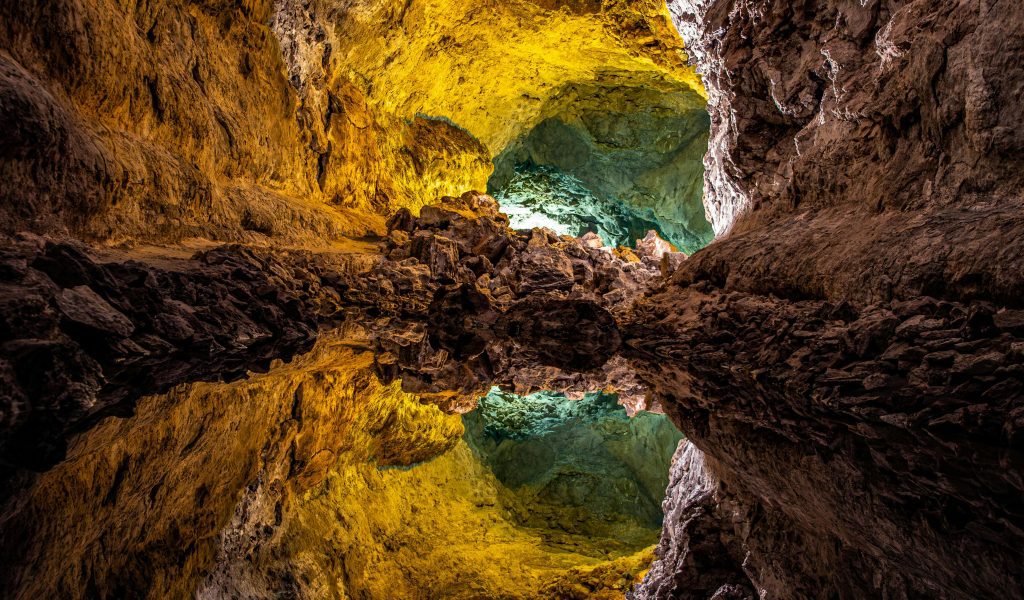
One of Lanzarote’s most awe-inspiring natural sites, the Cuevas de los Verdes is a vast volcanic tunnel system formed about 5,000 years ago when the eruption of the Volcán de la Corona caused lava to race down to the sea, creating an underground passage over six kilometres long, part of which lies beneath the ocean itself.
The cave’s name, “Los Verdes” (“The Greens”), comes not from its colour but from a local family who once owned the land. For centuries, the cave served as a refuge for islanders hiding from pirates and slave raiders.
César Manrique attractions
Jameos del Agua
Part of the same 7-kilometre volcanic tunnel system as Cuevas de los Verdes, Jameos del Agua is an extraordinary underground complex designed by the island’s famed artist, César Manrique, in the 1960s.
Here you’ll find a dreamlike space where volcanic geology meets Manrique’s artistic vision that human creativity should exist in harmony with the natural world, not in defiance of it.
A “jameo” is a natural collapse in the roof of a lava tube, forming an open skylight into the underground world below. Manrique saw this collapsed cave as a rare opportunity to transform the wild beauty of the volcanic terrain into a living cultural space. It now houses a cultural centre with a lagoon, restaurant, and concert hall.

Museo Lagomar
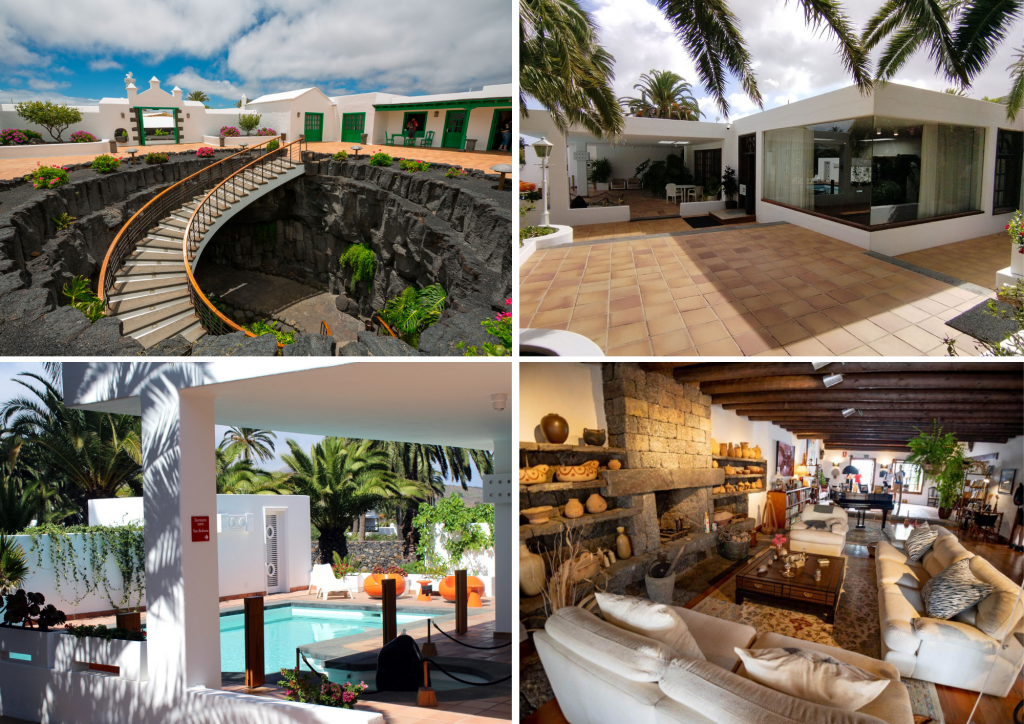
One of the most memorable things on the island is certainly the Museo Lagomar. Carved directly into volcanic rock in the village of Nazaret, Museo Lagomar is half house, half sculpture, made up of a labyrinth of caves, tunnels, staircases, and terraces, all integrated into the hillside of an old quarry set against striking red cliffs and whitewashed curves.
Conceived by Manrique as part of his lifelong mission to blend human design with Lanzarote’s natural geology, the result feels almost like a fantasy world with a mix of Gaudí-like organic forms and Arab-inspired design. The house gained fame when it was briefly owned by Hollywood actor Omar Sharif (who reportedly eventually lost it in a game of bridge).
Today, the museum displays art, photography, and memorabilia while offering visitors the chance to enjoy gardens, water features, courtyards, viewpoints, and even a small bar carved into the stone.

Casa museo de César Manrique
Located in Tahíche, Manrique’s main residence is now a museum celebrating his life and work. Built in 1968 upon a sea of solidified lava, it was the artist’s main residence for 20 years and combines futuristic design with nature. When Manrique first discovered the terrain, locals thought he was mad to want to build on jagged, barren, and unforgiving ground but he saw beauty in the raw volcanic landscape.
The upper level is clean, white, and full of light, reflecting traditional Canary Island architecture, while the lower level plunges into the earth itself, built within five natural volcanic bubbles. Today, visitors can explore his original living areas, including underground chambers, gardens, a lava pool, and his workshop with exhibitions of his art and design.
Jardin de Cactus
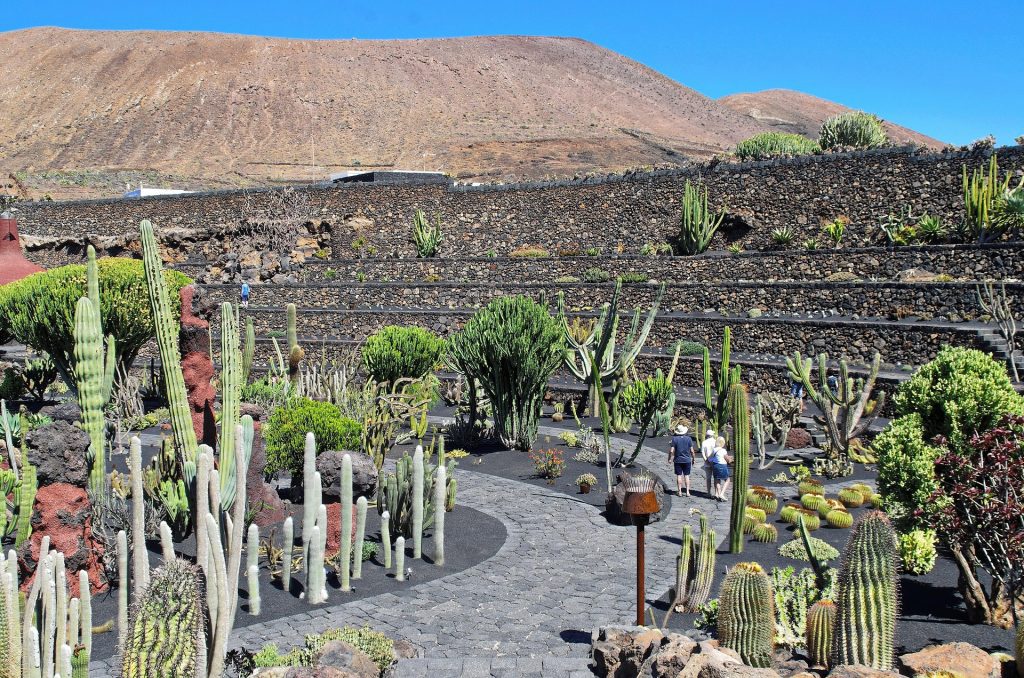
The final architectural project of César Manrique, this cactus garden in Guatiza hosts more than 4,500 specimens from around the world. Terraced into a former quarry, it’s a stunning blend of geometry, sculpture, and botanical beauty crowned by a restored windmill overlooking the valley.
Beaches
Playa de Papagayo
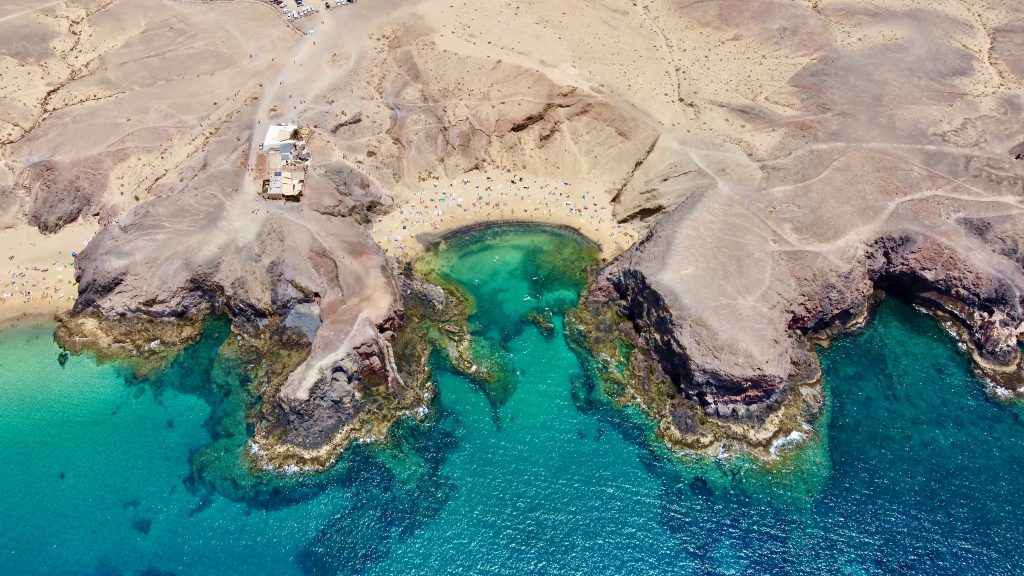
The island’s most famous beach, Papagayo, features calm turquoise waters sheltered by volcanic cliffs. Its golden sands and gentle waves make it ideal for swimming and relaxing. Accessible via a dirt road inside a protected area, it’s part of a chain of pristine coves on the island’s south coast.
Caletón Blanco
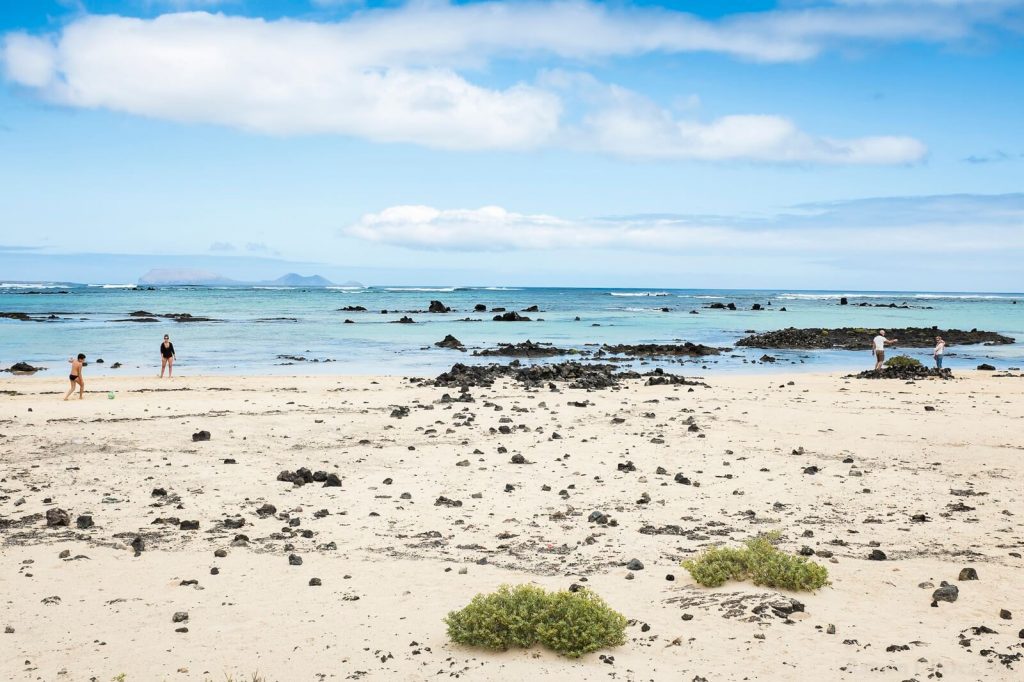
Located near Órzola on Lanzarote’s north tip, this series of white-sand coves contrasts strikingly with the surrounding black lava rocks. Shallow lagoons make it perfect for families and for paddling in calm, crystal-clear water.
Playa de Famara
Stretching for several kilometres along the northwest coast, Famara is Lanzarote’s great surf beach. Backed by dramatic cliffs, it’s popular for surfing, kiteboarding, and long walks at sunset. The wind can be strong, but the scenery is unforgettable.

La Garita Beach (Arrieta)
A wide, golden-sand beach in the laid-back fishing village of Arrieta, La Garita offers gentler surf and a more local feel than the big resort beaches. Great for families, it has lifeguards, restaurants, and a relaxed, authentic atmosphere.
Playa Grande (Puerto del Carmen)
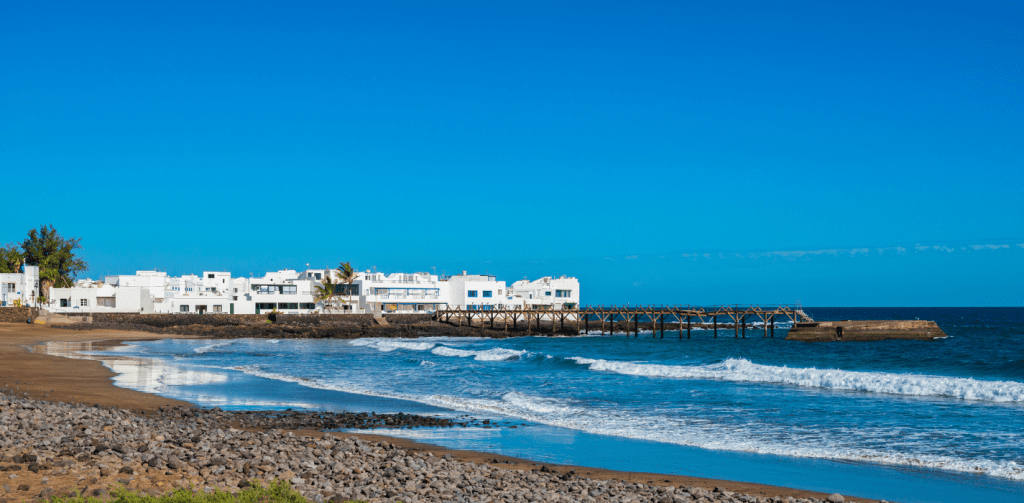
The main beach in Lanzarote’s biggest resort town, Playa Grande, combines fine sand, gentle waves, and full amenities from sunbeds to beachfront cafes. It’s ideal for swimming, evening strolls, and easy access from nearby hotels.
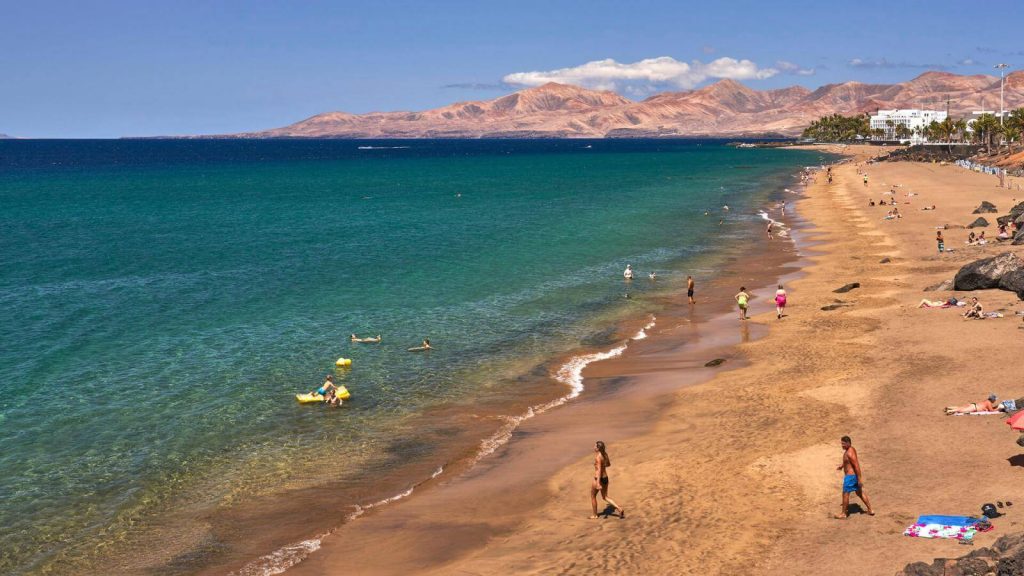
Wineries
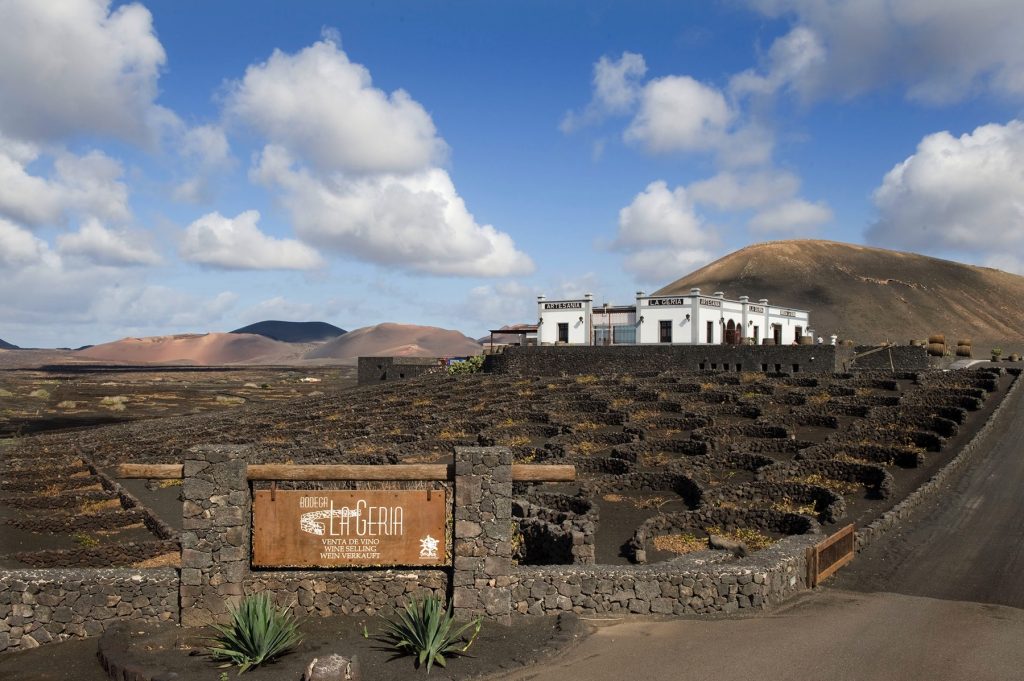
Bodega La Geria
Located in the heart of Lanzarote’s volcanic wine region, Bodega La Geria is the island’s most visited winery. Its vines grow in hand-dug pits protected by lava stone walls known as “hoyos”. The bodega offers tastings of the island’s signature Malvasía Volcánica white wines.
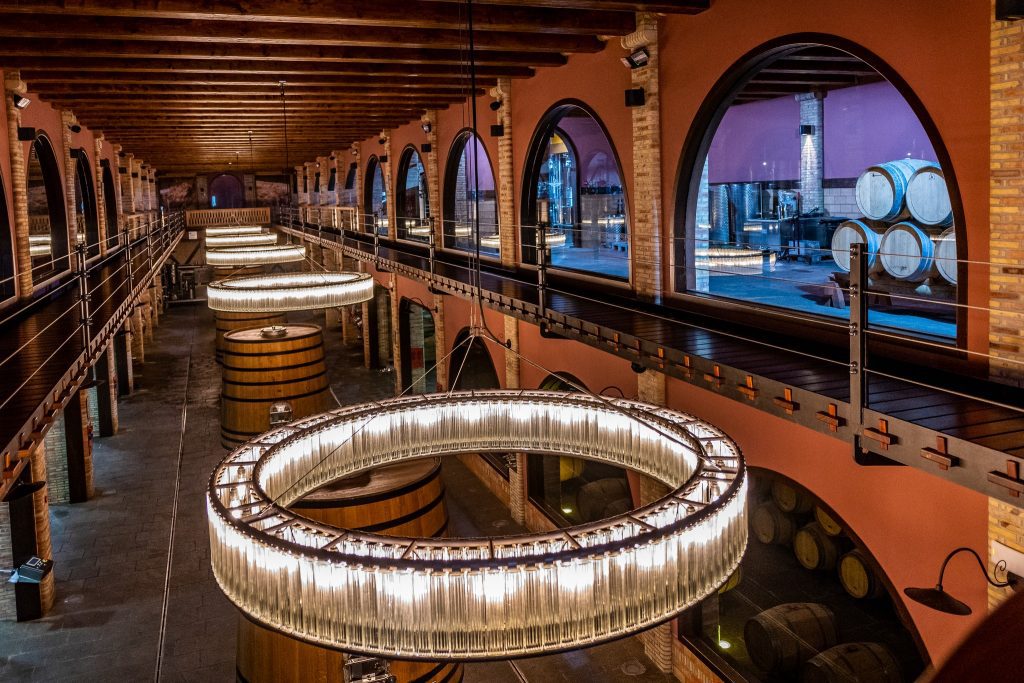
Bodega Stratvs
A modern architectural landmark in La Geria, Stratvs combines cutting-edge winemaking technology with stunning views of volcanic vineyards. Visitors can tour the facilities and enjoy tastings paired with local products.
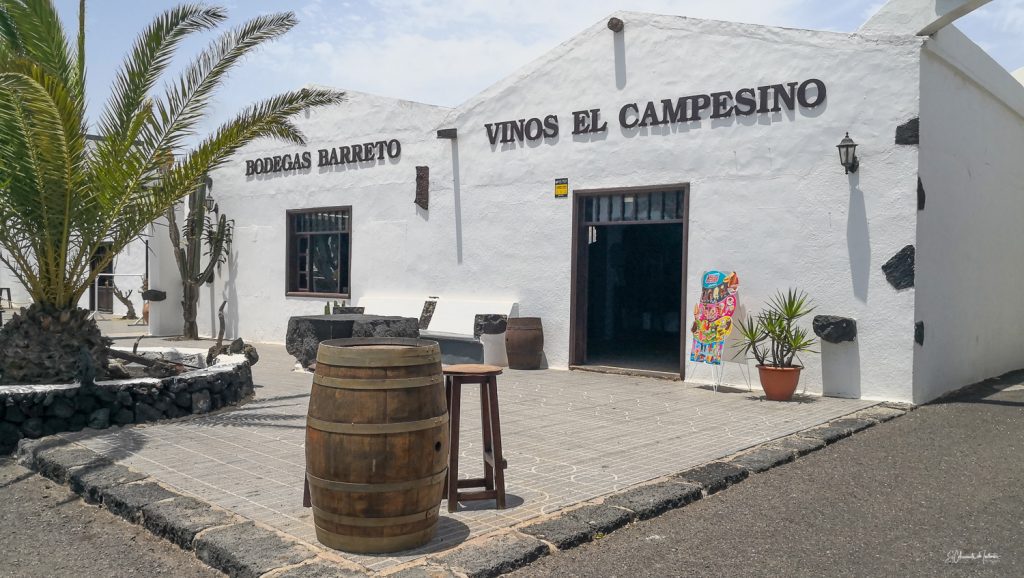
Bodegas Barreto
A small, family-run winery known for its traditional methods and dedication to preserving local grape varieties. Its wines are often described as rich, mineral, and distinctly “Lanzarote.” Visits offer a quieter, more personal experience than the larger bodegas.
Bodegas El Grifo
Founded in 1775, El Grifo is the oldest winery in the Canary Islands and one of the oldest in Spain. Alongside its award-winning wines, it houses a fascinating wine museum that traces the history of Lanzarote’s unique volcanic viticulture.
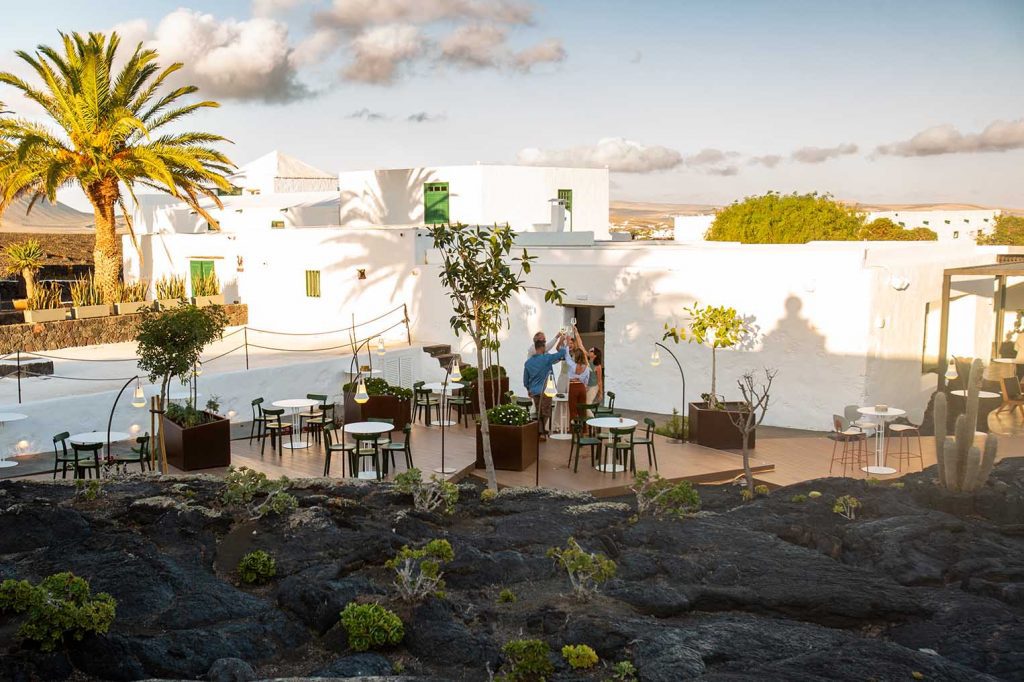
Bodegas Guiguan
Situated near Tinajo, this small bodega offers a more intimate tasting experience and produces limited quantities of hand-crafted wines. It’s especially loved by locals for its friendly owners and traditional Malvasía and Listán Negro varietals.

La Graciosa
Just north of Lanzarote lies La Graciosa, the smallest inhabited island of the Canary Islands and one of the least altered by modern tourism. With no paved roads, a handful of sandy tracks, and a population of around 700 people, it’s a place where time slows down.
Ferries to La Graciosa depart year-round from Órzola, the northernmost port on Lanzarote. The crossing takes 25–30 minutes, and two companies, Lineas Romero and Graciosa Lines Arma, operate frequent daily services. Tickets can be purchased online or at the harbour.
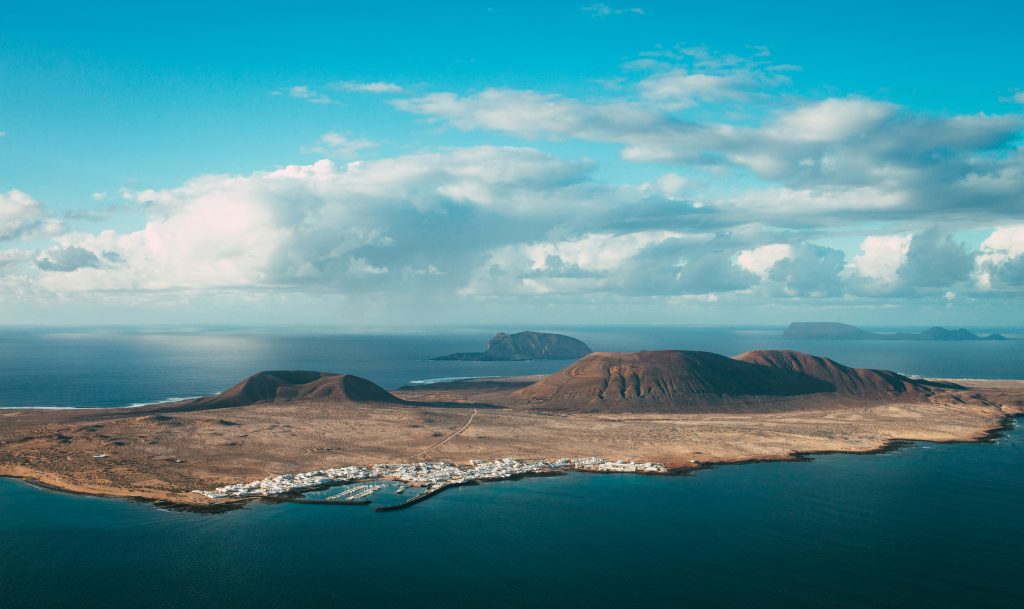
Once you arrive at Caleta de Sebos, the island’s only village, you’ll step off the boat onto sandy streets instead of asphalt. There are no cars for hire here, just bicycles, e-bikes, and 4×4 taxis, which are the main ways to explore beyond the village. I recommend renting mountain bikes and exploring the island. They can be rented from various places right by the port when you disembark, though the terrain is sandy and uneven, so if that’s not an option for you, local 4×4 drivers also offer fixed-price routes to the main beaches.

In either case, you’ll be given a map showing the island like the one above and advised on where to head. Here are some of the highlights:
First off, your arrival point is the island’s laid-back “capital”, where whitewashed houses line sandy lanes and a few simple restaurants serve freshly caught fish. It’s the best place to grab lunch, rent bikes, or simply soak up the slow island rhythm.
Playa de la Francesa & Playa de la Cocina
Located along the southern coast, not far from Caleta de Sebos, these beaches are sheltered and perfect for swimming or snorkelling. The turquoise shallows and views back toward Lanzarote make them ideal for a relaxing day trip.
Playa de las Conchas
A sweeping golden beach on the island’s northwest coast, backed by volcanic hills and facing the uninhabited islets of Alegranza and Montaña Clara.
It’s breathtakingly beautiful but not safe for swimming due to strong currents, so come for the views, the solitude, and the sense of wild isolation.
Montaña Bermeja
A reddish volcanic ridge near Las Conchas that adds striking colour to the island’s northwest landscape. The short hike to its crest gives a sweeping view across Alegranza and Montaña Clara.
Caletón de los Arcos
Further around the island’s rugged northeastern coast, this natural lava formation is sculpted into arches and sea caves by centuries of Atlantic wind and waves. The black volcanic rock contrasts sharply with the turquoise water, creating one of La Graciosa’s most striking coastal scenes. Ideal for photography and quiet exploration rather than swimming.
Playa de Lambra
Even further along, Playa de Lambra (sometimes called Las Lambas) is the island’s most remote beach, reached by a long dirt track through volcanic terrain. Its pale sands and pinkish shells give it a surreal, almost desert-like beauty. Strong currents make swimming risky, but the isolation and sweeping views are otherworldly.