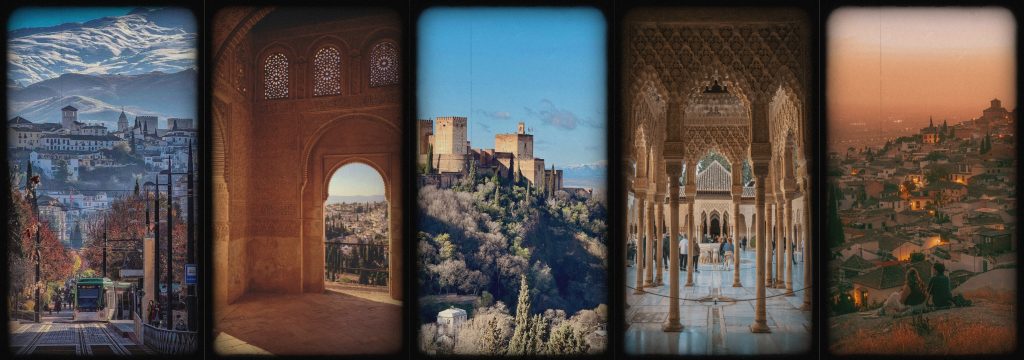
Set at the edge of Andalucía’s Sierra Nevada, Granada is a city shaped by centuries of Islamic and Christian rule where history feels ever-present.
Cobblestone streets wind through medieval neighbourhoods, flamenco echoes from cave-lit venues, and the Alhambra, the city’s defining monument, sits perched above the city, framed by mountain peaks.
From hilltop miradores overlooking the palace to hidden Arab bathhouses and shaded gardens tucked behind thick walls, Granada is one of southern Spain’s most characterful destinations and a truly enchanting experience.
The Alhambra
You can’t go to Granada and not experience the Alhambra. The city’s crown jewel and a UNESCO World Heritage Site, the Alhambra is one of the 12 Treasures of Spain and the first thing that should be planned on any first-time trip to Granada.
This 14th-century masterpiece isn’t a single palace, it’s a sprawling citadel made up of patios, gardens and an ancient fortress with ramparts and panoramic views over Granada.
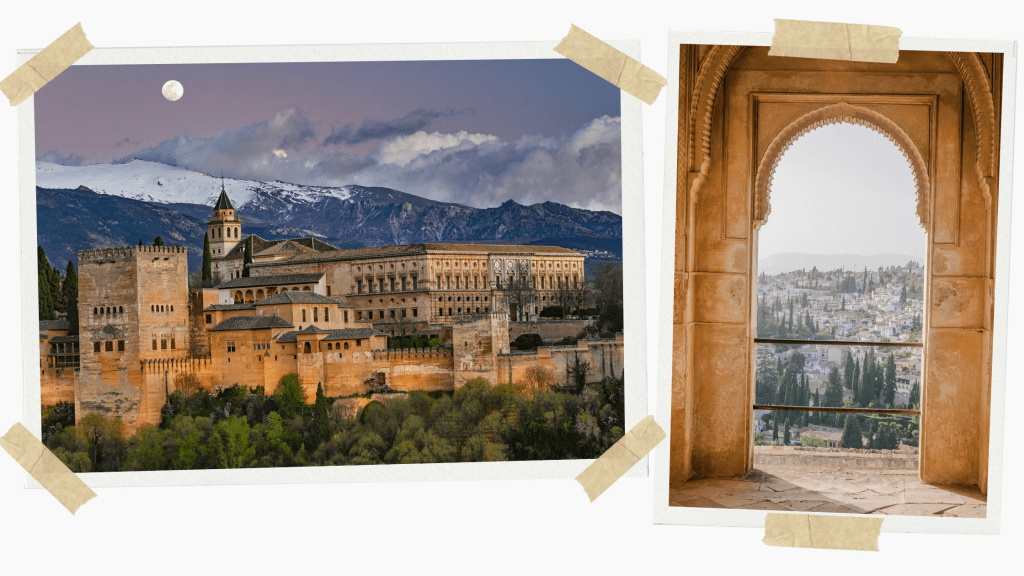
Within, the Palacios Nazaríes are renowned for their mosaics, intricately carved stucco, slender columns, and the Patio of the Lions.
Next door, the Generalife Gardens offer shaded terraces, fountains, and blooming pathways that epitomise Andalucían garden design.
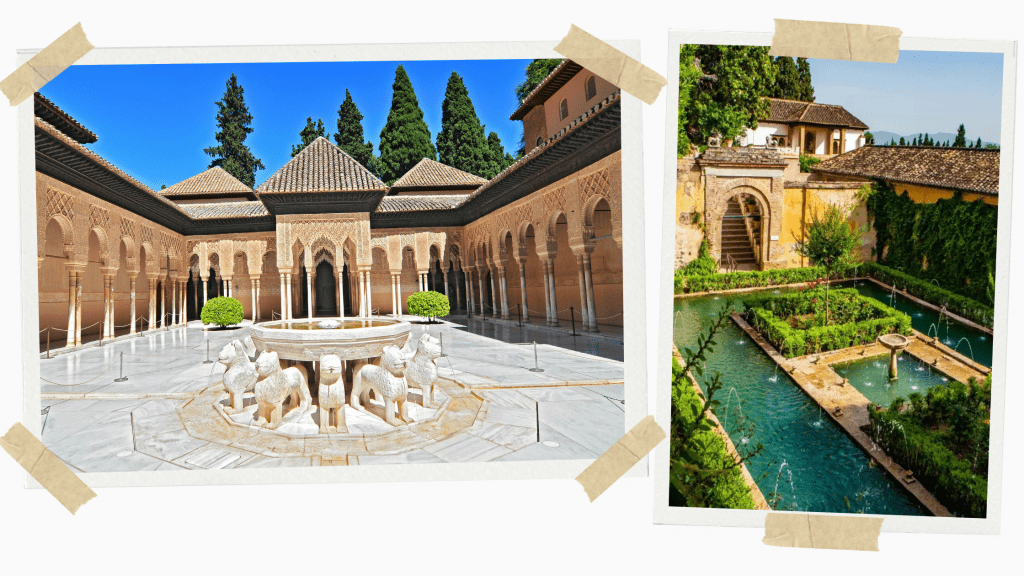
A full daytime ticket is around €22, though there are cheaper options if you only want the gardens or night visits.
The best time to go is early morning for softer light and fewer crowds, or early evening. April-May or September-October are the best months for the same reasons.
You should book online in advance as tickets can sell out.
Miradores San Nicolás & San Miguel
Mirador de San Nicolás
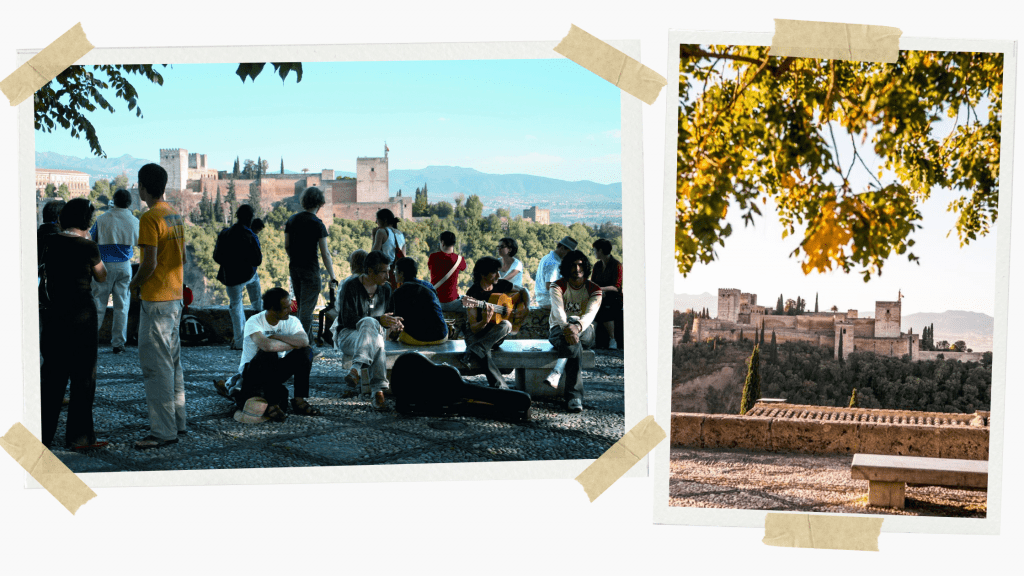
The San Nicolás viewpoint is perched above the neighbourhood of Albaicín, Granada’s old labyrinthine Moorish quarter. Made up of narrow, cobblestone alleys and whitewashed homes draped in bougainvillaea, it makes for a beautiful walk to the mirador.
Once you’ve reached the viewpoint, you’ll find the most quintessential Granada postcard view and one of the most famous photo spots in Spain, with the Alhambra framed against the Sierra Nevada.
It is a lively square crowned by the church of San Nicolás, so expect a crowd, especially around sunset. Street musicians often play flamenco guitar here, and terraces nearby make it a social hangout as much as a viewpoint.
Mirador de San Miguel Alto
If you have time, I would recommend the walk up to the Mirador de San Miguel Alto. This is the highest official viewpoint in Granada.
Perched higher above Albaicín next to the hermitage of San Miguel Alto, here you’ll find a broader panorama over Granada, the Alhambra, and the mountains beyond.
Because of the steeper climb and location, it’s usually much quieter than San Nicolás. There’s less commercial bustle and more rewarding horizon-wide views.
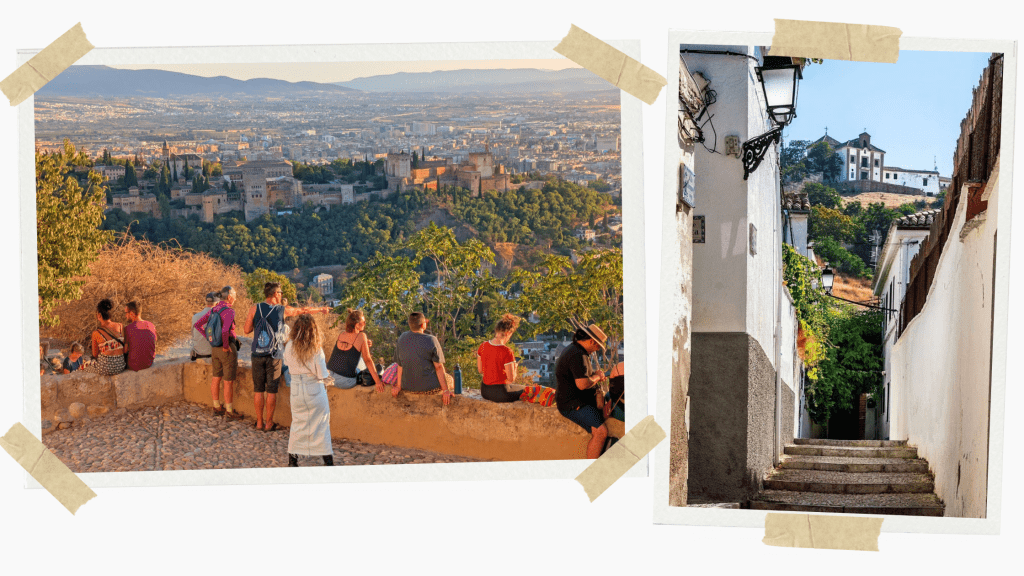
In both cases, I would recommend arriving before golden hour to claim a spot and watch the Alhambra gradually glow in sunset hues.
Sacromonte & Flamenco
Above the river and tucked into hillsides, the Sacromonte district is world-renowned for its cave dwellings and Roma heritage. Generations of Roma have lived and performed flamenco here, and some of these cave homes now host intimate flamenco shows.
Unlike large, polished tablaos, these performances, often in small, candlelit caves, feel raw and ancestral.
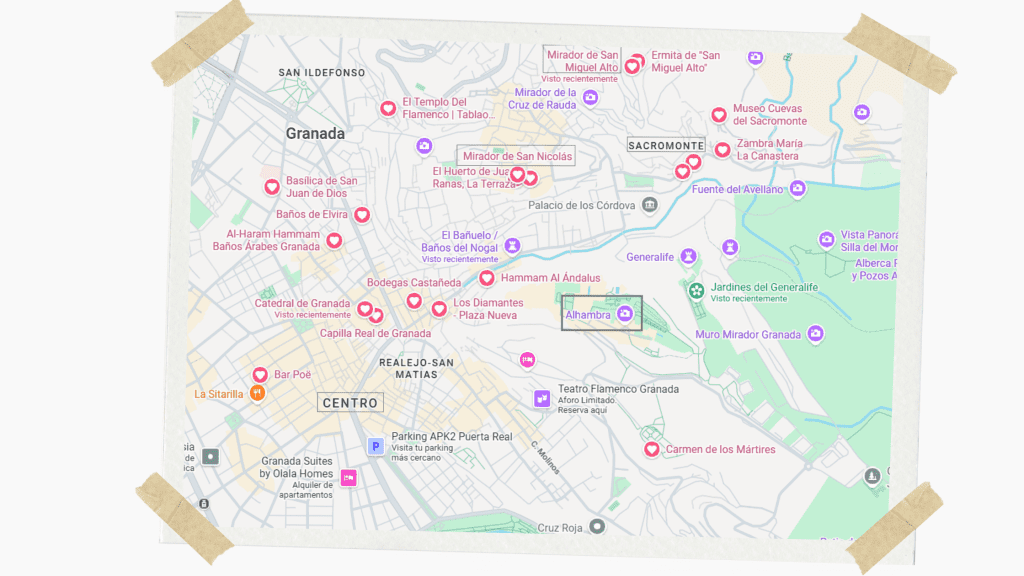
There are more central, smaller tablaos like El Templo Del Flamenco if you don’t want to make the journey to Sacromonte, but I recommend that you do.
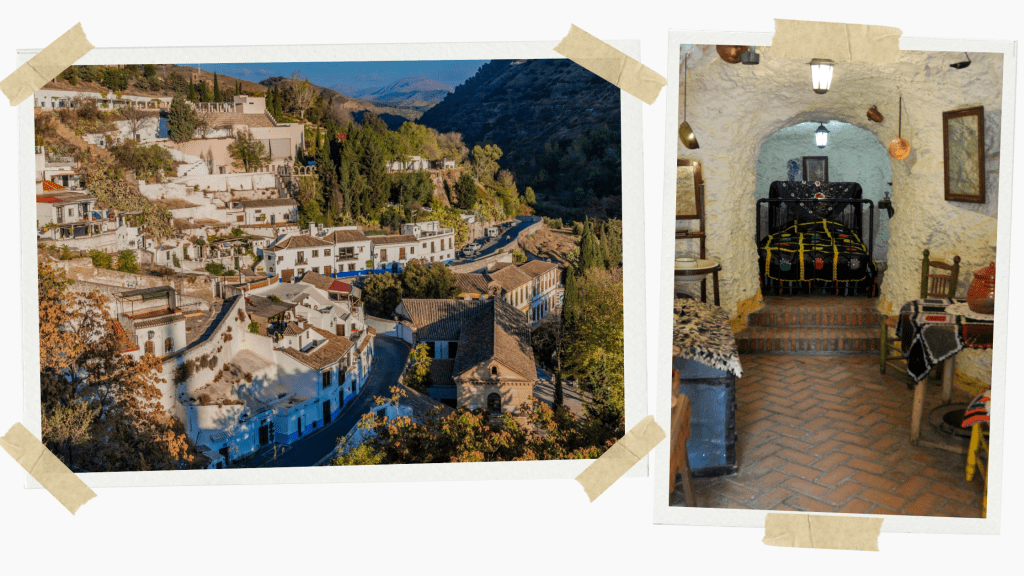
Not far from each other, Cueva Flamenca Los Amayas, Cueva la Rocío, and Zambra María la Canastera are all terrific Sacromonte options delivering authentic, emotional performances.
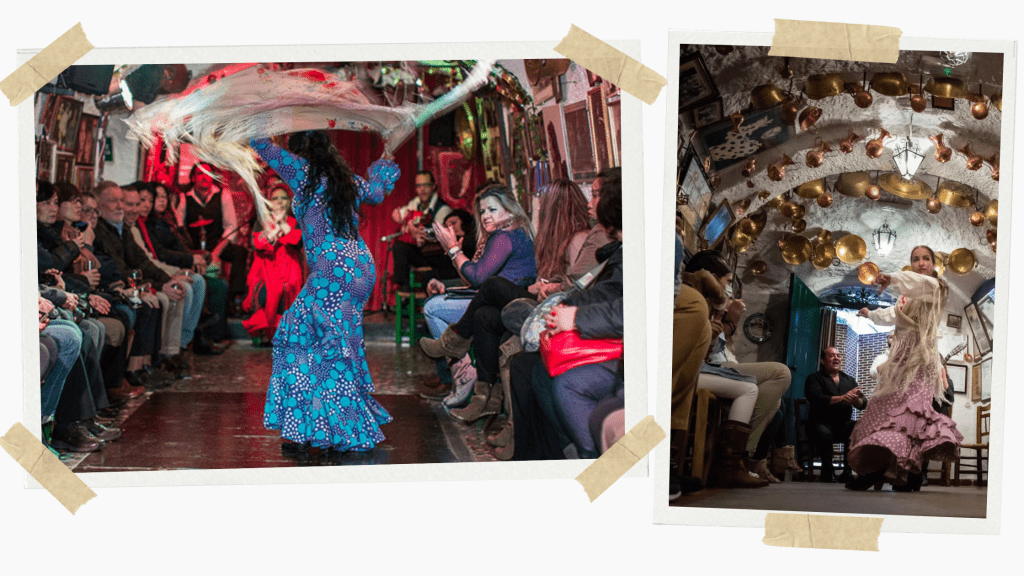
You can also visit the Museo Cuevas del Sacromonte for context on the valley’s caves and cultural evolution if you’re interested.
Hammam Arab Baths
Embracing centuries-old tradition, Granada’s Hammam and Arabic Bath experiences offer great places to take a breather while still soaking up the city’s history.
The most recommendable of these is Hammam Al Ándalus Granada. This candle-lit oasis is widely regarded as Granada’s signature Arab bath and is found in a beautifully restored neo-mudéjar style building in the historic centre near Plaza Nueva.
You’ll find stone arches, gentle lighting, and a sequence of hot, warm, and cold pools that guide you through a deeply calming thermal circuit as well as tea and quiet rest areas to linger afterwards.
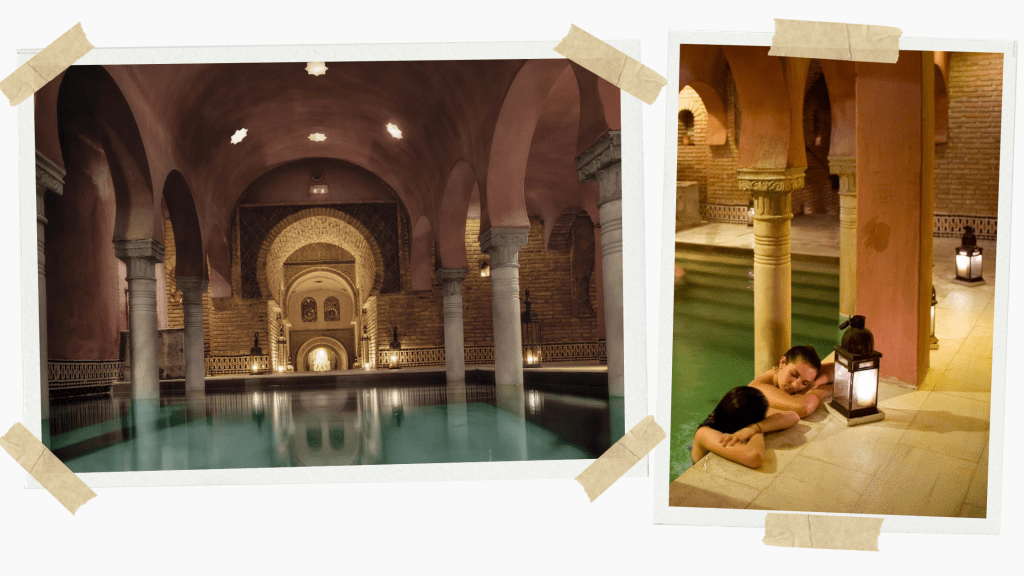
Other options are the slightly smaller Al‑Haram Hammam Baños Árabes Granada, also occupying a historic building dating back hundreds of years, and the more modern Baños de Elvira tucked away in Granada’s historic centre along Calle Arteaga.
Pack swimwear and be prepared to follow respectful hammam etiquette for calm, meditative relaxation.
Best Bars & Restaurants
Granada has no shortage of great places to eat and drink, but before settling anywhere, take time to wander Paseo de los Tristes.
This riverside stretch beneath the Alhambra is one of the city’s most atmospheric spots. As daylight fades, the palace glows above the Darro River, and the terraces slowly fill.
It’s especially magical at dusk and into the night. Walk the length of the promenade first, then choose somewhere to sit and linger.
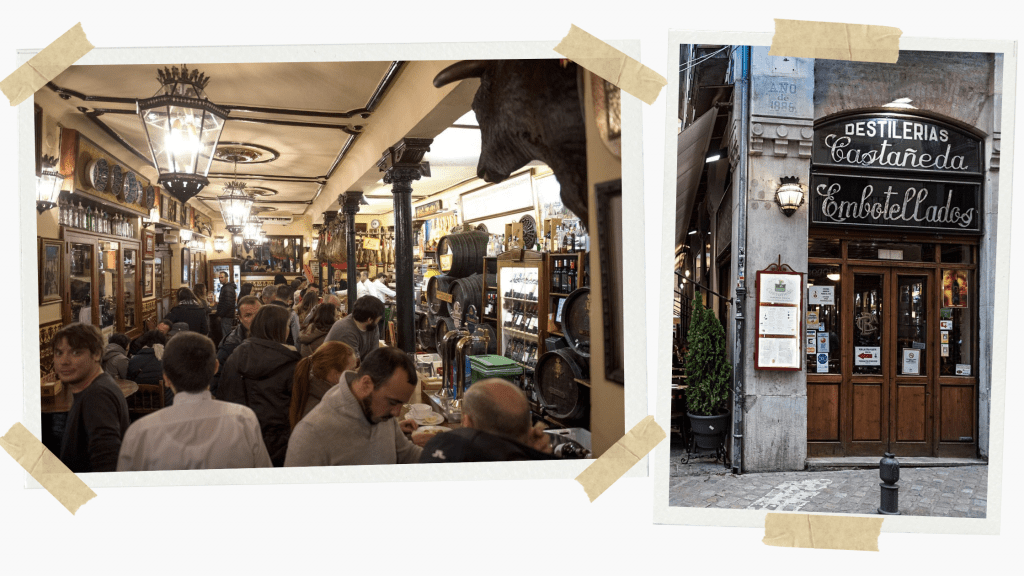
Bodegas Castañeda
A Granada institution just off Plaza Nueva, Castañeda feels like a living museum of Andalucían bar culture. Barrels line the walls, jamón hangs overhead, and classic tapas are done properly.
The tapas are classic and done properly, simple plates that don’t need embellishment. Stand at the bar for quicker service and order vermouth, sherry, or local wines.
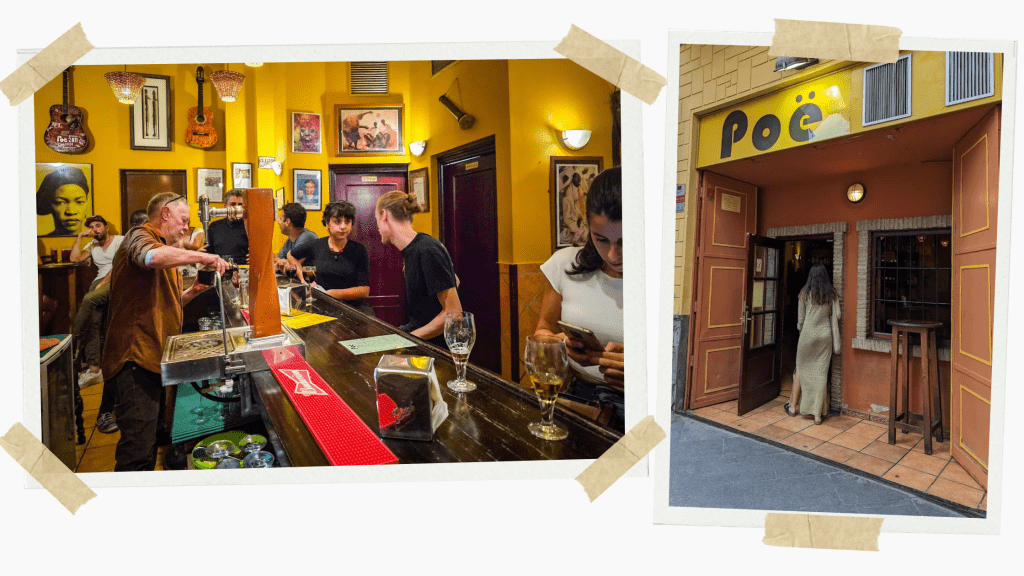
Bar Poë
Small, warm, and refreshingly personal, Bar Poë stands out because you choose your tapa, which is a bit of a rarity in Granada.
It is different to your standard Granada bar and has international-leaning tapas with things like peanut sauces and spiced meats. As you get a tapa choice with each drink, it is great for having a few rounds and trying a few different things at a slow pace.
La Tana
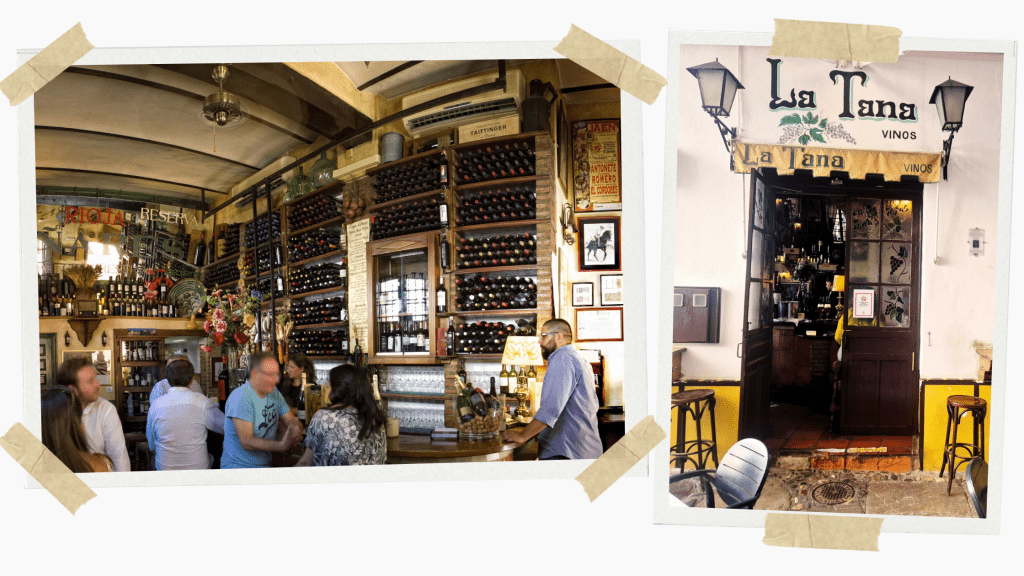
A tiny wine bar near Realejo with one of the best wine selections in the city, La Tana is a favourite among locals who take their vino seriously.
The tapas are simple but excellent, designed to pair with the wine rather than compete with it. Go early as it fills up fast.
Los Diamantes (On Calle Navas)
This is the fried-fish tapas bar of Granada. The original location on Calle Navas is still the one that matters. It’s loud, chaotic, and legendary, with generous free tapas arriving alongside drinks.
You should also order seafood directly here, such as pescaito frito, gambas, and boquerones. Go early if you want elbow room.
Rincón de Julio
Less hyped and more local, Rincón de Julio is dependable and honest. Expect traditional tapas done well, reasonable prices, and a relaxed atmosphere that makes it easy to stay longer than planned.
La Riviera
More of a sit-down restaurant than a tapas bar, La Riviera is a good choice when you want to slow things down. It serves solid Andalusian classics alongside more creative plates, supported by a strong wine list.
This is a reliable option for a proper meal after days of bar-hopping.
Other Attractions
Granada Cathedral & Capilla Real
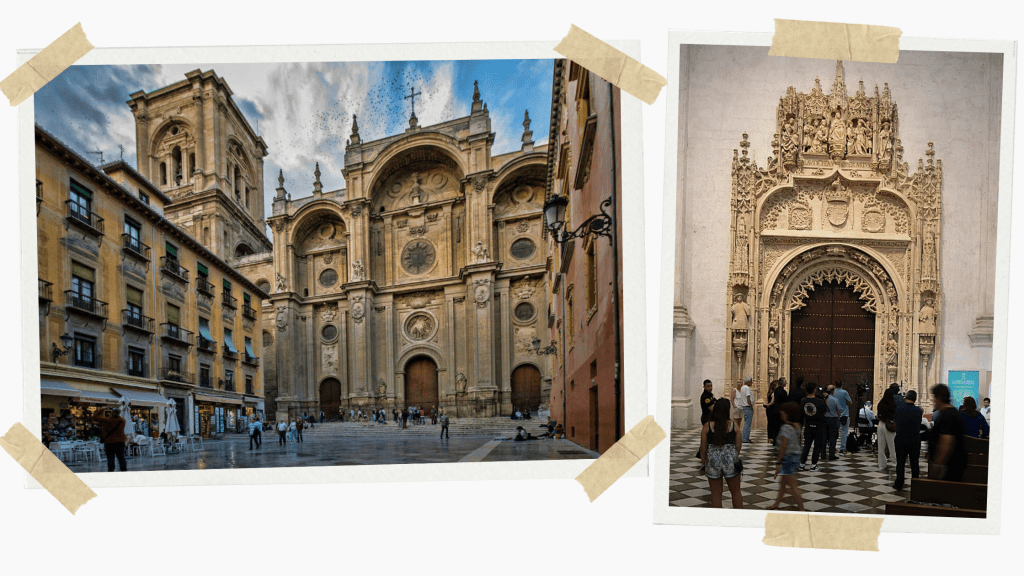
A powerful one-two punch of architecture and history. The Catedral de Granada is one of Spain’s most striking cathedrals, a triumph of Renaissance design that replaced the grand mosque after the 1492 Reconquista.
Adjacent sits the Capilla Real and the tombs of Isabella I of Castile and Ferdinand II of Aragon, patrons of Columbus and architects of Spain’s global age.
Basílica de San Juan de Dios
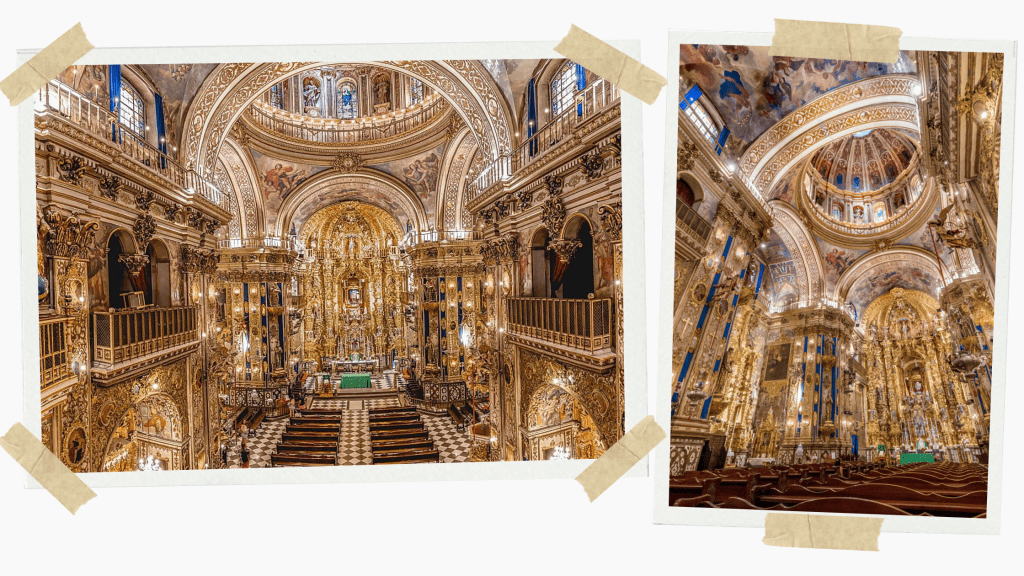
Often overlooked, and extra special because of it. The Basílica de San Juan de Dios houses one of Spain’s most extravagant Baroque interiors with gold, marble, and devotional intensity.
This is an incredible visual experience for art and architecture lovers.
Carmen de los Mártires
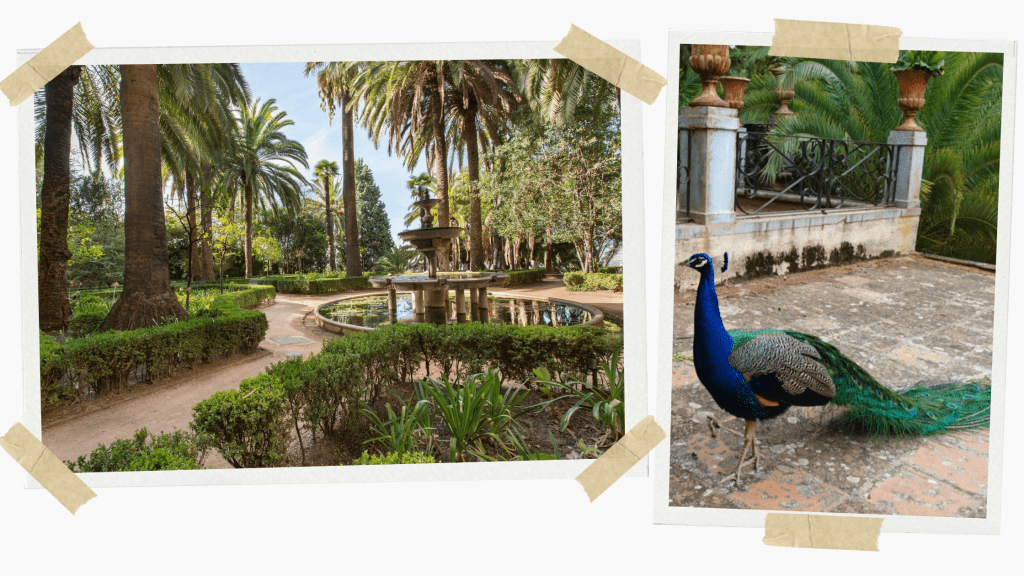
A breath of calm near the Alhambra. Carmen de los Mártires is a tranquil hillside estate of romantic gardens, shaded paths, fountains, and roaming peacocks.
Entry is free, and the views over the city and toward the Alhambra are excellent, especially in the late afternoon.