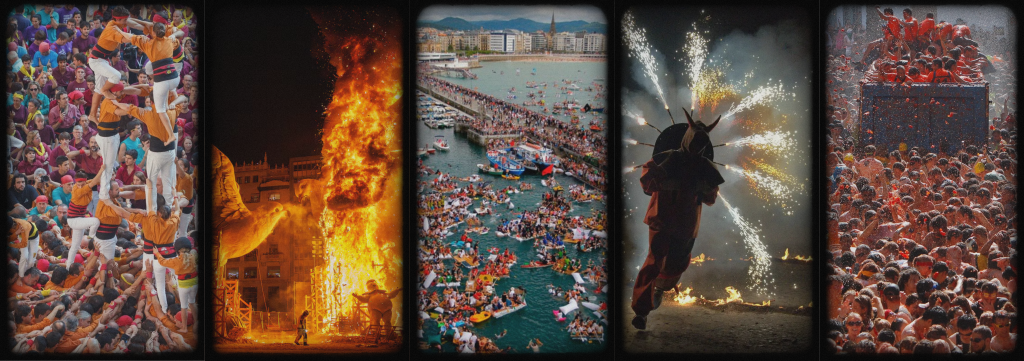
Spain is one of the world’s great festival countries, a place where community, history, food, religion, sport, music, and spectacle mix in a variety of monumental celebrations throughout the year.
Whether you’re thrown into rivers of tomatoes, racing down a river by kayak, or watching fire-spitting sculptures burn at midnight, Spanish festivals offer immersive cultural experiences that showcase local identity as much as national pride.
Many of these fiestas are deeply rooted in centuries-old traditions and have earned official designations as events of national or international interest, so planning ahead, especially for big ones, is key, as they are busy, hectic events.
Las Fallas (Valencia)
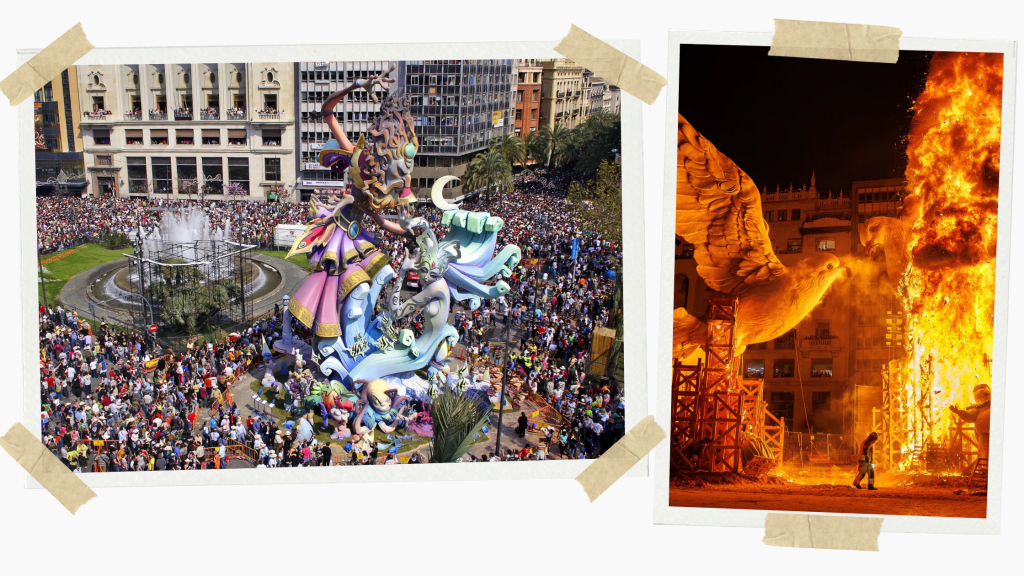
Las Fallas is one of Spain’s most visually overwhelming festivals, combining monumental public art, satire, noise, and fire into a week-long celebration that completely transforms Valencia.
Enormous papier-mâché sculptures, often humorous, political, or sharply critical, are displayed throughout the city before being ceremonially burned in a dramatic finale.
Location: Valencia.
Dates: Mid-March (often 15–19 March)
Tips: Experience the daily “mascletàs” (loud daytime firecracker shows) and save your spot early. The final night’s burning, La Cremà, is unforgettable but crowded.
More information can be found via the official website.
San Fermín (Pamplona)
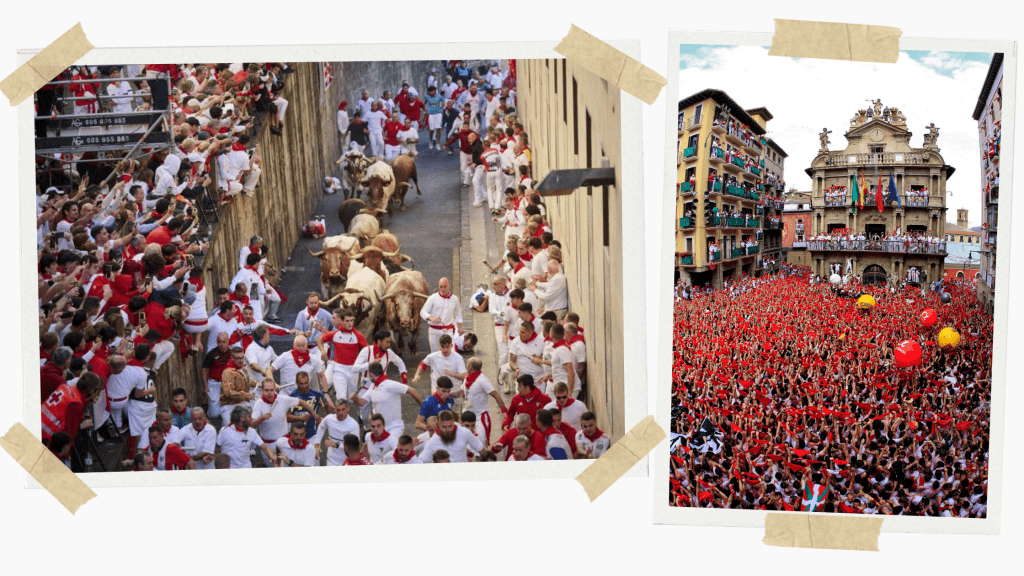
One of Spain’s most internationally renowned and controversial festivals, San Fermín is rooted in religious devotion but famed for its adrenaline-charged bull runs through Pamplona’s historic streets.
Over nine intense days, the city becomes a nonstop celebration of tradition, risk, music, and communal ritual, where centuries-old customs continue, and parties take place around the old centre.
Location: Pamplona, Navarre.
Dates: 6–14 July annually.
Tips: If you plan to witness the bull runs, arrive early for viewing spots and wear traditional white with red scarves. Participation in the run itself is dangerous and requires careful awareness of safety rules. Book accommodation well in advance.
More information can be found via the official website.
La Tomatina (Buñol)
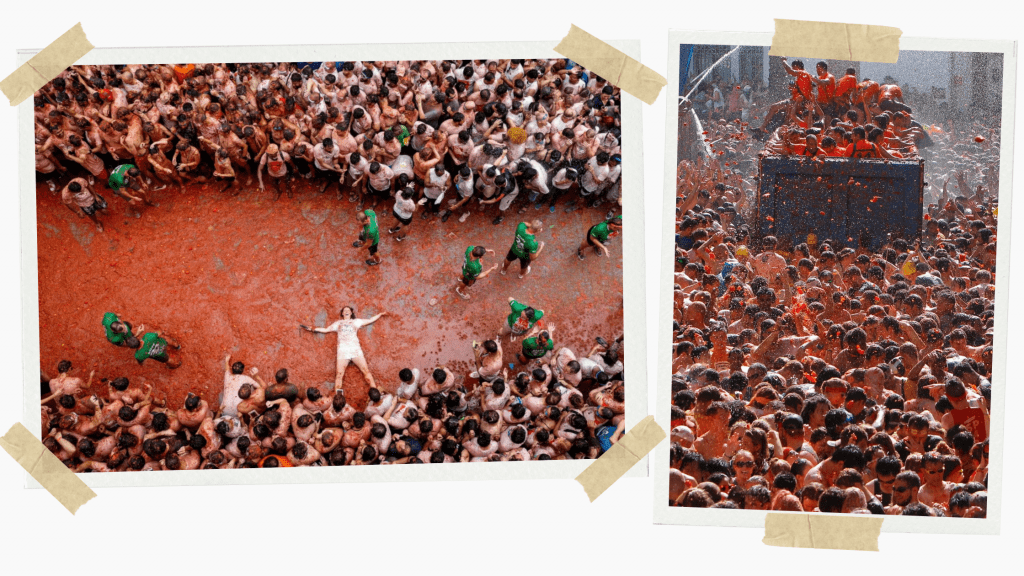
La Tomatina is a deliberately absurd and joyful festival that turns the small town of Buñol into the epicentre of the world’s largest food fight.
What began as a spontaneous local prank has grown into a tightly organised international event of chaotic fun, with few rules and tens of thousands of people throwing ripe tomatoes as the streets briefly disappear beneath a sea of red.
The world’s most famous tomato fight, where tens of thousands throw ripe tomatoes in chaotic fun.
Location: Buñol (near Valencia).
Dates: Last Wednesday of August.
Tips: Wear goggles and old clothes, and arrive early. There’s a small fee for participants. After an hour of fruit warfare, enjoy showers and local food.
More information can be found via the official website.
Castells (Tarragona)
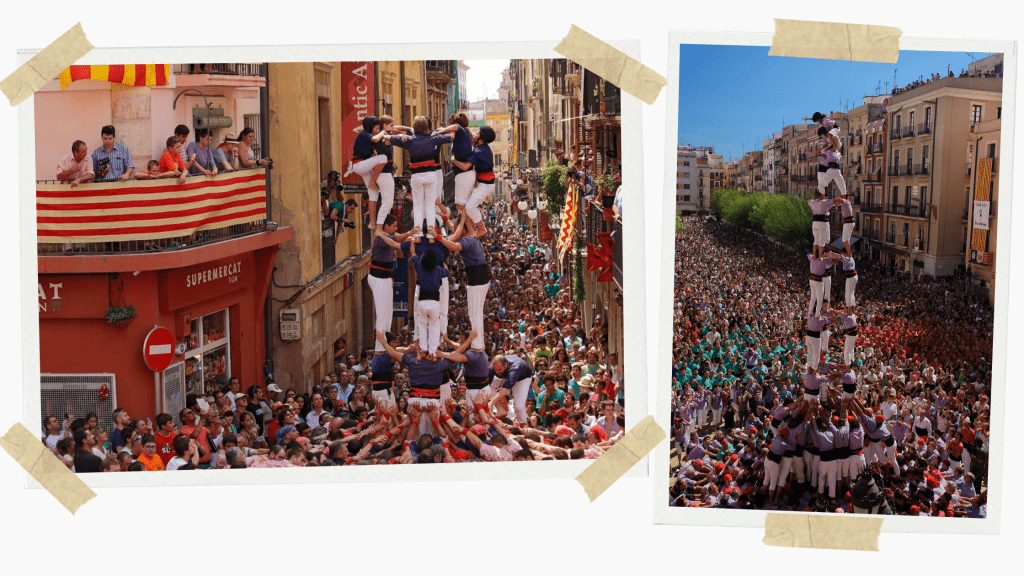
Castells are one of Catalunya’s most extraordinary living traditions, defined by an extraordinary show of physical strength, balance, trust, and collective discipline as residents create towering human formations.
Originating in the late 18th century around Tarragona, castells are constructed by organised teams known as colles castelleres, each with its own colours, symbols, and fierce local pride.
Entire communities participate, with hundreds forming the base to absorb the weight and stabilising the tower, while lighter participants ascend methodically above them, and children climb to the very top to complete the structure.
Recognised by UNESCO as Intangible Cultural Heritage, castells are both a spectacle and a social ritual rooted in teamwork, reinforcing ideas of cooperation, shared risk, and collective achievement.
Location: Primarily Tarragona and surrounding towns in Catalunya.
Dates: Various dates throughout the summer and early autumn.
Tips: Watch team performances in local squares and arrive early to secure a good view of the towering formations and hear crowd chants.
More information can be found via the official website.
La Mercè (Barcelona)
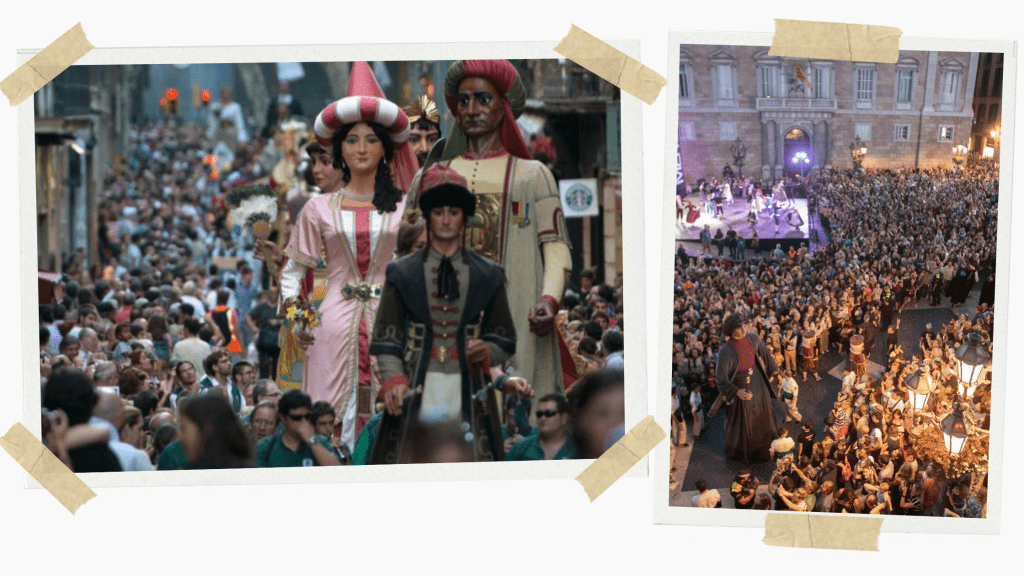
La Mercè is Barcelona’s biggest annual celebration, showcasing the city’s cultural identity through a dense program of music, fireworks, street performance, and traditional Catalan rituals (especially more castells).
Spread across multiple days and neighbourhoods, the festival balances large-scale spectacles with deeply local customs, turning the city itself into a living stage.
Location: Barcelona.
Dates: Late September (often around the 24th).
Tips: See the castellers and nightly piromusical light shows, public transport gets busy but keeps the city accessible.
More information can be found via the official website.
Abordatzea (Donostia)
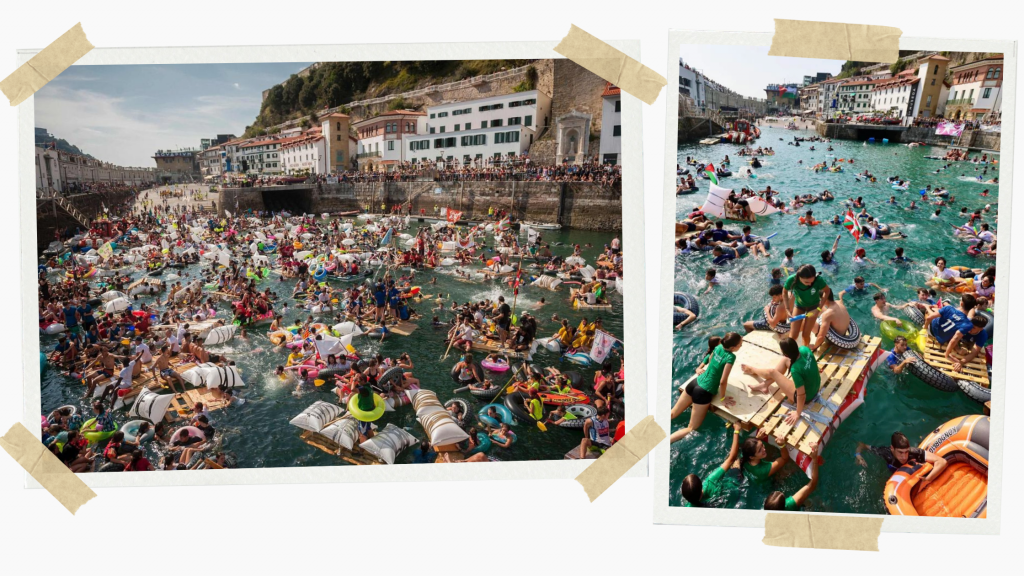
Bilbao and San Sebastián both have major “Semana Grande” festival weeks of music, fireworks, concerts, and street events in August each year.
The San Sebastián version features a playful pirate element, which is best seen in its Abordatzea event on the opening weekend of its program.
Hundreds of people build handmade rafts, dress as pirates, and float into the city’s harbour in a theatrical and deliberately chaotic “invasion” of Donostia with music blaring, flags flying, and crowds packed along the quays.
Location: San Sebastián (Donostia).
Dates: Around mid-August (e.g., 9–16 August in 2025).
Tips: Free concerts and fireworks over La Concha Bay make this a favourite. Plan for crowds and reserve nearby lodging early.
More information can be found via the official website.
La Tamborrada (Donostia)
San Isidro (Madrid)
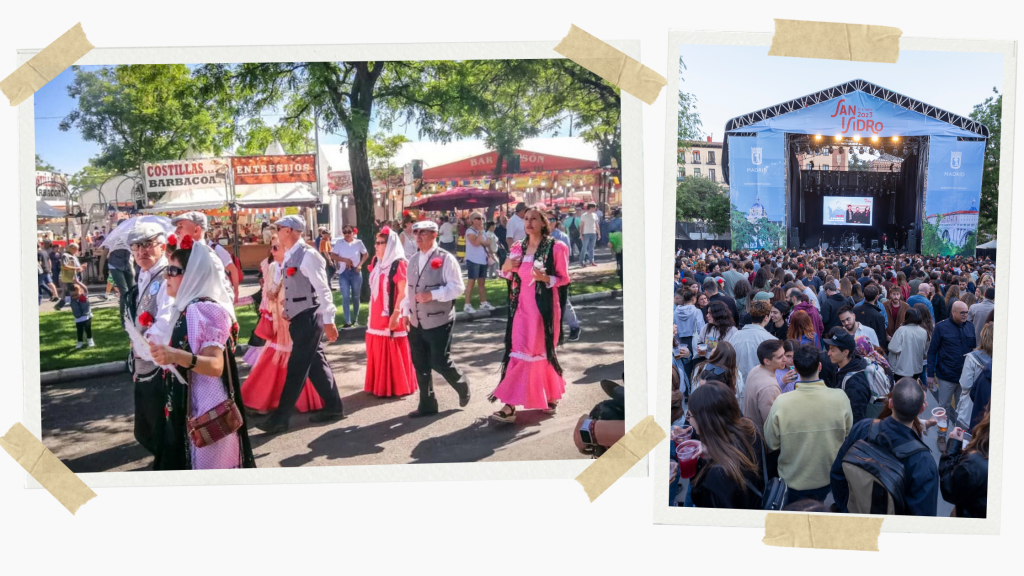
Dedicated to San Isidro Labrador, a 12th-century farm worker associated with agricultural miracles, San Isidro is Madrid’s patron saint festival and one of the clearest expressions of the city’s traditional identity.
Madrileños dress as chulapos and chulapas, wearing traditional outfits tied to the city’s 19th-century working-class culture, and dance the chotis, Madrid’s signature folk dance.
The heart of the celebration lies in La Pradera de San Isidro, where families and friends gather for picnics, music, food stands, and dancing, but concert stages and street parties pop up all over the city.
Location: All over Madrid, but especially Parque de San Isidro & La Latina.
Dates: Around 15 May.
Tips: Enjoy chotis dancing, local fairs, and picnics. The festival atmosphere spreads across parks and historic neighbourhoods.
More information can be found via the official website.
Batalla Naval (Madrid)
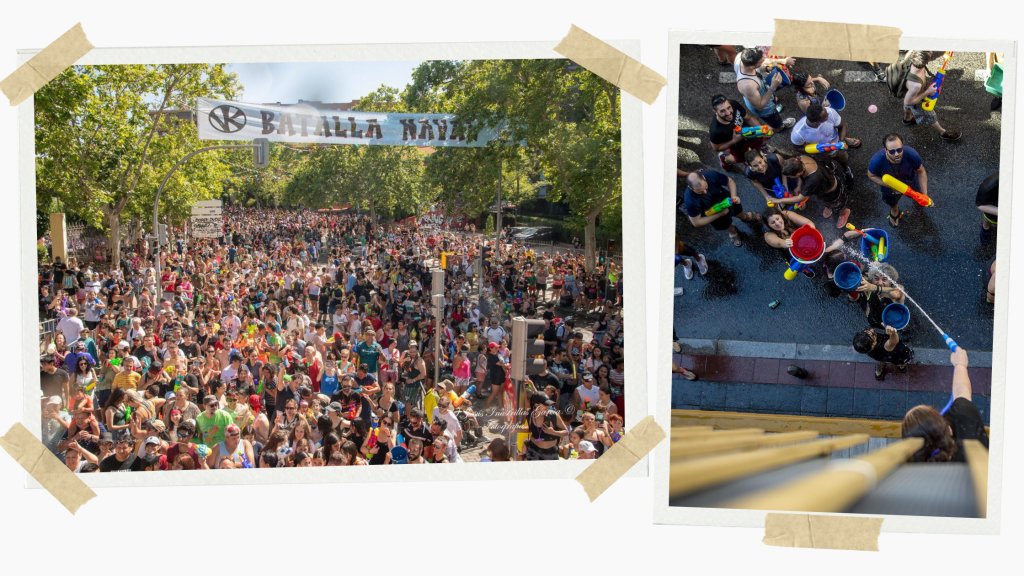
La Batalla Naval de Vallecas is one of Madrid’s most unique and irreverent neighbourhood festivals, transforming the streets of Vallecas into a city-wide water fight each summer.
What began in the early 1980s as a grassroots, tongue-in-cheek protest for better public services has evolved into a joyful celebration of community identity, solidarity, and humour.
Thousands of participants roam the neighbourhood of Vallecas armed with water pistols, buckets, hoses, and anything that sprays, soaking one another relentlessly.
Despite its playful chaos, the event remains deeply tied to Vallecas’ strong tradition of neighbourhood activism and collective pride, embodying a long-standing culture of community solidarity and resistance.
Location: The streets of the Vallecas district in Madrid.
Dates: Usually held on a Sunday in July (dates vary each year).
Tips: Wear old clothes and shoes, as you will get completely soaked. Protect your phone and valuables in waterproof bags. Arrive earlier in the day to catch the build-up before the water fight peaks. Public transport is the easiest way in and out, as streets are often closed. Embrace the spirit: this is participatory, not a spectator event.
More information can be found via the official website.
Feria de Abril (Sevilla)
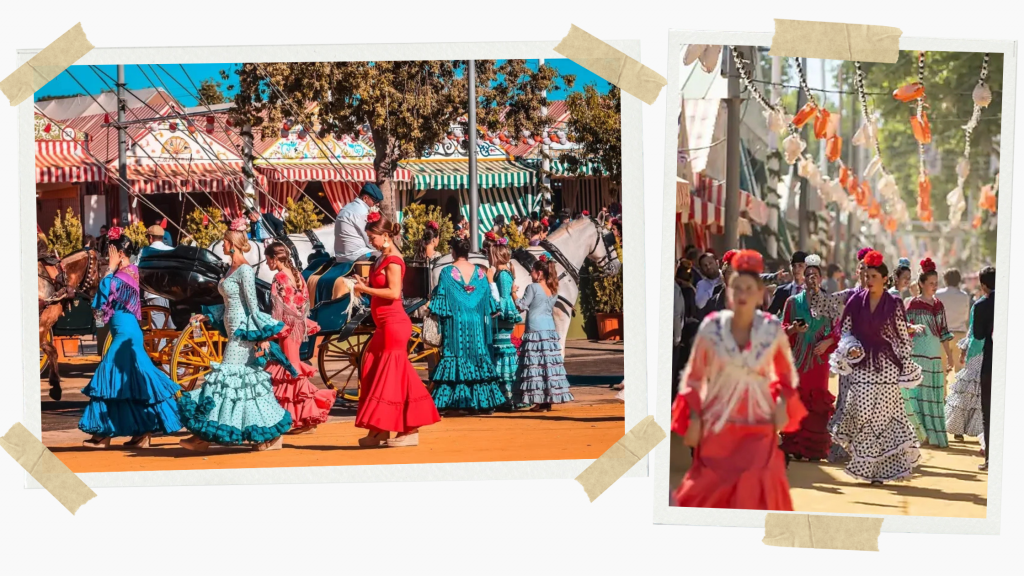
The Feria de Abril is Sevilla’s most iconic social festival, where Andalucían culture takes centre stage through flamenco, horses, music, and shared celebration.
For one week, the city embraces elegance and excess alike, recreating a temporary world of brightly lit casetas (tents), traditional dress, and round-the-clock dancing.
Location: Seville.
Dates: Usually two weeks after Easter. April 21-26 in 2026.
Tips: Dress in traje de flamenca for full immersion; reserve caseta access early and pace yourself across multiple days of festivities.
More information can be found via the official website.
Carnaval (Tenerife & Cádiz)
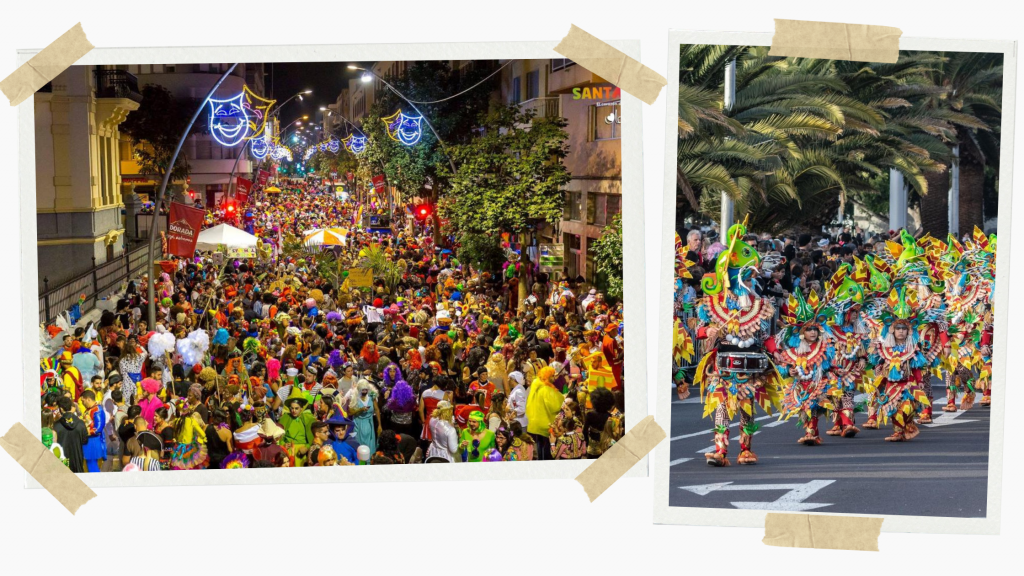
Carnaval in Tenerife and Cádiz represents Spain at its most playful and theatrical. Both carnivals feature extravagant costumes, satire, music, and late-night street celebrations.
In Santa Cruz de Tenerife, the carnival is grand, flamboyant, and international in scale, often compared to Rio de Janeiro’s. Massive parades, elaborate floats, and dazzling costumes dominate the streets, with the election of the Carnival Queen serving as a central event.
In contrast, Cádiz offers a more intimate, satirical, and sharply humorous carnival. Here, the stars are the chirigotas, comparsas, and coros: musical groups that perform witty, often biting songs poking fun at politics, celebrities, and everyday life.
Performances take place not only on official stages but spontaneously in streets and plazas, making Cádiz’s carnival as much about listening and laughing as it is about dressing up.
Dates: February/March.
Location: Santa Cruz de Tenerife and Cádiz have the biggest events.
Tips: Book flights and hotels months ahead. Costume shops and street parties spring up across the city.
More information for Tenerife Carnaval via the official website.
More information for Cádiz Carnaval via the official website.
Feria del Caballo (Jerez de la Frontera)
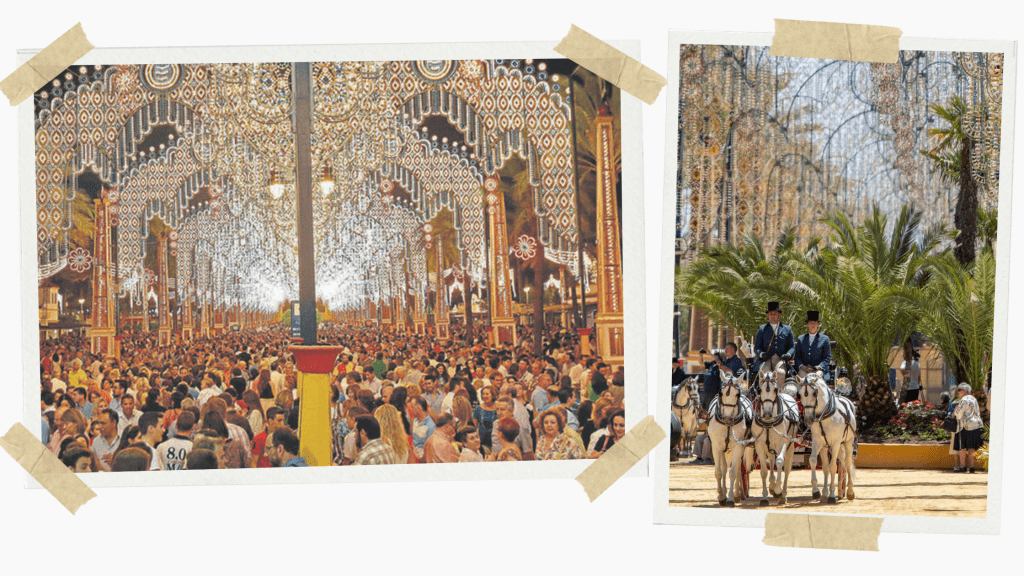
The Feria del Caballo is a celebration of Jerez’s deep connection to horses, sherry, and Andalucían tradition.
Combining elegance with festivity, the event highlights equestrian culture alongside music, dance, and social gathering, all set against the refined yet exuberant atmosphere of the feria grounds.
Dates: Mid to late May. May 9-16 in 2026.
Location: Jerez de la Frontera, Cádiz.
Tips: Sample sherry, join parades, and enjoy the festive atmosphere in casetas from early evening through the night.
More information can be found via the official website.
Descenso Internacional del Sella (Ribadesella)
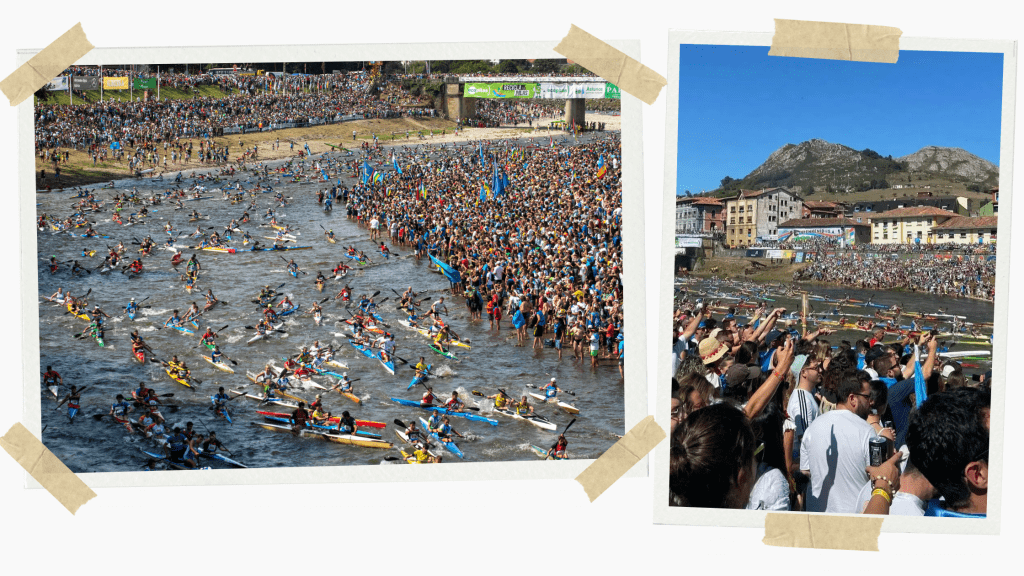
The Descenso Internacional del Sella is both a serious international sporting competition and one of Asturias’ most anticipated summer celebrations.
What begins as a canoe and kayak race quickly expands into a riverbank festival filled with music, cider, and spectators, blending athletic achievement with regional pride.
Location: Ribadesella, Asturias.
Dates: First Saturday after 2 August. August 8 in 2026.
Tips: If you’re not racing, find a riverside spot for food stalls, music, and cheering. Book nearby lodging early as the area fills up.
More information can be found via the official website.
Fiestas de la Virgen de San Lorenzo (Valladolid)
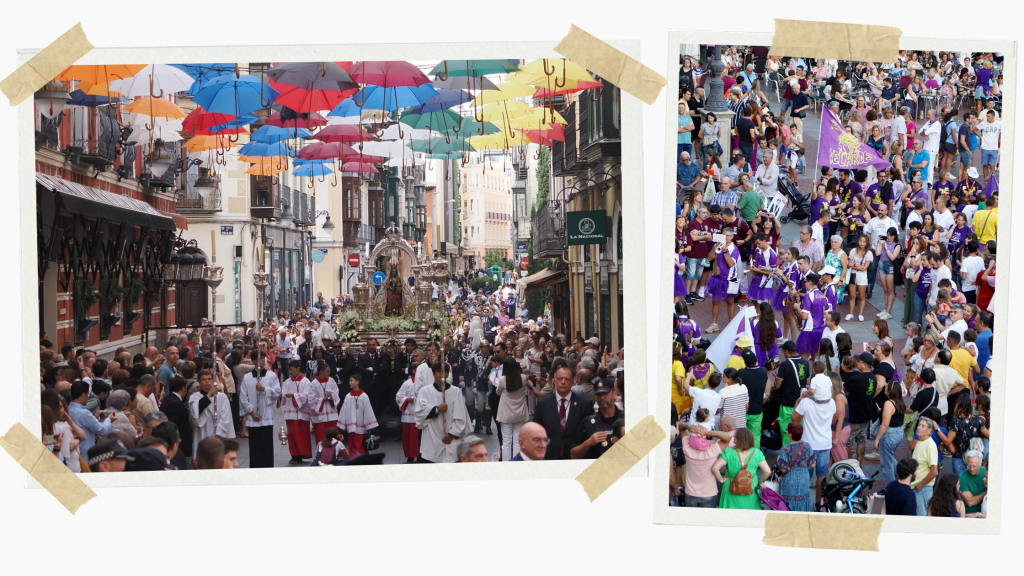
The Fiestas de la Virgen de San Lorenzo are Valladolid’s principal annual celebrations, bringing together religious tradition, popular festivities, and contemporary entertainment.
The festival serves as a focal point for local identity, combining historic devotion with concerts, parades, and communal gatherings.
Location: Valladolid.
Dates: Early-mid September.
Tips: Enjoy a blend of cultural and musical events; arrive a day or two early to orient yourself and find good viewing spots for parades and concerts.
More information is provided on the city’s official website close to the date.
El Colacho (Castrillo de Murcia)
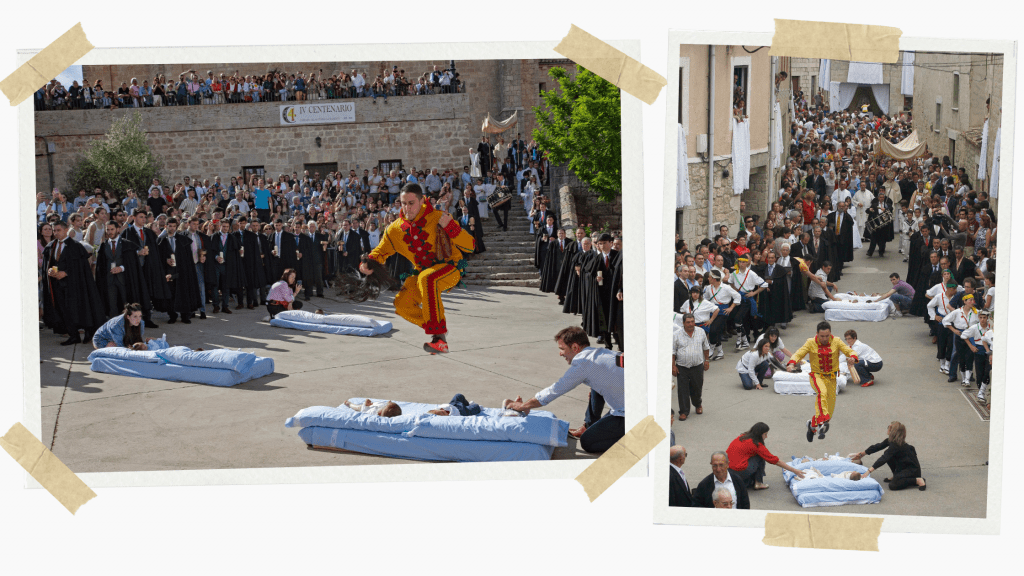
El Colacho is one of Spain’s most unusual and visually striking festivals, held in the small Castilian village of Castrillo de Murcia.
Dating back to the 17th century, the celebration is rooted in local folklore and features a costumed figure representing the devil who leaps over babies lying on mattresses in the street.
The ritual is believed to cleanse the infants of original sin and protect them from evil spirits. It is a serious and deeply respected tradition despite its eccentric appearance.
Location: Castrillo de Murcia (province of Burgos).
Dates: Corpus Christi weekend (May or June, date varies yearly).
Tips: Arrive early, as space is limited and the village is very small. Be respectful, this is a religious rite, not a performance. Accommodation is scarce locally, so base yourself in nearby Burgos.
More information can be found via the official website.
Country-Wide Festivals
Fiesta de San Juan (Night of St. John)
Celebrated on the night of 23-24 June, San Juan marks the summer solstice with bonfires, fireworks, and beach gatherings across Spain, especially in coastal towns.
The festival blends pagan and Christian traditions, with fire symbolising purification and renewal. Many people jump over flames or wade into the sea at midnight as part of local rituals, making it one of the most atmospheric nights of the year.
Semana Santa (Holy Week)
Semana Santa takes place in March or April, during the week leading up to Easter, and is one of Spain’s most important religious observances.
Cities and towns host solemn processions featuring ornate floats (pasos), hooded penitents, and marching bands. While celebrated nationwide, the scale and intensity are especially notable in places like Sevilla, Málaga, and Valladolid.
Fiestas de Moros y Cristianos
These festivals commemorate historical battles between Muslim and Christian forces during the Reconquista through elaborate reenactments, parades, and costume displays.
Featuring dramatic mock battles, traditional music, and richly detailed attire, the celebrations take place in many towns, particularly in eastern Spain, most commonly held in late April.
Alcoy, near Alicante, is known for the most famous and theatrical version.
Cabalgata de Reyes (Three Kings Parades)
Held on the evening of 5 January, the Cabalgata de Reyes is celebrated in cities and towns across Spain to mark the arrival of the Three Wise Men.
Colourful parades feature floats, music, and performers, with sweets thrown to children lining the streets. For many families, this event is more culturally significant than Christmas Day itself and is a key part of Spain’s festive calendar.
San Antonio Abad (Bonfire Festivals)
Celebrated around 16-17 January, San Antonio Abad is marked by bonfires, animal blessings, and local processions in towns across Spain.
Particularly strong in rural areas, the festival honours Saint Anthony, the patron saint of animals, and blends religious tradition with seasonal fire rituals.