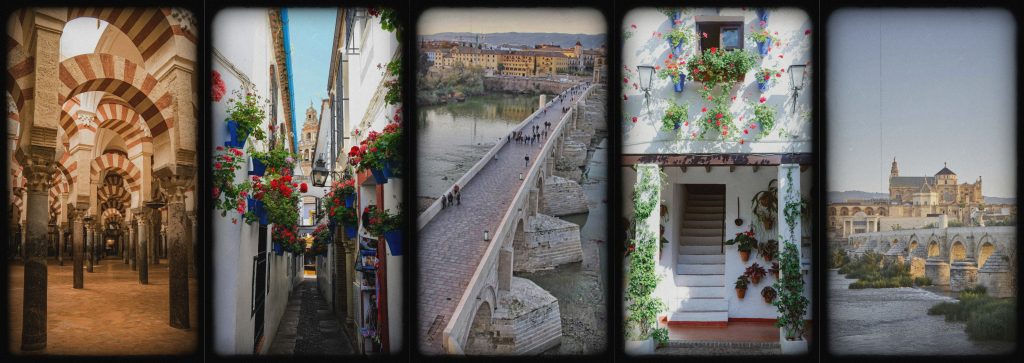
Once the intellectual capital of medieval Europe, Córdoba was a city of scholars, philosophers, fountains, beauty, and mystery. It is now a modest-sized city, but its depth still lingers in quiet confidence.
It’s a city rarely in the top places of a traveller’s ‘must-visit’ list, but that is part of its charm. Stepping into this city, there’s layered intimate beauty behind unassuming doors.
You don’t need days to explore Córdoba. It’s a great place to visit for a weekend. The optimum time to go to Córdoba is in spring when it has emerged from winter, but it isn’t yet reaching sweltering Andalucía temperatures.
May is the perfect time to go, as not only is the weather ideal, but it’s also the month of the city’s famous Fiesta de los Patios, when hundreds of courtyards open to the public in a colourful competition.
Here are some of the top things to do in Córdoba.
The Mezquita-Catedral de Córdoba
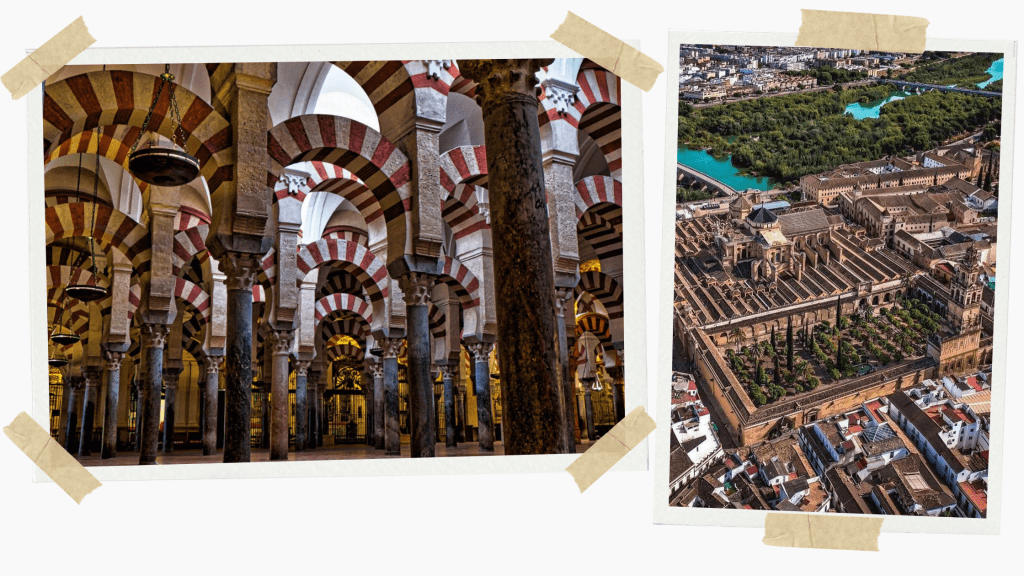
The soul of the city. This astonishing monument, housing an enchanting forest of red-and-white arches, is one of the 12 Treasures of Spain and one of Europe’s most extraordinary landmarks. It epitomises the unique combination of Islamic and Christian heritage, which mirrors Córdoba’s layered history of tension and harmony
Built as a grand mosque in 785 AD, the Mosque–Cathedral of Córdoba was one of the most important Islamic monuments in the western world at its height and accommodated roughly 40,000 worshippers.
In 1236, the mosque was then consecrated as a cathedral following the fall of al-Andalus and the Christian conquest of Córdoba and a Renaissance-style cathedral nave was inserted in the 16th century.
It is best visited early during free entry from 08:30 to 09:30, when the calm, uncrowded atmosphere makes the experience far more powerful.
Sites & Landmarks
El Puente Romano
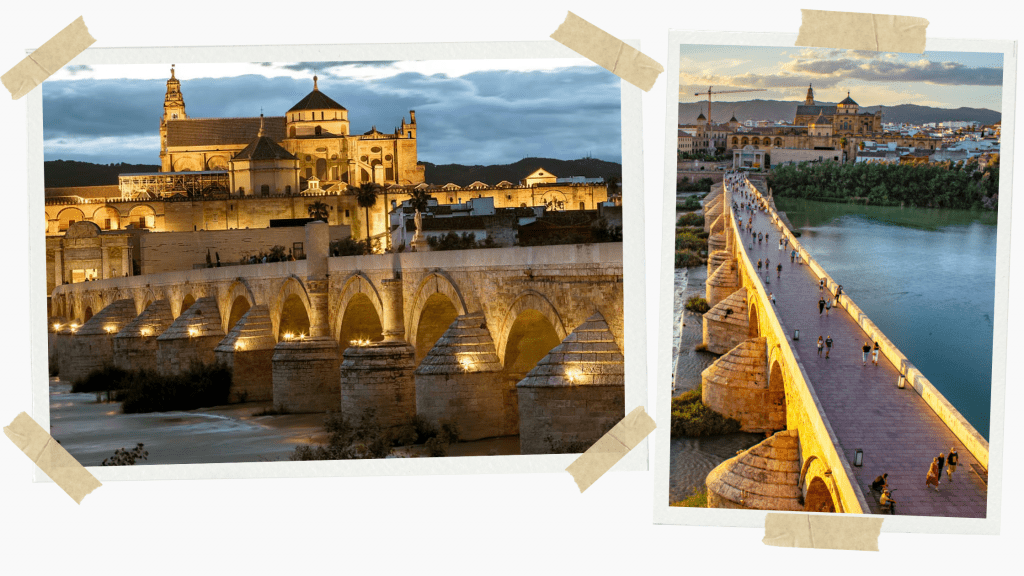
A stone’s throw from the Mezquita-Catedral is another of Córdoba’s defining features, its Roman Bridge. Stretching across the Guadalquivir River, this ancient bridge offers some of the best views in the city, especially at sunset when the Mezquita glows in warm light.
A simple walk here feels quietly cinematic. There isn’t all that much going on over the other side, but it is well worth a stroll for the views and then stopping for a drink by the river on the section of Ronda de Isasa between the two bridges when you head back.
Alcázar de los Reyes Cristianos
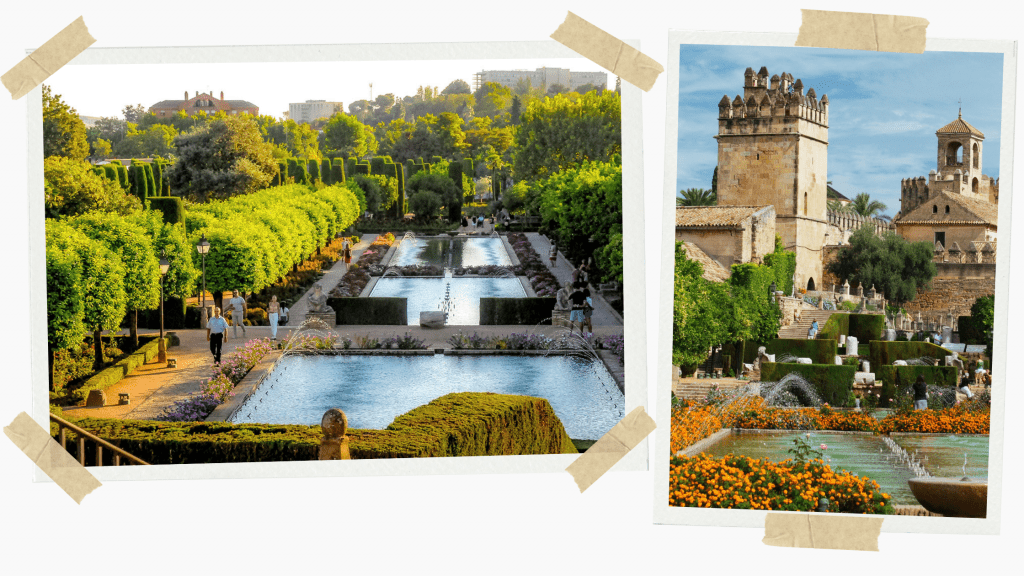
The Alcázar de los Reyes Cristianos is also well worth a visit. Combining military architecture with royal residence traditions, this 14th-century historical site was built on the foundations of earlier Roman and Islamic structures and served as a seat of power for Christian monarchs, including Ferdinand and Isabella.
Inside, you’ll find austere halls and towers with city views, while outside, the terraced gardens are a particular highlight, with long reflecting pools, fountains, and carefully ordered greenery creating a calm, almost meditative space. It’s an ideal place to slow down and absorb Córdoba’s long, multi-period history.
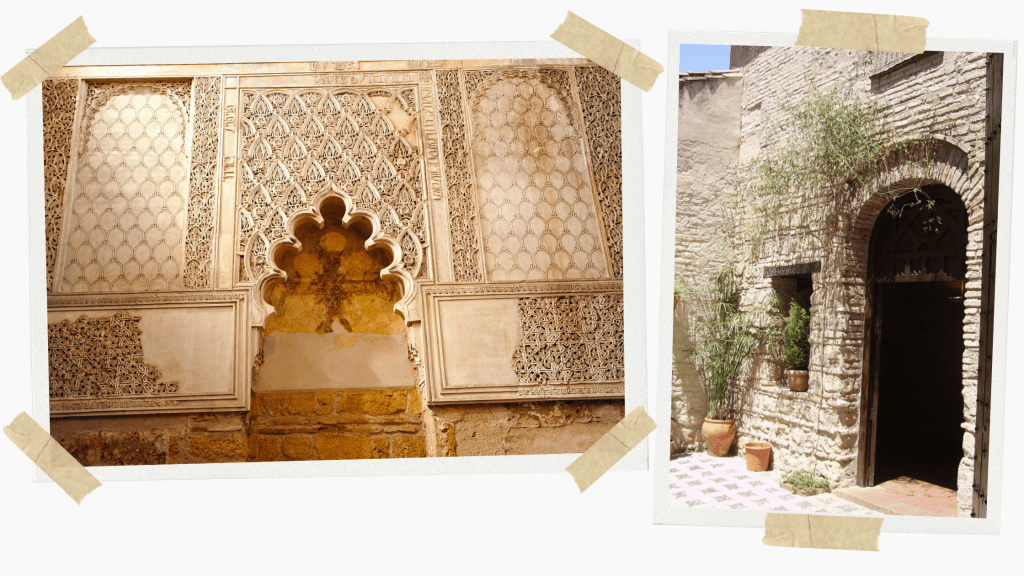
Sinagoga de Córdoba
Elsewhere, the Córdoba Synagogue is modest in size but deeply significant. Built in the early 14th century, it is one of the few medieval synagogues still standing in Spain and a rare physical reminder of Córdoba’s once-flourishing Jewish community.
Visiting the synagogue naturally leads you to wander the surrounding Jewish Quarter (Judería) through narrow streets and whitewashed houses, inviting reflection on the city’s layered history of coexistence, cultural exchange, and eventual expulsion.
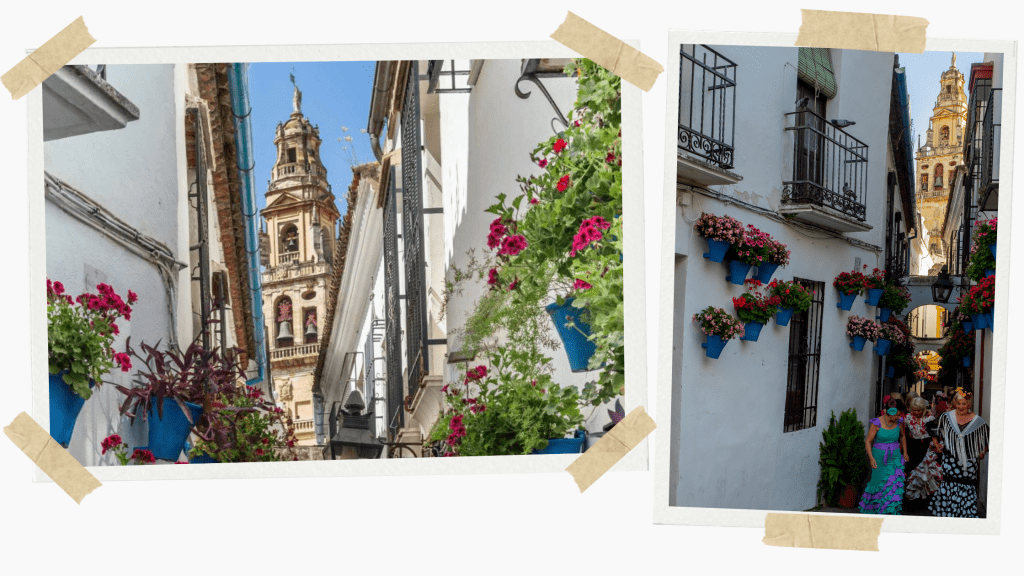
Calleja de las Flores
The Calleja de las Flores is one of Córdoba’s most photographed corners. This narrow, whitewashed lane is carefully arranged to frame the Mezquita’s bell tower at the end of the passage, with flower-filled pots adding colour and contrast along the walls.
It’s a short stop rather than a destination in itself, but its composition captures much of what defines the intimacy, simplicity, and quiet attention to detail of Córdoba’s old town.
It is best visited early in the morning or later in the evening, when the crowds thin and the charm feels less staged.
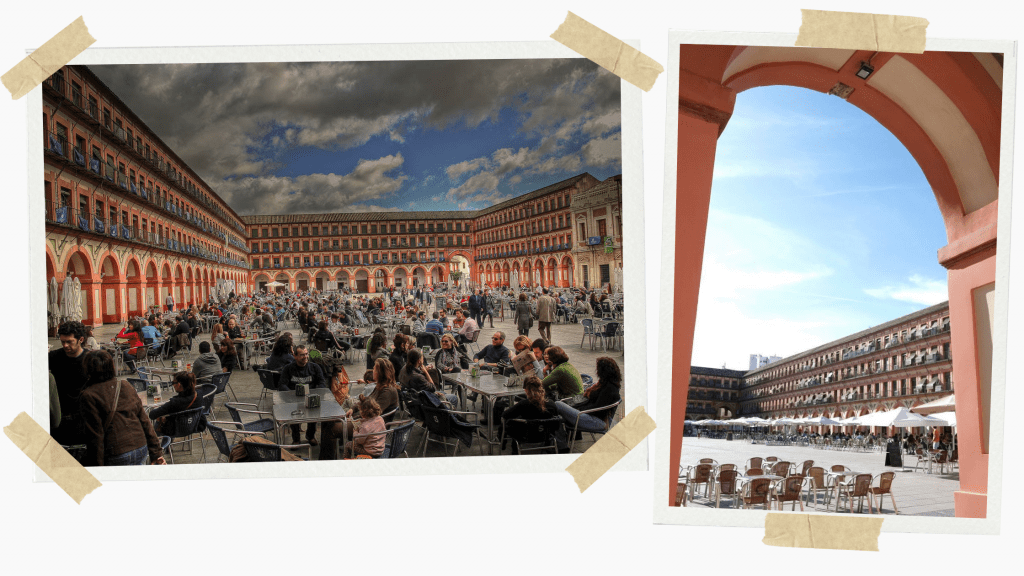
Plaza de la Corredera
Córdoba has many pleasant squares, but when the sun is out, this expansive, arcaded plaza is one of the best places to sit with a drink, people watch, and linger longer than planned.
Lined with continuous arcades featuring several relaxed bars and restaurants around the edges and a nearby market, it offers a more lived-in, less tourist-heavy atmosphere than the area surrounding the Mezquita, making it a refreshing change of pace.
Hotel Balcón de Córdoba
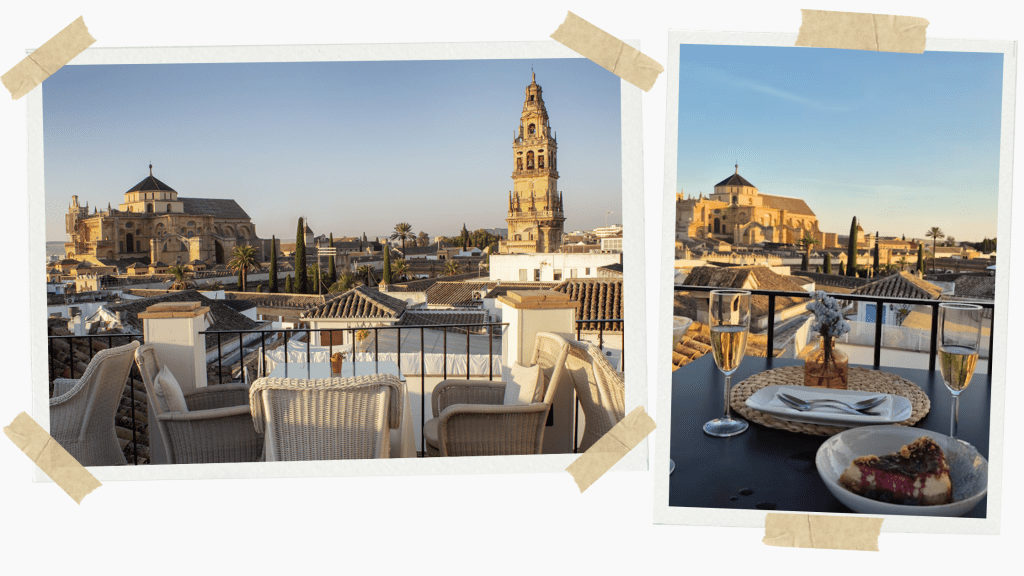
For a change of scenery from the buzz of the plaza, head up to the Hotel Balcón de Córdoba to have a drink while looking out over Córdoba’s tiled rooftops and church towers.
Set above the old town, it’s a calm, elegant place for an evening drink and ideal for a pre-dinner aperitif or a relaxed nightcap when you want atmosphere without noise. Walk in and ask to be directed up to the terrace for a drink (or food if they’re serving and you’re hungry).
Jazz Café & Automático Muzik Bar
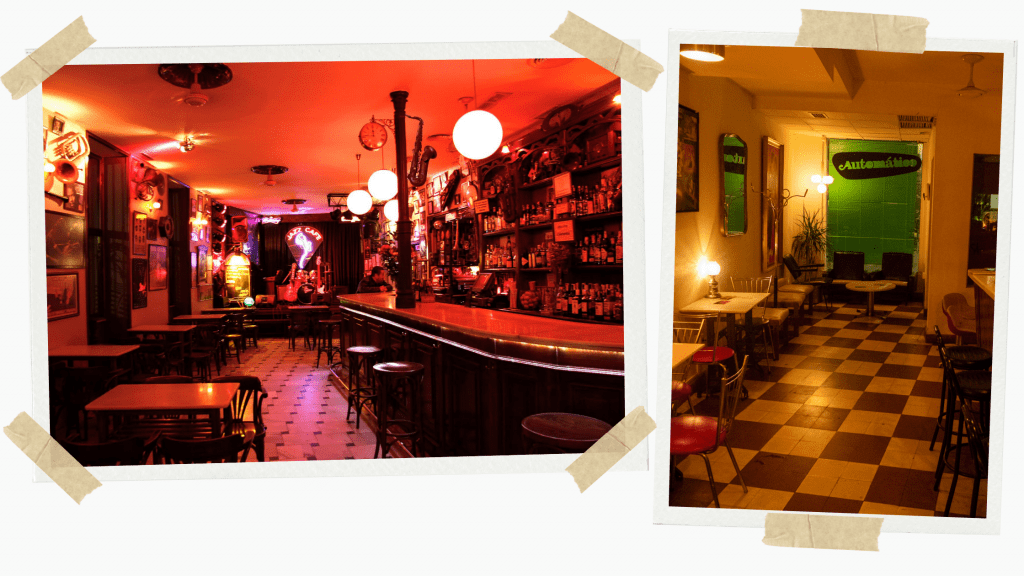
Jazz Café is a long-standing favourite for low-key nights centred around live music. The space is intimate and unfussy, attracting a mixed crowd of locals and visitors who come for jazz, blues, and acoustic sets rather than club energy. It’s a good choice if you want to sit, listen, and unwind in somewhere lively and a little different.
Automático Muzik Bar feels local, casual, and comfortably unpretentious. Known for its eclectic music selection and laid-back vibe, it’s the kind of place people drop into without planning. Expect a friendly crowd, reasonable prices, and a very Córdoba-style night out.
La Comuna is another spot, a neighbourhood bar with a sense of community rather than loud music, while Hangar Córdoba is a club-like atmosphere and one of the city’s more energetic late-night options.
“Case El Pisto”
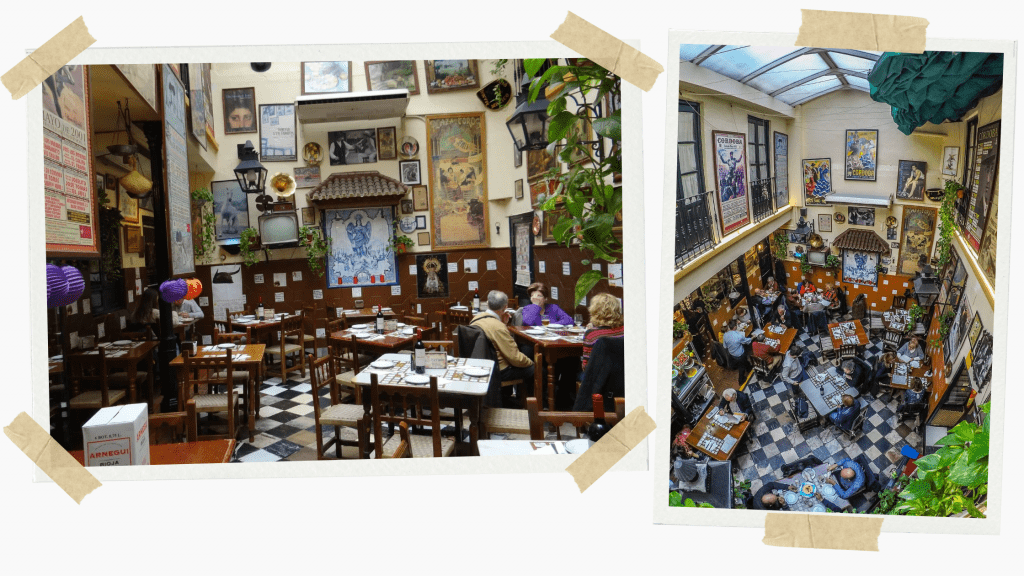
Taberna San Miguel “Casa El Pisto” is one of Córdoba’s most iconic historic taverns, deeply rooted in the city’s culinary and social traditions. Founded in 1880, it has maintained a central role in Córdoba life for well over a century and is officially recognised by the city for its heritage as a “taberna histórica”.
The interior feels almost like a lived-in museum, with walls adorned with vintage bullfighting posters, photos of local personalities, and memorabilia reflecting its historical Córdoba life.
The setting is as much part of the experience as the food, making it a memorable stop if you’re exploring the city centre on foot and want a meal that feels rooted in local tradition.
Restaurants & Tabernas
El Rincón de Carmen
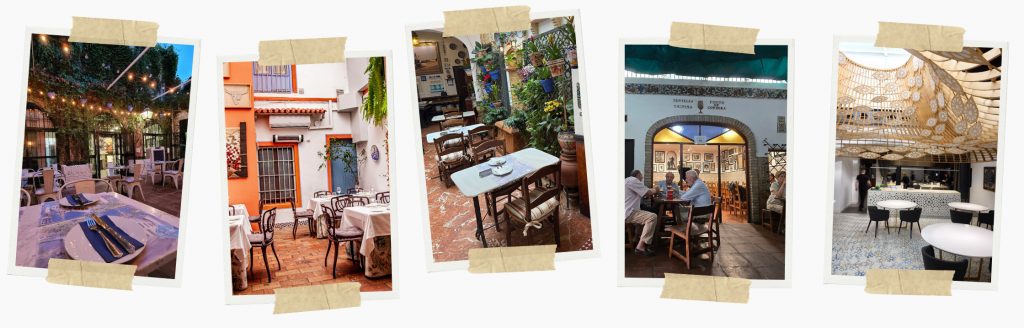
El Rincón de Carmen has a charming interior courtyard surrounded by plants and flowers. It feels like a quintessentially Andalusian space reflecting the classic Córdoba patio aesthetic. The food is fantastic too.
You’ll find a thoughtful take on traditional Andalusian cuisine with slightly elevated dishes presented with a bit more refinement than a typical taberna, but without moving into fine-dining territory.
Casa Pepe de La Judería
Located in the heart of the historic Jewish Quarter, Casa Pepe beautifully showcases traditional Andalusian cuisine such as salmorejo, flamenquín, rabo de toro and expertly fried aubergines. The setting feels both historic and welcoming, with interiors and a terrace that reflect the built-heritage of the surrounding Judería streets.
Taberna Salinas
One of the city’s most dependable traditional taverns, Taberna Salinas, is located close to the historic centre and is well known for its generous portions at affordable prices. It does exactly what a proper taberna should do, providing a no frills, lively atmosphere and reliable, satisfying Andalusian staple dishes.
Bodega Guzmán
Bodega Guzmán deserves a mention too. A classic, unpretentious wine bar that feels firmly rooted in everyday Córdoba. It’s known for its relaxed atmosphere, local clientele, and a focus on Andalusian wines served alongside simple, well-priced dishes.
Noor
If you’re looking for a high-end experience, Noor is the most acclaimed restaurant in Córdoba and one of the very few restaurants in Spain with three Michelin stars. The menus take you on a thematic journey through different eras of local culinary heritage.
You can expect meticulously composed artistic plates and very high prices. It’s a special-occasion meal where a reservation in advance is essential.
Hammam Arabic Baths
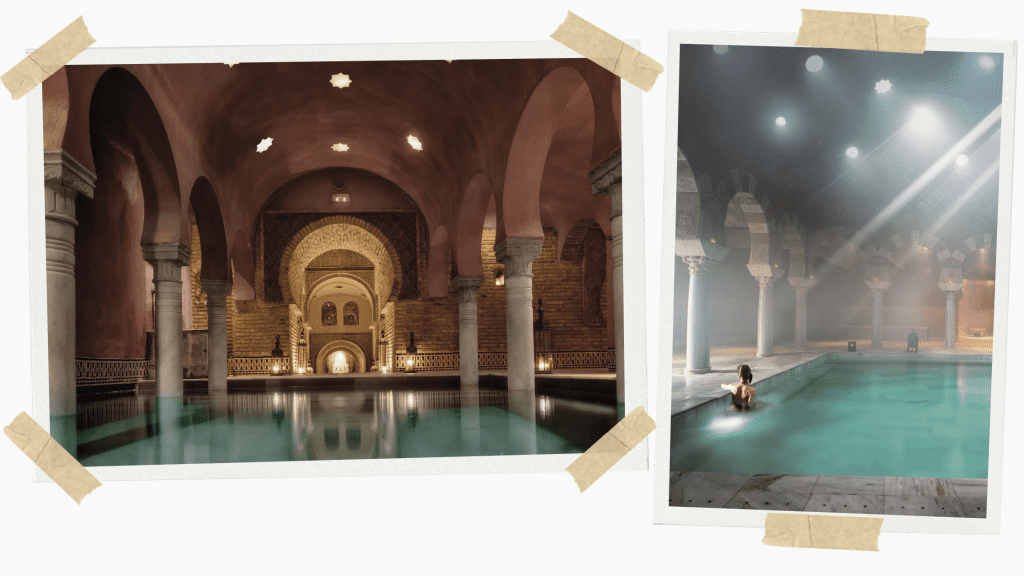
Córdoba’s compact size often leaves visitors with pockets of spare time, and the Hammam Al Ándalus Baños Árabes are a great place to spend it.
Inspired by traditional Arab baths, the atmospheric space features warm and cool pools, subdued lighting, and a deeply restorative pace offering a welcome reset after days spent walking the city.